Singapore · Sushi · Marina Bay Sands · Around $590 SGD for Three
What I told Vika later, after seeing the bill, was that KOMA’s room is incredible, KOMA’s food is good, and those turn out to be two different things. I had dinner here with two coworkers on a work night out at The Shoppes at Marina Bay Sands, sitting under a ceiling full of paper parasols and staring at a bronze bell the size of a small car. The sushi was fresh, the room was unreal, the service was sharp. And I walked out of there sure I had eaten just as well in Singapore for half the price.
This article is not sponsored. Nothing was comped, and we didn’t tell KOMA we were going to write about them.
First, the Room (Because the Room Is What You’re Buying)
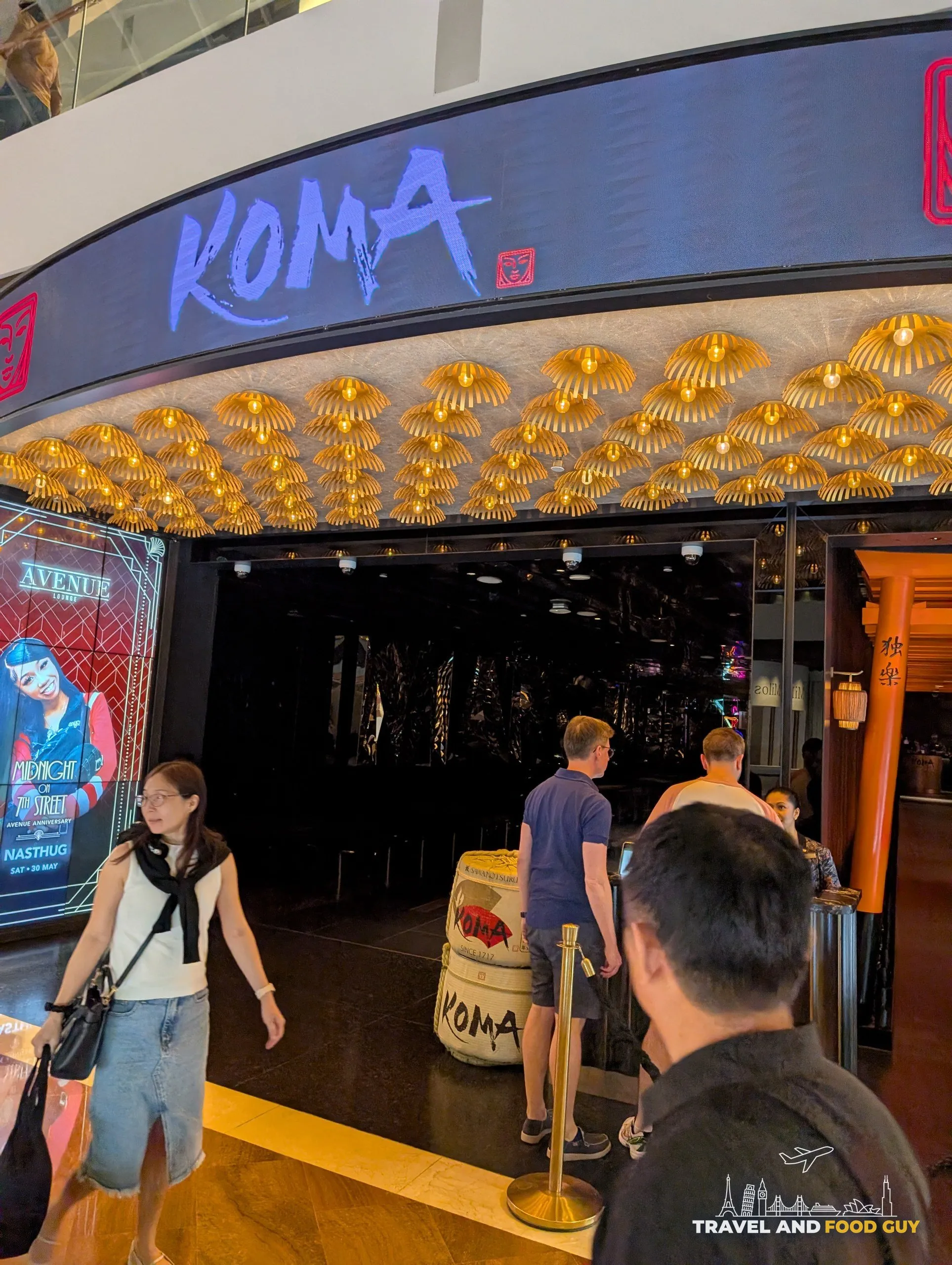
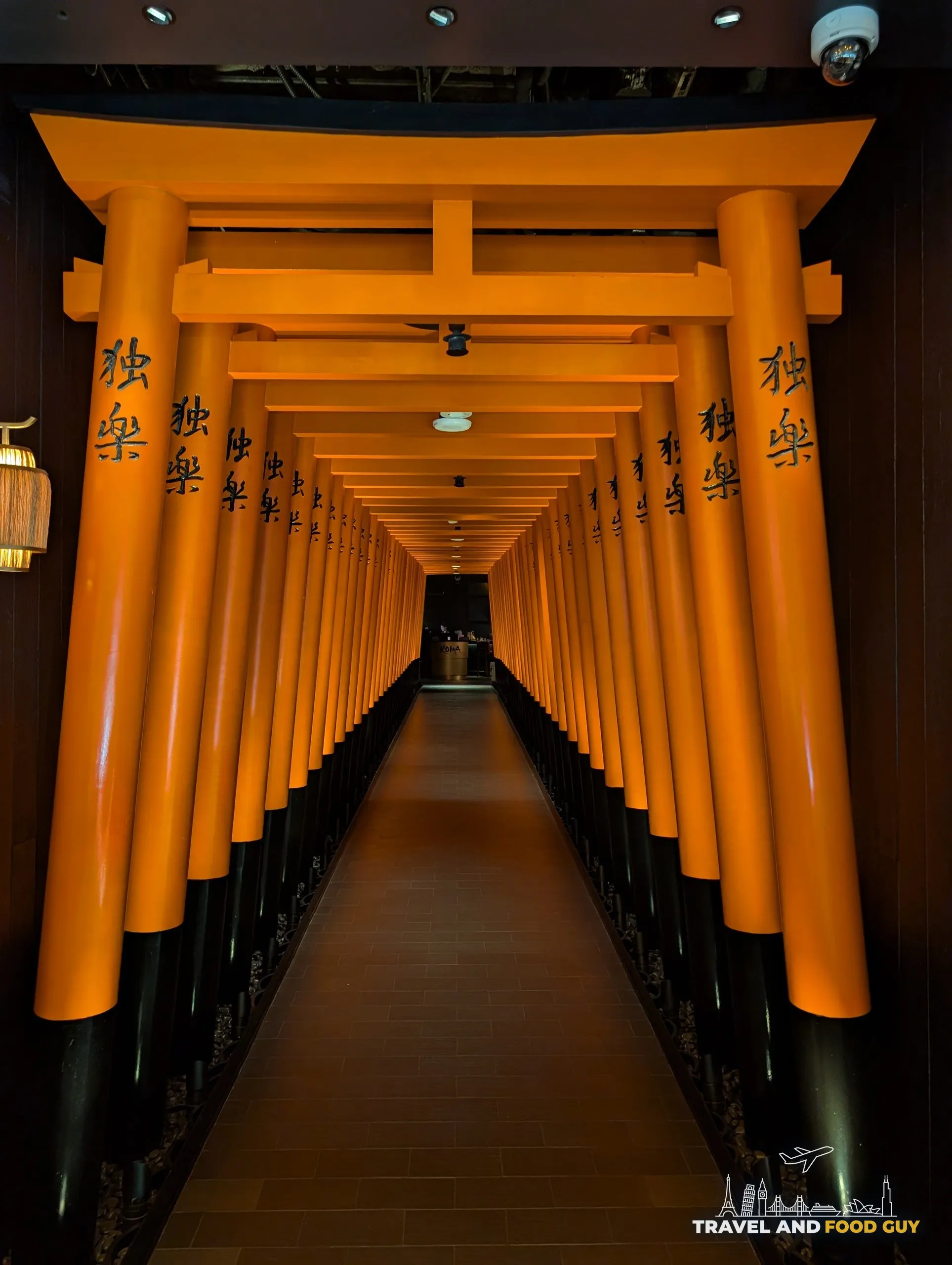
The entrance is a curved canopy of gold paper parasols you walk right under, with a barrel out front and the word KOMA glowing above. Then comes the hallway, and that hallway is the best part. It’s a tunnel of bright orange torii gates with Japanese characters inked across the crossbeams, lined up one behind the other like a tiny version of Fushimi Inari in Kyoto. By the time you reach the end of it, you already know the next two hours are going to be a show.
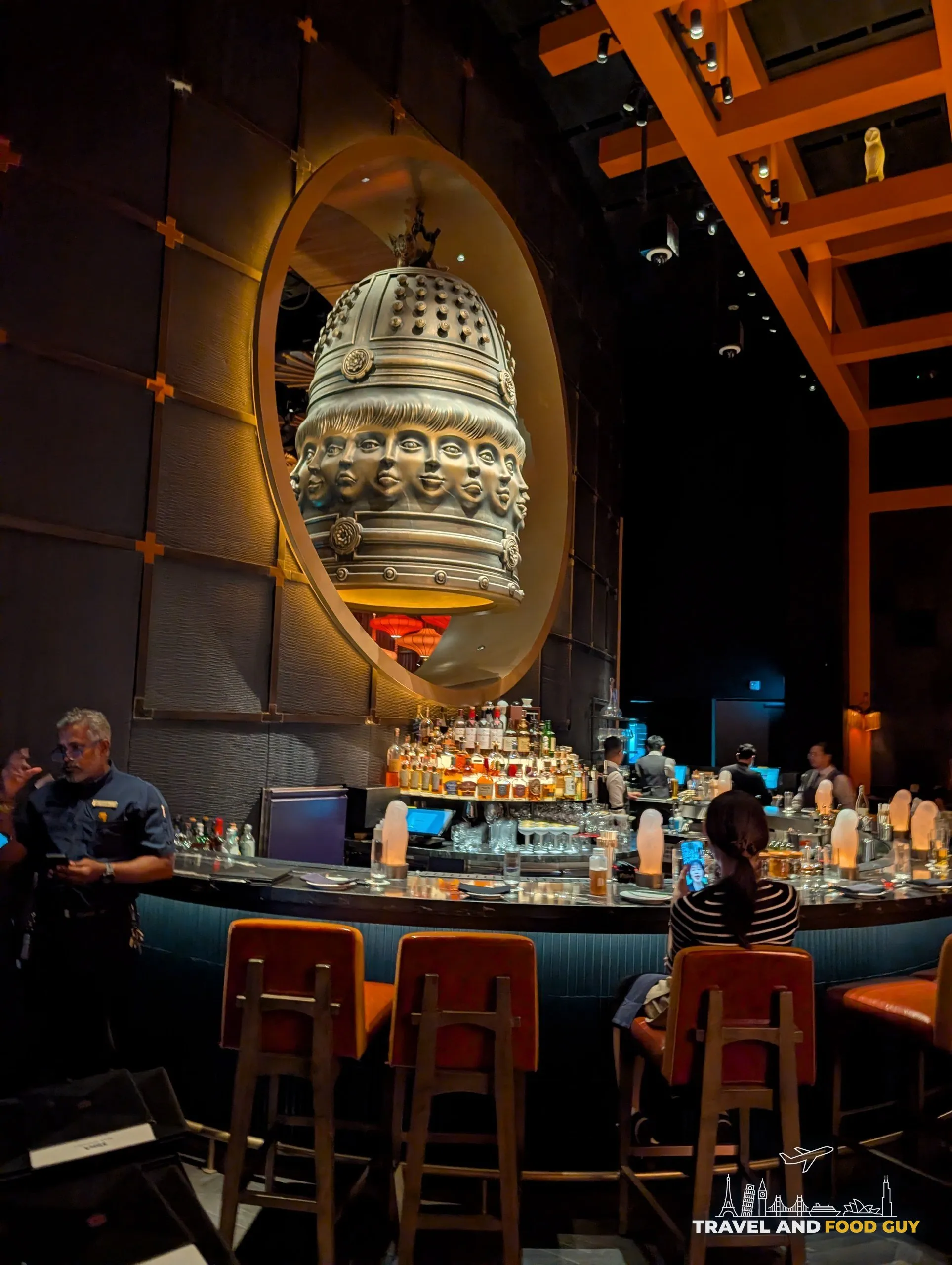
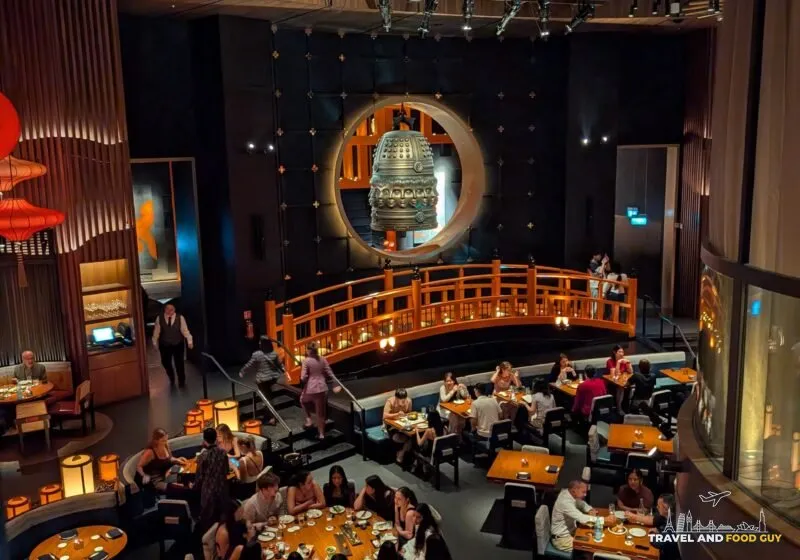
At the far end of the hallway the bar opens up, and the first thing you notice is the bell. It’s huge. A bronze sculpture the size of a small car, ringed with rows of faces and topped with what looks like a cow but probably isn’t. We actually asked if we could ring it. They didn’t understand the joke. Fair enough. If everyone who walked in could ring it, the room would be unbearable inside fifteen minutes.
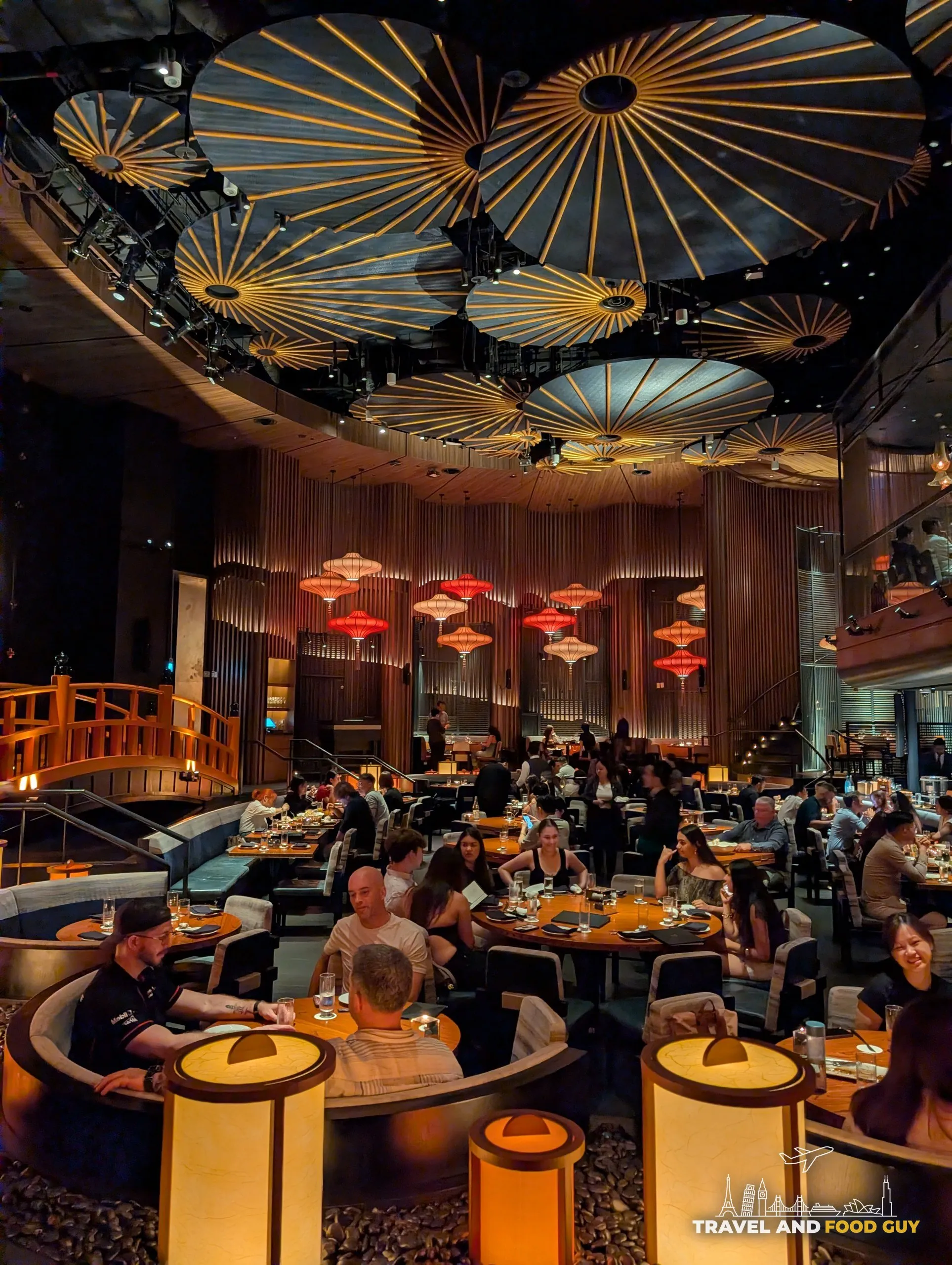
From there you cross a small wooden footbridge into the main dining room, and that’s where KOMA really stops messing around. The ceiling is a forest of giant overlapping kasa, those wooden ribbed parasols, lit from underneath in soft gold. There’s a mezzanine private dining area floating above the room, and looking up at it I kept thinking of the scene in The Matrix where Neo meets the Architect, where you’re overlooking everything but somehow also in the middle of it. It’s the most photographed room in Marina Bay Sands for a reason. Probably half the reason anyone is here is to put it on Instagram.
One thing worth knowing about the mall itself, because it’s part of the experience: The Shoppes at Marina Bay Sands is shaped like an indoor canal, with little Asian sampan boats running through it that reminded me of the gondola rides at the Venetian in Las Vegas. We wandered the Louis Vuitton store and the Burberry next door on the way in. Beautiful stuff, didn’t buy anything, all the money that night was going to dinner. Setting matters here. KOMA isn’t a quiet sushi counter on a side street. It’s the centerpiece of a luxury mall built to make you feel like you should spend money, and it works.
The Beers: Two Suntory Drafts, and the Slightly Better One
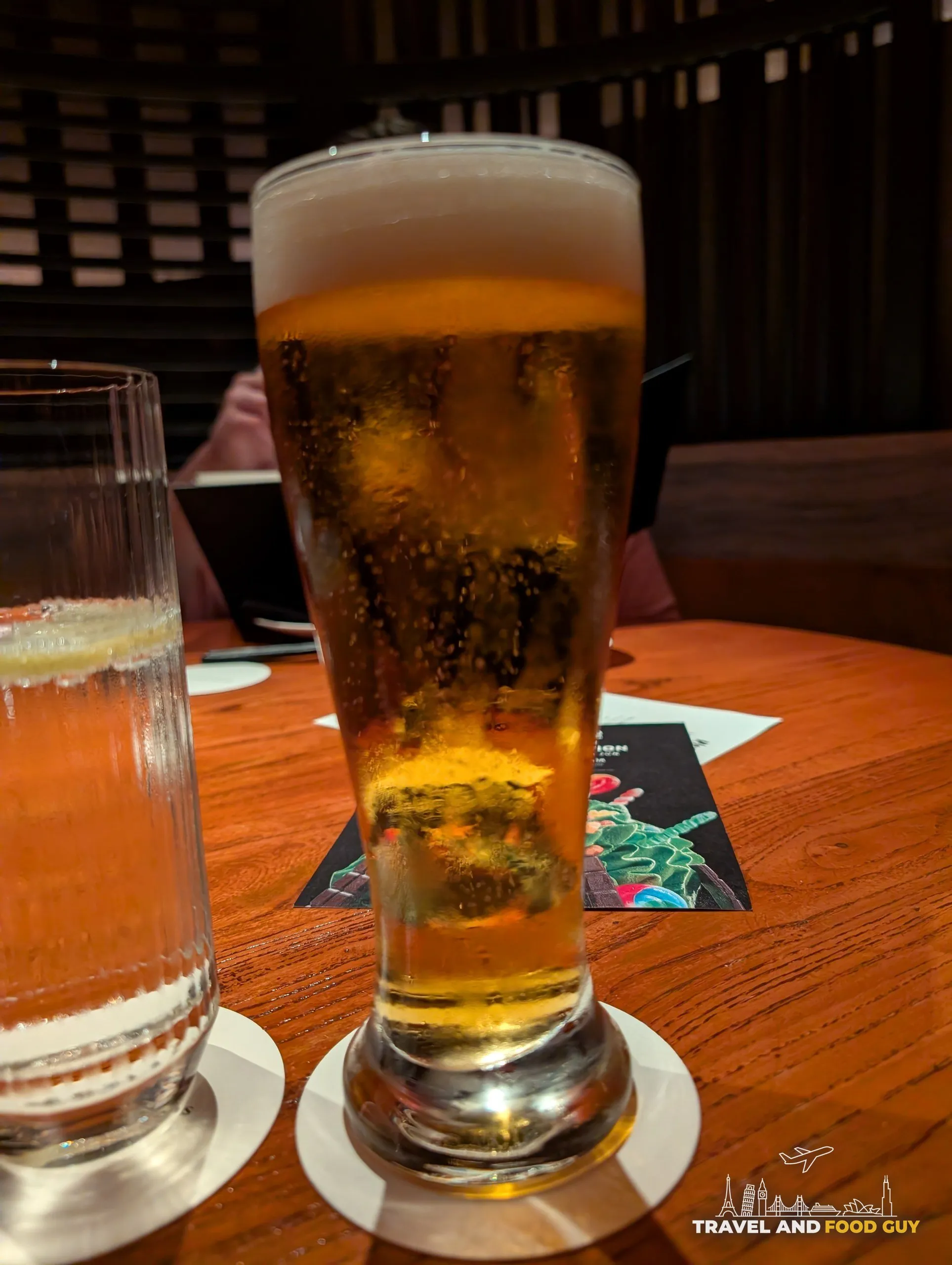
Every day is a hot day in Singapore. Even in what they call winter, you’re looking at about eighty degrees. By the time you sit down anywhere with air conditioning, a cold beer is doing serious work. KOMA has two Suntory Premium Malts on draft, both out of Kyoto. I had both. The standard Suntory Premium Malt is crisp, clean, a little bready, exactly what you want with sushi. The Master’s Dream is the one to order if you’re paying attention. It’s noticeably rounder, with a slightly sweeter malt note that holds up better as the meal stretches on. Almost a tie, I would say, but Master’s Dream wins it by a beer length.
What We Actually Ate
Three of us, dinner service, ordering for the table. Here is what landed in front of us: edamame, Hokkaido scallop sashimi, a Monaka Sushi six-piece tasting board, the 7 Treasure Vegetable roll, the Truffle Unagi roll, the Spicy Yellowtail roll, a custom three piece nigiri set (maguro, hirame, and seared otoro), the Hokkaido Scallop robata, two Negima yakitori skewers, and the Truffle Fried Rice. We did order dessert too. I didn’t take a picture of it, it looked great, but I also didn’t eat any of it. The bill landed at around five hundred and ninety Singapore dollars.
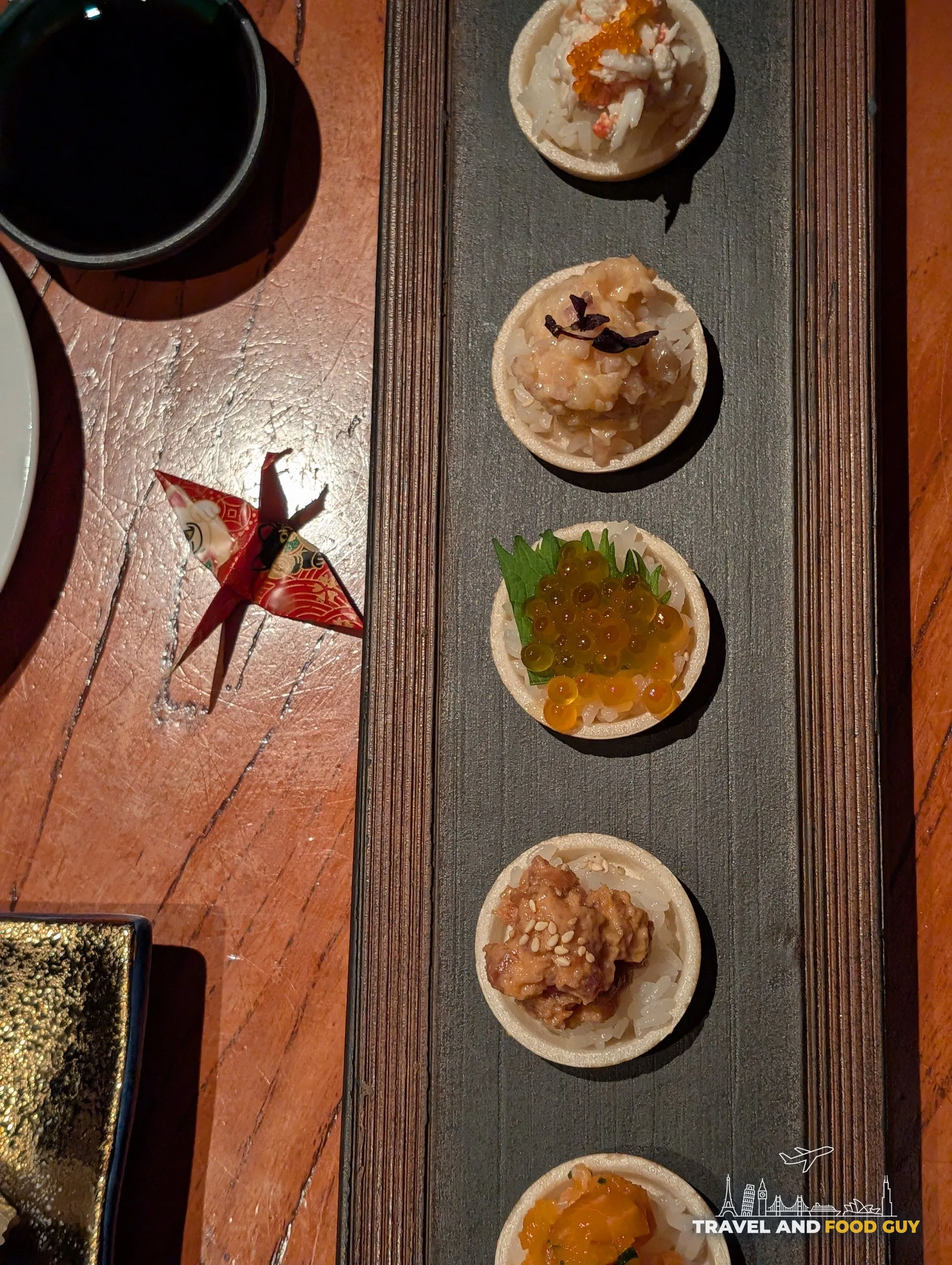
The dish that justified the prices for everyone at the table was the Monaka Sushi. Six small bites on a wooden plank, each one different. The ikura sitting on a shiso leaf was the one I went back to twice. The spicy yellowtail bite tasted the cleanest. The truffle unagi was rich but not too heavy. If you order one thing here that lives up to the bill, order this.
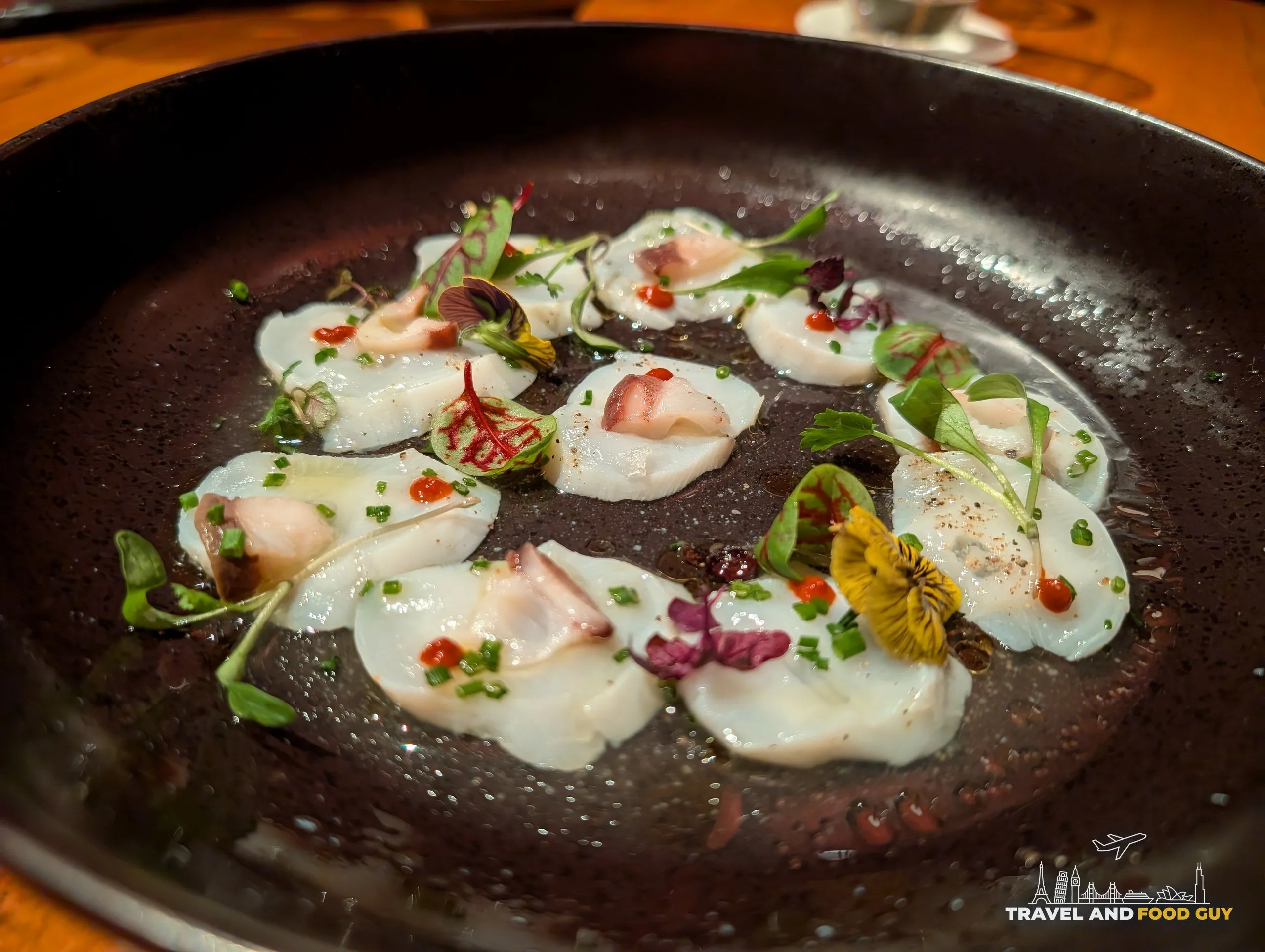
I loved the Hokkaido scallop sashimi. Paper thin slices in a dark cast iron pan, ringed with drops of scallion oil and a few mustard seeds for a little kick. Clean, sweet, properly cold. One of my favorite plates of the night. Each roll we ordered had its own very distinct flavor too, nothing tasted same-y or repetitive the way it can at some sushi restaurants where every roll ends up hiding under the same sauce.
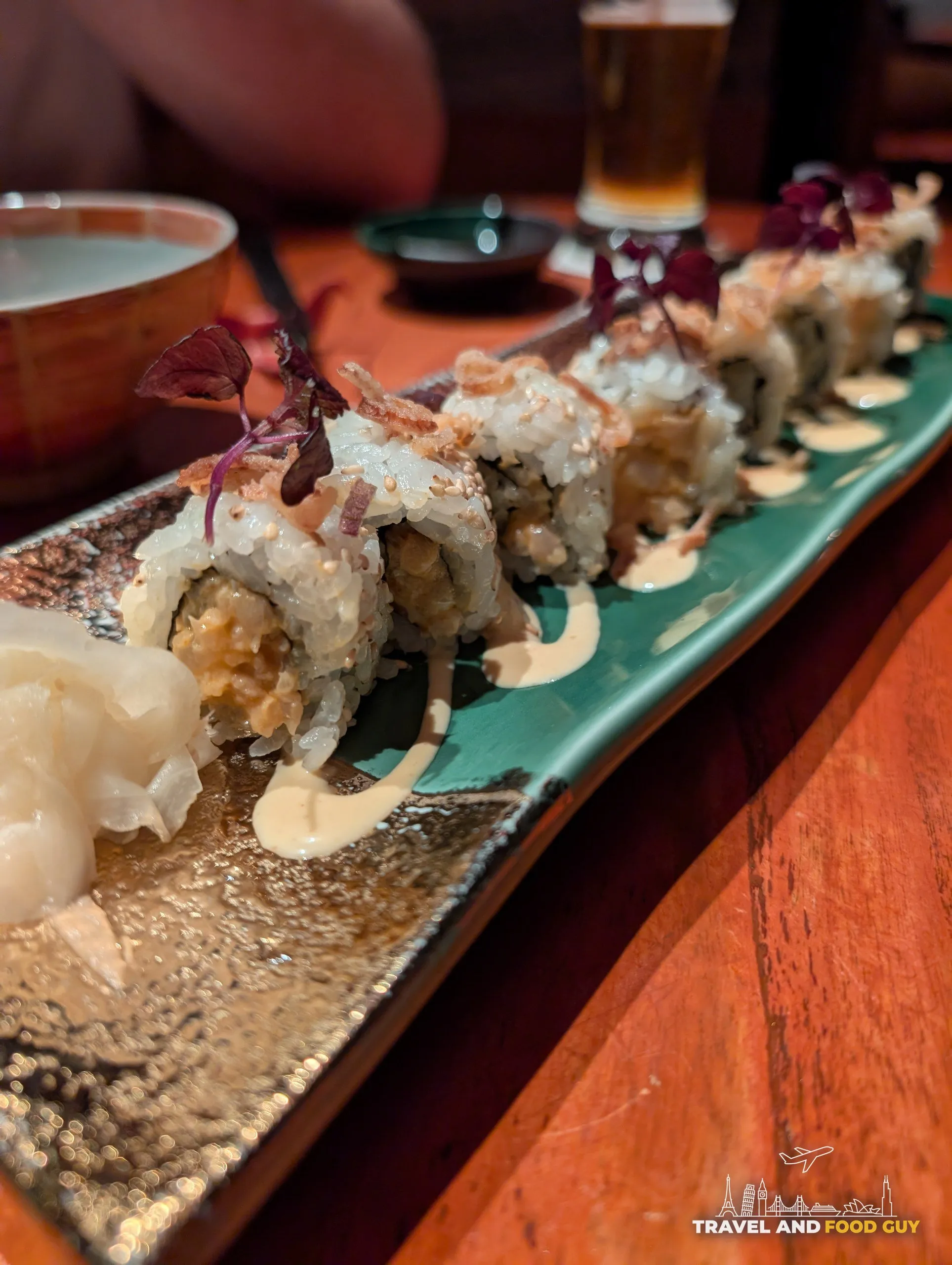
The Spicy Yellowtail roll is the one to point at when somebody asks what a signature KOMA roll looks like, topped with a haystack of crispy fried shallots and a drizzle of spicy mayo. The mayo itself was nice, on the mild side. I prefer mine a lot spicier, but I did enjoy the taste of this one, and the shallots give every bite a savory crunch you don’t usually get on a yellowtail roll.
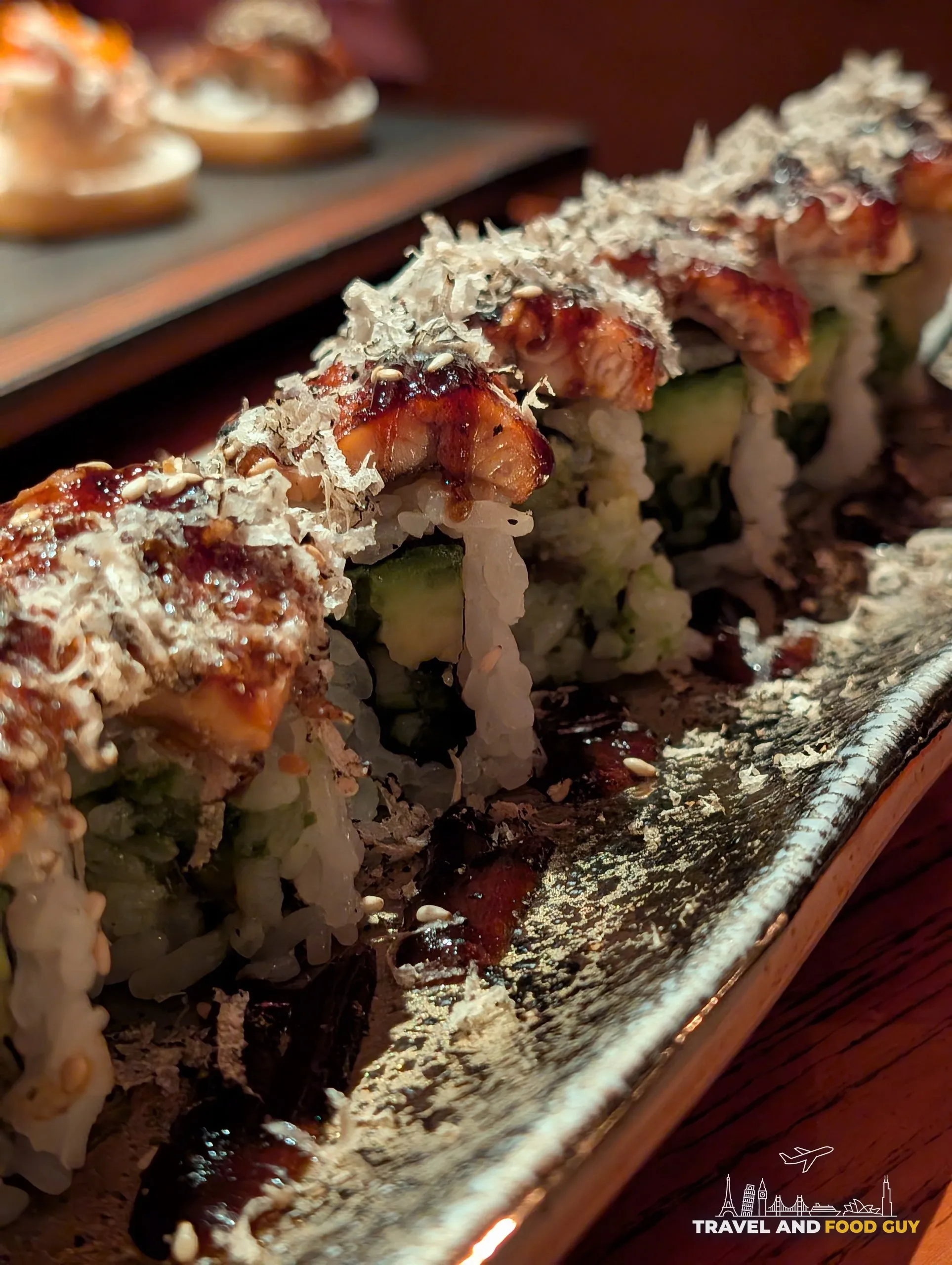
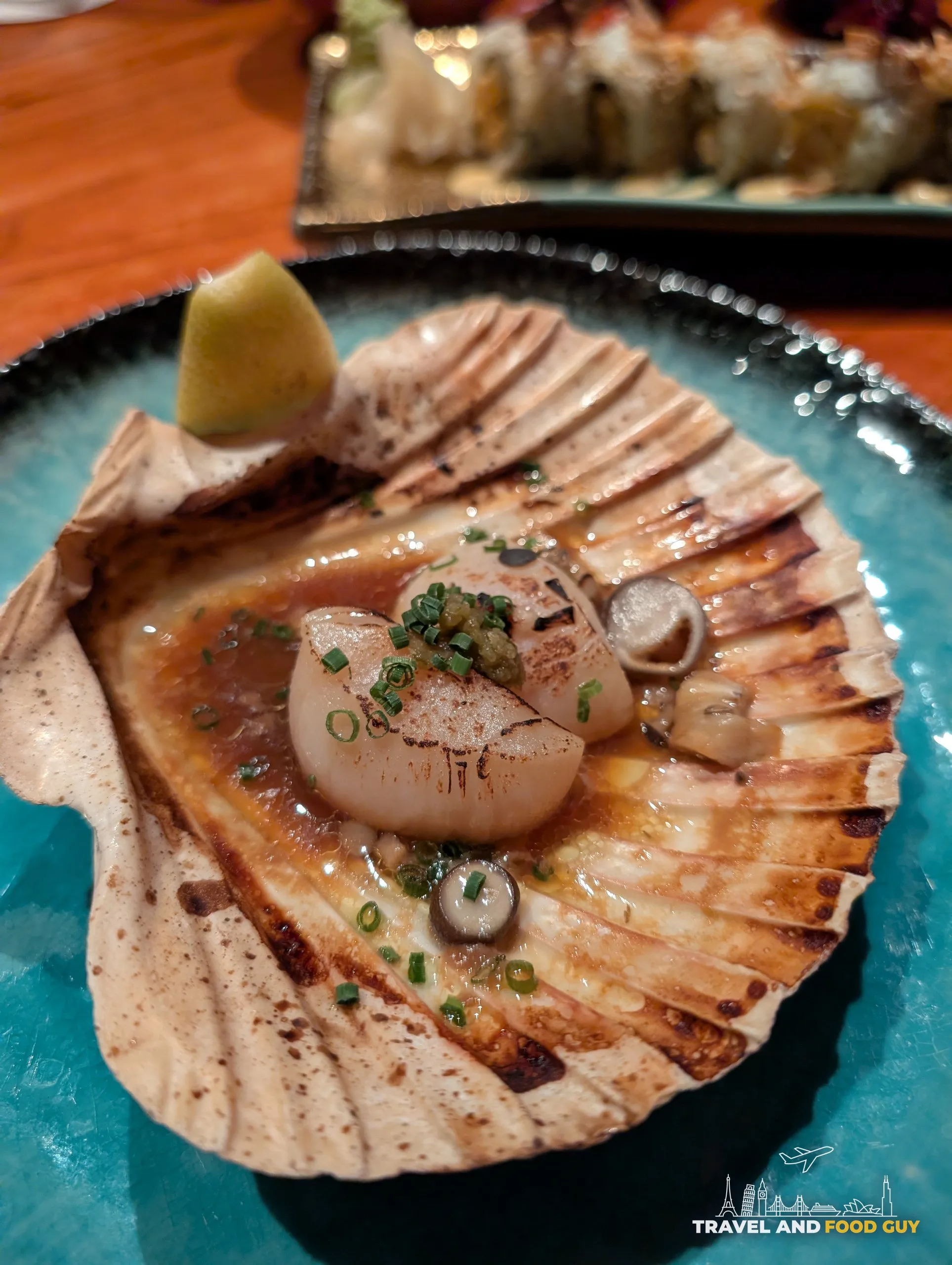
The Truffle Unagi roll is glazed in sweet soy and topped with a pile of bonito flakes that move on the plate from the heat. It’s a satisfying roll. It’s also the kind of thing where you taste it and think, “this is good, and I have had this exact roll done with more care for half this price.” The nigiri trio we picked off the à la carte list (maguro, hirame, seared otoro) was clean and properly handled but not the kind of nigiri that makes you stop talking. The grilled Hokkaido scallop served in its own shell, with butter soy and chives, was the one splurge that actually felt worth the price.
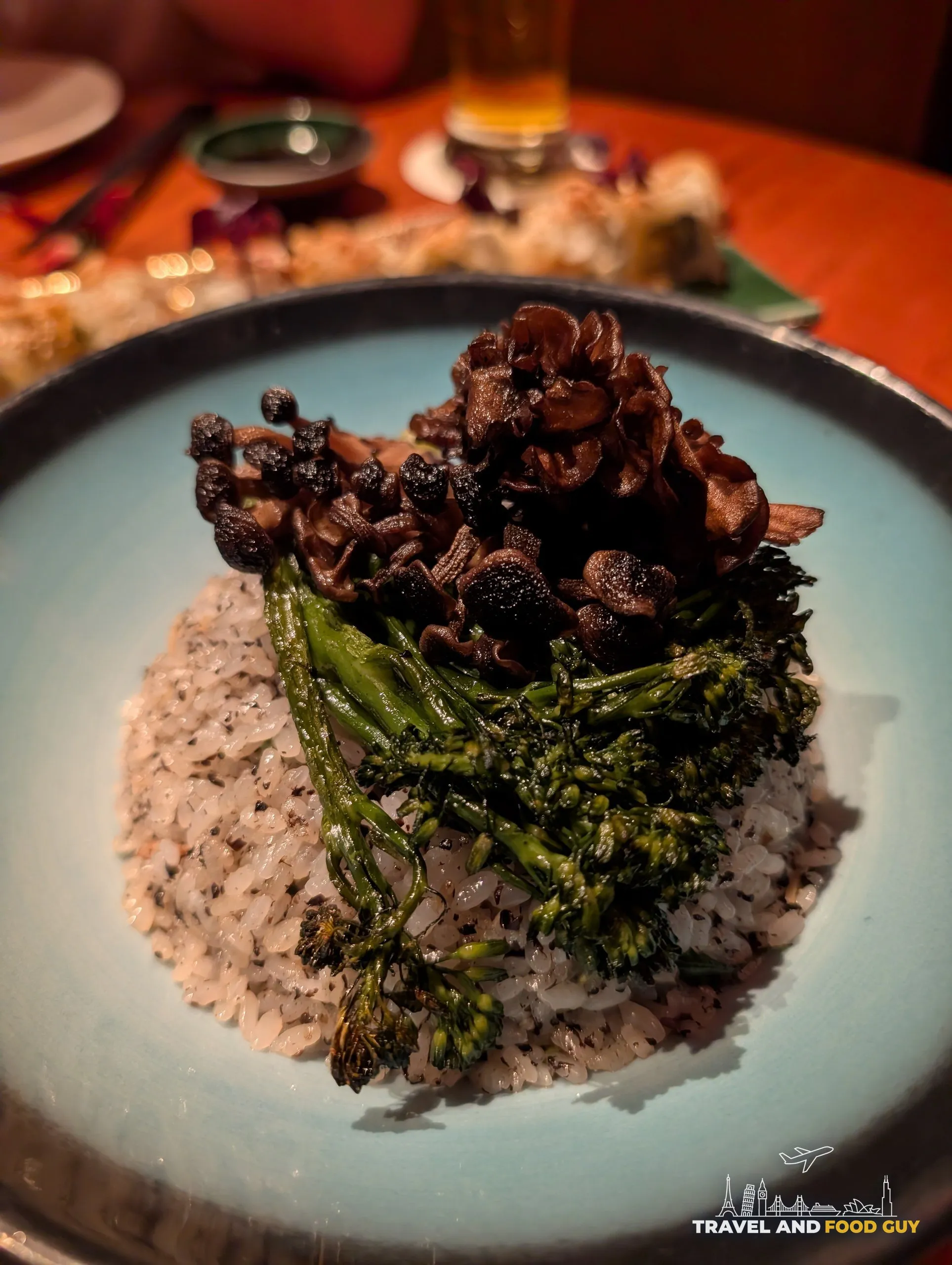
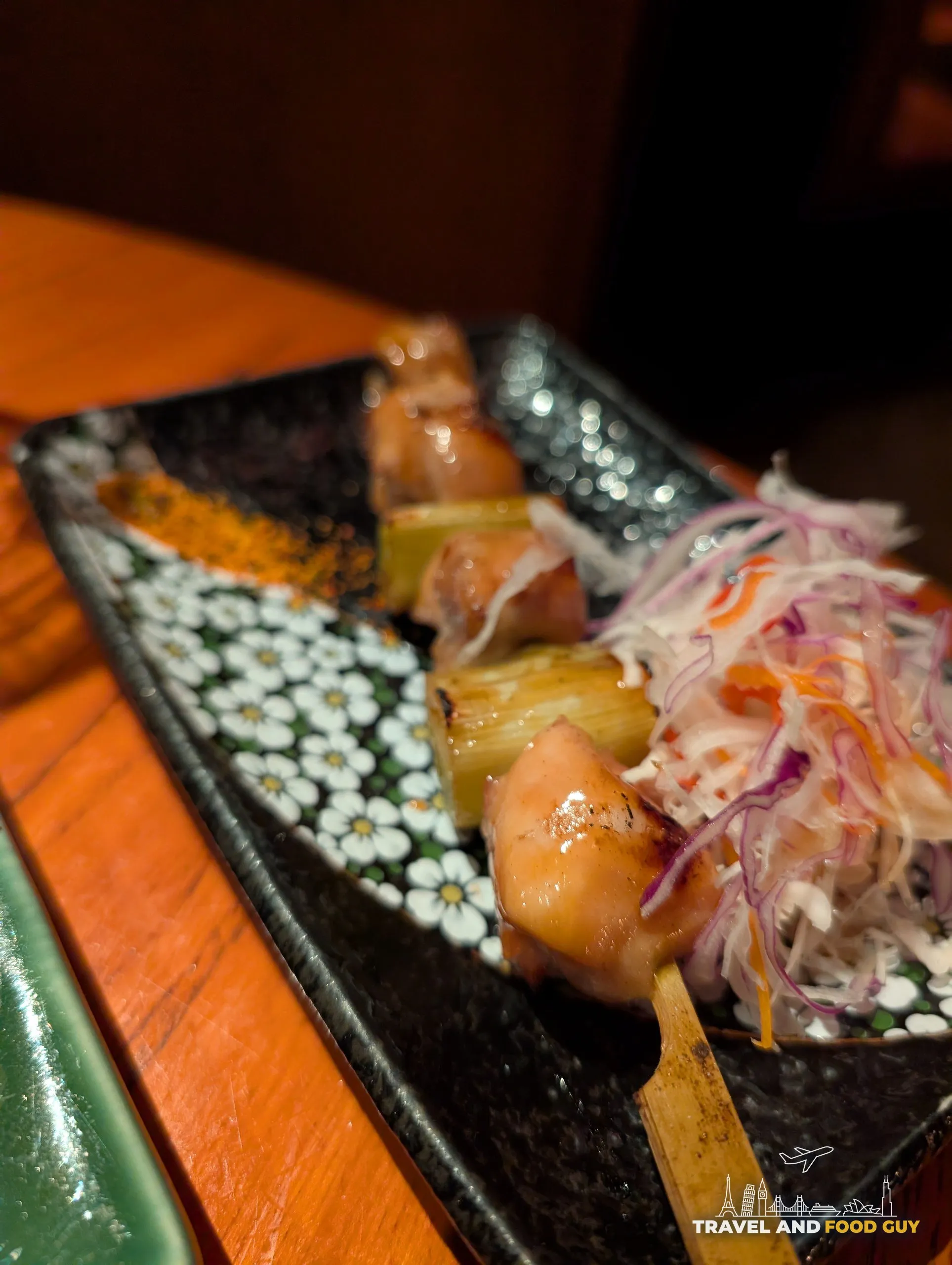
The Truffle Fried Rice was fantastic. I would not normally order fried rice when I’m having sushi, but dietary restrictions at the table are what put it on the order, and I’m glad they did. We all tried it. It wasn’t dry. It had good flavors, good sauces, and a really nice combination of every element on the plate, with maitake and king oyster mushrooms on top and a single stalk of broccolini standing up like a flag. The Negima yakitori skewers were honest, well charred, the chicken thigh juicy and the Tokyo negi sweet, but two skewers for sixteen dollars at this register is the moment you start doing math in your head.
One disappointment worth flagging: the wasabi was not real wasabi. It was the dyed horseradish paste you get at every sushi place that isn’t trying. At this price point, in this room, with the rest of the bill where it is, I would expect KOMA to either serve real wasabi or at least offer it as an upcharge. They do neither, and that’s the one cost saving move they made that you can taste.
The Gluten Free Menu Is Real (and That’s Why We Came)
One of the reasons we landed at KOMA in the first place is that one of my coworkers is gluten intolerant, and KOMA has one of the most extensive gluten free menus you’ll see at a restaurant this size. Not a single asterisk on a regular menu, not a “we can probably do that” from the server, an actual second menu they hand you when you ask. That alone bought KOMA a lot of goodwill at our table. If you’ve ever traveled with somebody who can’t eat gluten, you know how rare it is to walk into a sushi restaurant in another country and have the staff confidently route around it. KOMA pulled it off without making it a thing. That matters, and it matters a lot more than most reviews of this place will tell you.
For balance: I’ve also had sushi at smaller spots in Singapore where the server didn’t speak much English but still managed to flag every menu item with gluten and quietly hand over a plate of pristine sashimi. KOMA isn’t unique in caring. It’s just unusually good at making the gluten free guest feel like a normal guest, and that is a real positive worth paying a little extra for.
The Bill, and What You’re Actually Paying For
Three of us, two beers between us, all the dishes listed above plus a dessert. The total came to roughly five hundred and ninety Singapore dollars. That’s around four hundred and forty US dollars when you check the rate. Per person, you’re looking at close to two hundred Singapore dollars for a dinner that, on the food alone, would land at about a hundred Singapore in a quieter part of the city. So where does the rest of the bill go?
What it cost: about $590 SGD for three people, covering edamame, ten sushi and robata items, two Suntory drafts, the Truffle Fried Rice, and a dessert. No cocktails, no sake on this visit.
You’re paying for the room. You’re paying for being inside Marina Bay Sands, in a mall that turns shopping into a theater. And you’re paying, whether you realize it or not, for the fact that KOMA is part of TAO Group Hospitality, the same company behind Tao, Hakkasan, Marquee, and LAVO. I figured that part out later, doing the research while writing this, and the whole experience clicked into place. TAO Group restaurants are not really about the food being the best you’ve ever had. They’re about the room being the best you’ve ever sat in, the playlist being the right kind of loud, and the night feeling like a story. The food is good, honestly very well done. It’s just not the main thing.
The other piece of the bill is the celebrity factor. Taylor Swift was photographed eating here during her Singapore Eras Tour stop, and KOMA has been riding that wave since. None of that has anything to do with the sushi, but all of it is in the price.
Where I’ve Had Just As Good Sushi For Half the Price (In Singapore)
The honest comparison, because the whole reason to write this is to give you something the rest of the internet won’t: Hanashizuku Japanese Cuisine, also in Singapore, is where I’ve had sushi just as good as KOMA’s for roughly half the bill. No bronze bell, no torii hallway, no Taylor Swift, no Marina Bay Sands address. Just clean, careful sushi served by people who care more about the fish than the lighting. If you are coming to Singapore and your single goal is to eat the best sushi for the money, that is where I would send you.
None of that means KOMA is bad. It means the two restaurants are selling different products. KOMA is selling a night out. Hanashizuku is selling a meal. Decide which one you came to Singapore for and your decision gets easier.
Would I Bring the Family Back?
This was a work trip dinner with coworkers. Vika, Josh, and Emily weren’t with me. But I run every place I eat through the same filter anyway, because that’s how our family travels. Would I bring them here? On a return trip to Singapore, with money set aside specifically for one impressive dinner, probably yes. Josh would like the food, the vibe, and would happily live on the California roll. Emily would love that Taylor Swift ate here and the Instagram photo ops the room hands you for free. Vika would like the sushi, but not the price. For a casual family sushi night, no. There are quieter, cheaper, equally satisfying sushi spots in Singapore for that.
The Verdict
Beautiful room, very serious gluten free coverage, fresh sushi competently done, two Suntory drafts that taste like they were brewed for this kind of night, and a bill that is paying for the story as much as the food. If you have the money to spend on the experience and you want to walk out with a night to talk about, KOMA is worth the visit. If you came to Singapore specifically to eat the best sushi for your money, eat at Hanashizuku and put what you save toward a cocktail at the KOMA bar instead, which I think is the smartest play this place gives you. Go for the room and the story. Eat the sushi anywhere else.
I posted a few short videos from this visit on Instagram. The torii hallway, the bell, the dining room from the upper floor. Head over to @travelandfoodguy if you want to see it move.
Another Singapore dinner worth planning around: Broth & Beyond hot pot at CHIJMES. And if you are still choosing a hotel, here is our Singapore Marriott Tang Plaza review. For the bigger trip, my Singapore stopover guide shows how I would fit the food, hotel, and sightseeing together.
Have you been to KOMA at Marina Bay Sands, or do you have a Singapore sushi spot you would send a friend to instead? Drop it in the comments. I’m building out my Singapore list for the next trip and I want yours on it.