
Italy . Travel Tips . Family of Four . Trains, Vaporetto, Metro, Apps (and the Catches)
It was four in the morning on the last day of the trip. We were in Lido di Ostia, the beach town outside Rome where we’d spent the back half of our two weeks in Italy, and we had an early flight to catch out of Fiumicino. We’d pre-booked the cab through the ride-hailing app the night before, intentionally. After a week and a half of bad luck flagging cabs in Rome (which I’ll get to later in this article), I wasn’t going to gamble at four in the morning on whether a car would actually show up. Pre-booked the night before, locked the time, the dot was already coming when we walked downstairs with the bags. Easy.
Halfway through the ride, the driver mentioned that there would be a couple of small extras on top of the app price. Four euros per bag in the trunk. Two euros per extra passenger past the second. With four of us and our luggage, it added up.
I didn’t argue. Five in the morning, foreign country, family in the car, flight to catch. I paid, we got on the plane, and later that week I googled it from home. The per-bag and per-extra-passenger thing turns out to be common in parts of Italy. Some drivers add it. Some don’t. The app never warned us.
That moment ended up shaping the whole article. We just spent almost two weeks moving a family of four through five Italian cities without a rental car. Trains between Rome, Florence, and Venice. The vaporetto network in Venice, the metro down to Lido di Ostia, the Rome Hop-On / Hop-Off, ride-hailing apps, a guided day trip out to Pisa. Most of it was excellent. One piece needs a warning label. The trains are the spine, the apps are usually faster and cheaper than the cab stand, but a ride that starts as a fixed-price app booking can still end with surcharges if the driver decides to add them. Pay attention to the bill.
This article is not sponsored. Nothing was comped. It does include affiliate links, including to the Pisa half-day tour we took through Viator. If you book the same tour through that link we get a small commission at no extra cost to you. Everything else in the article is unaffiliated.
This is a family-of-four read, written for the family-of-four reader. Vika, our teenagers Josh and Emily, and me. The whole trip was built on the idea that we could move like locals instead of like tourists with a fleet of vans, and that turned out to be the right call. Here’s how each piece of it actually worked. If the food side of the same trip is what you are after, here is the meals worth the money across five Italian cities.
The Trains Are the Spine of an Italian Trip
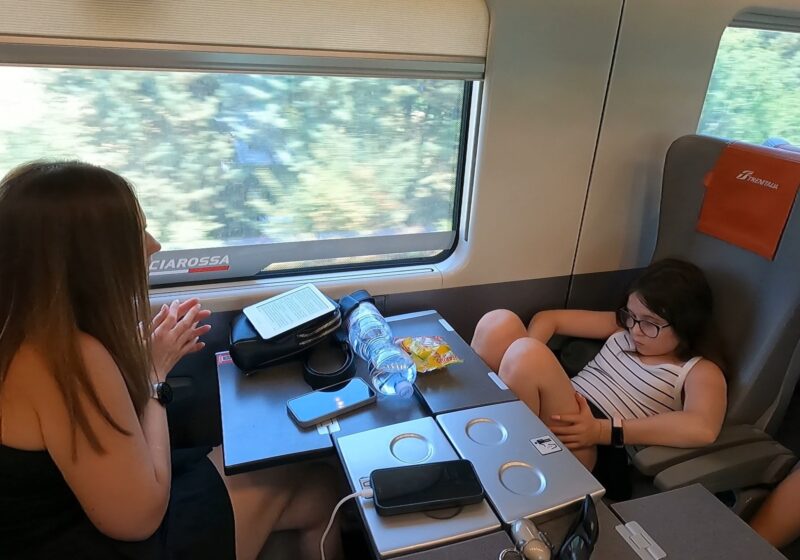
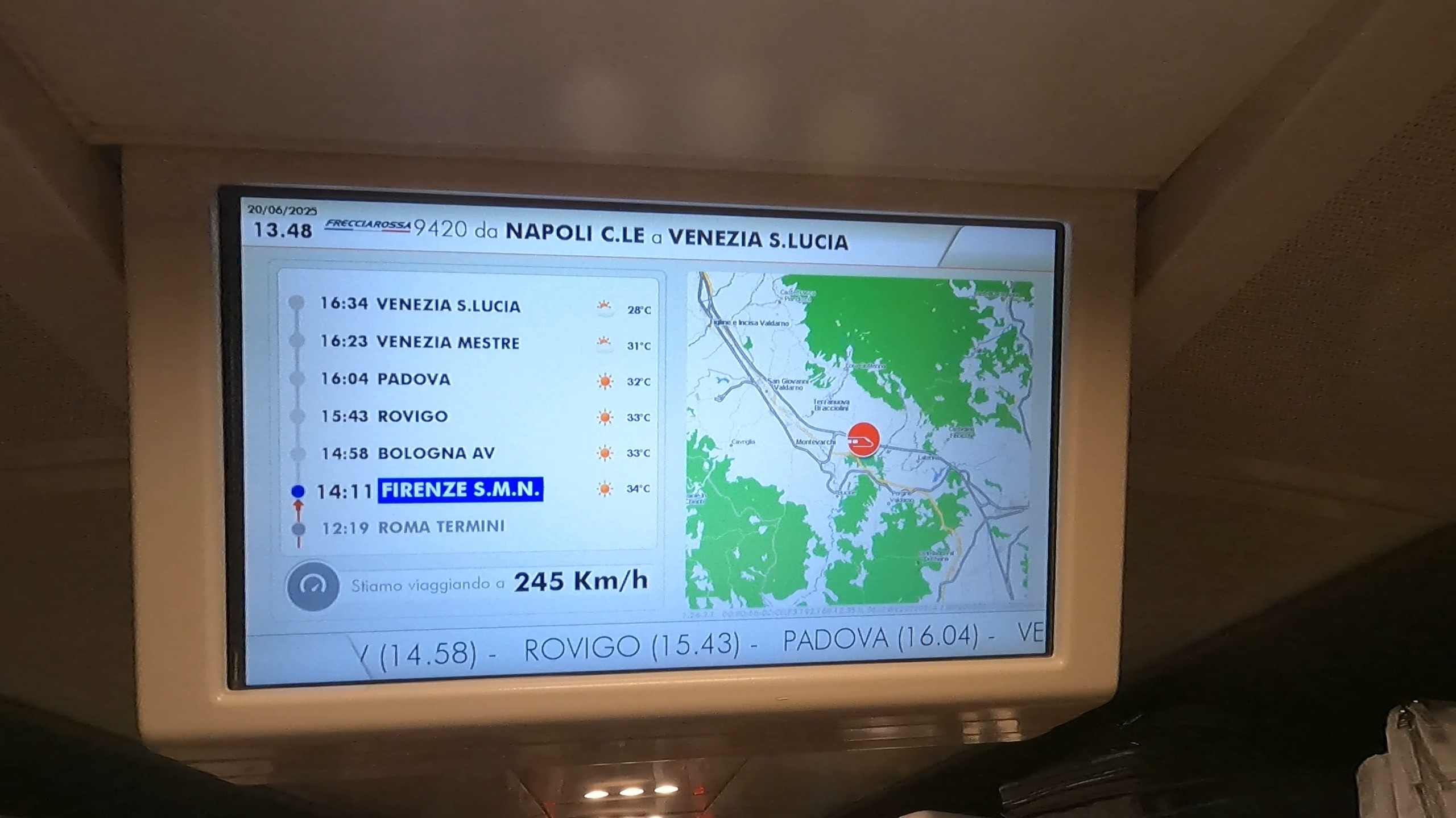
If you only learn one thing about Italian transit, learn this. The high-speed network connects everywhere you actually want to go on a first trip. The trains are fast, clean, and have plenty of room. We did three high-speed segments and they were the easiest part of the whole trip.
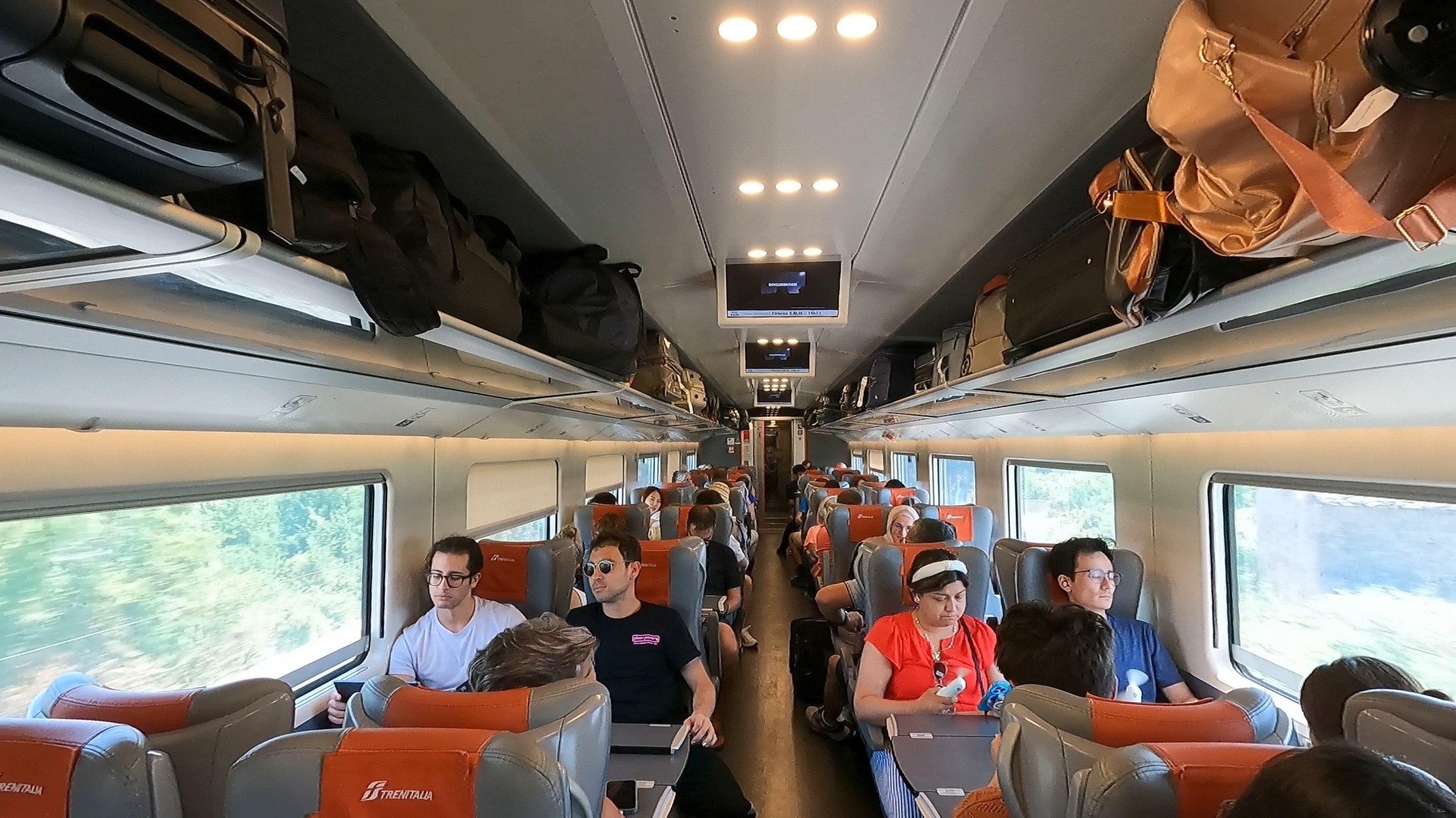
We rode Trenitalia for all three legs (not Italo) and we pre-booked through ItaliaRail. That’s a third-party reseller with a clean English-language flow. Same trains, same seats, same Trenitalia ticket at the end of it. If you’ve never bought a European train ticket before, the English flow takes a lot of the guesswork out, and the prices were essentially the same as buying direct.
Practical note on when to book. A few weeks out is the sweet spot for the best Standard fares. The cheapest tickets disappear closest to the travel date, and last-minute Standard can creep up to almost what Premium costs. Premium has less price flexibility but the availability holds longer, so if you’re a late planner, Premium becomes the more predictable bet.
Here’s what it cost the family of four, booked in advance:
- Rome to Florence, Standard seats: €54.90
- Florence to Venice, Premium seats: €157.24
- Venice to Rome, Standard seats: €224.58
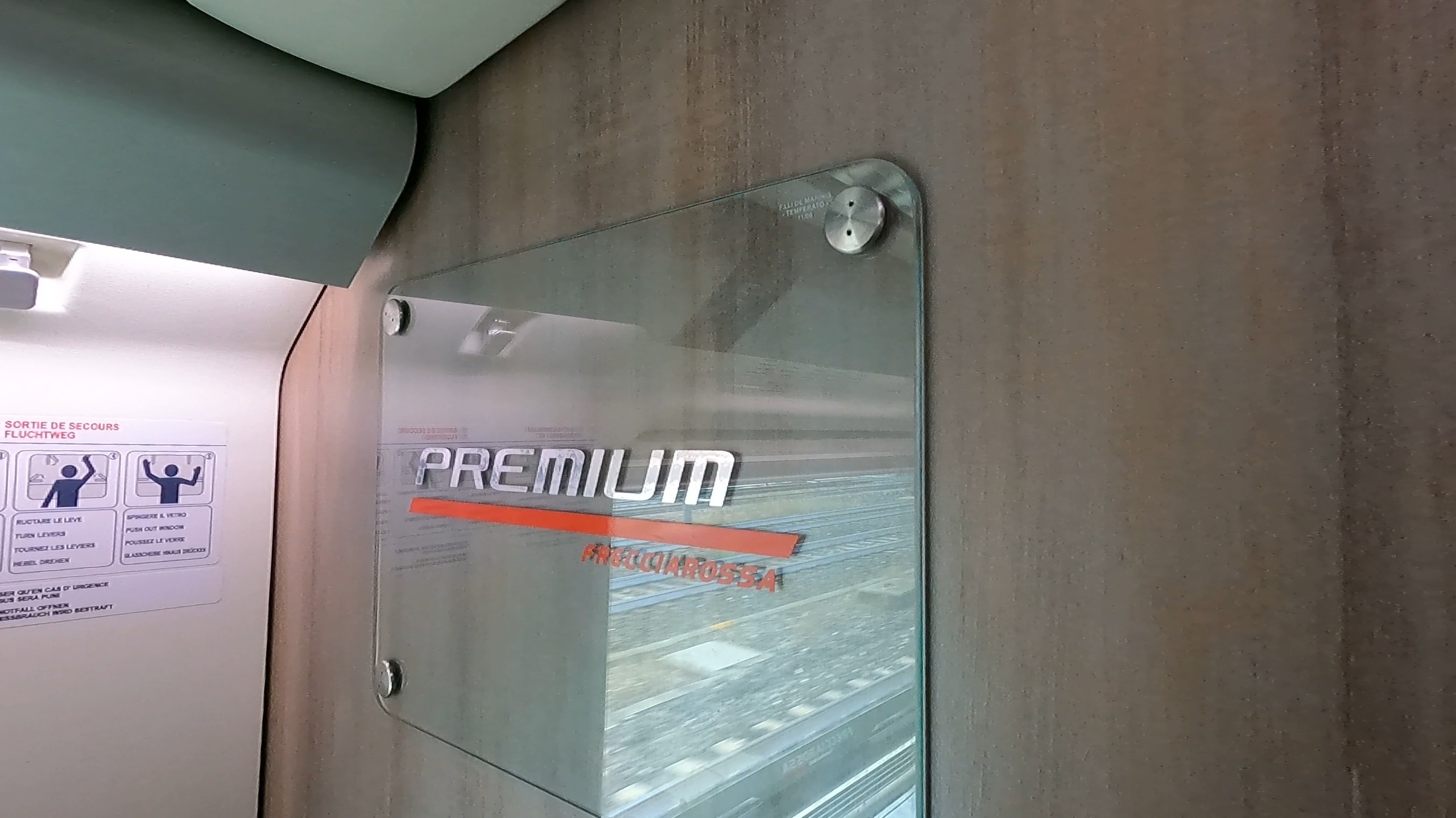
About the Standard versus Premium thing. The way I’d explain it is, it’s like flying United versus what Spirit Airlines used to be. You still get from point A to point B, you still get service, but what’s included is different. Premium gets you a slightly nicer seat and a small snack. Standard gets you the seat and the ride.
One thing to be clear on. Premium isn’t first class. Trenitalia’s Frecciarossa has tiers above it called Business and Executive, and those are the proper premium cabins. Premium is just the step up from Standard. A nicer chair, a small snack, and you’re done.
On the Florence to Venice leg the upgrade to Premium ran us about twenty dollars more for all four tickets combined, and at that price it was worth it. On Venice to Rome we went Standard and it was still totally fine. So I wouldn’t say you have to upgrade every leg. Look at the difference for your specific train and your specific day, and if it’s small, take it.
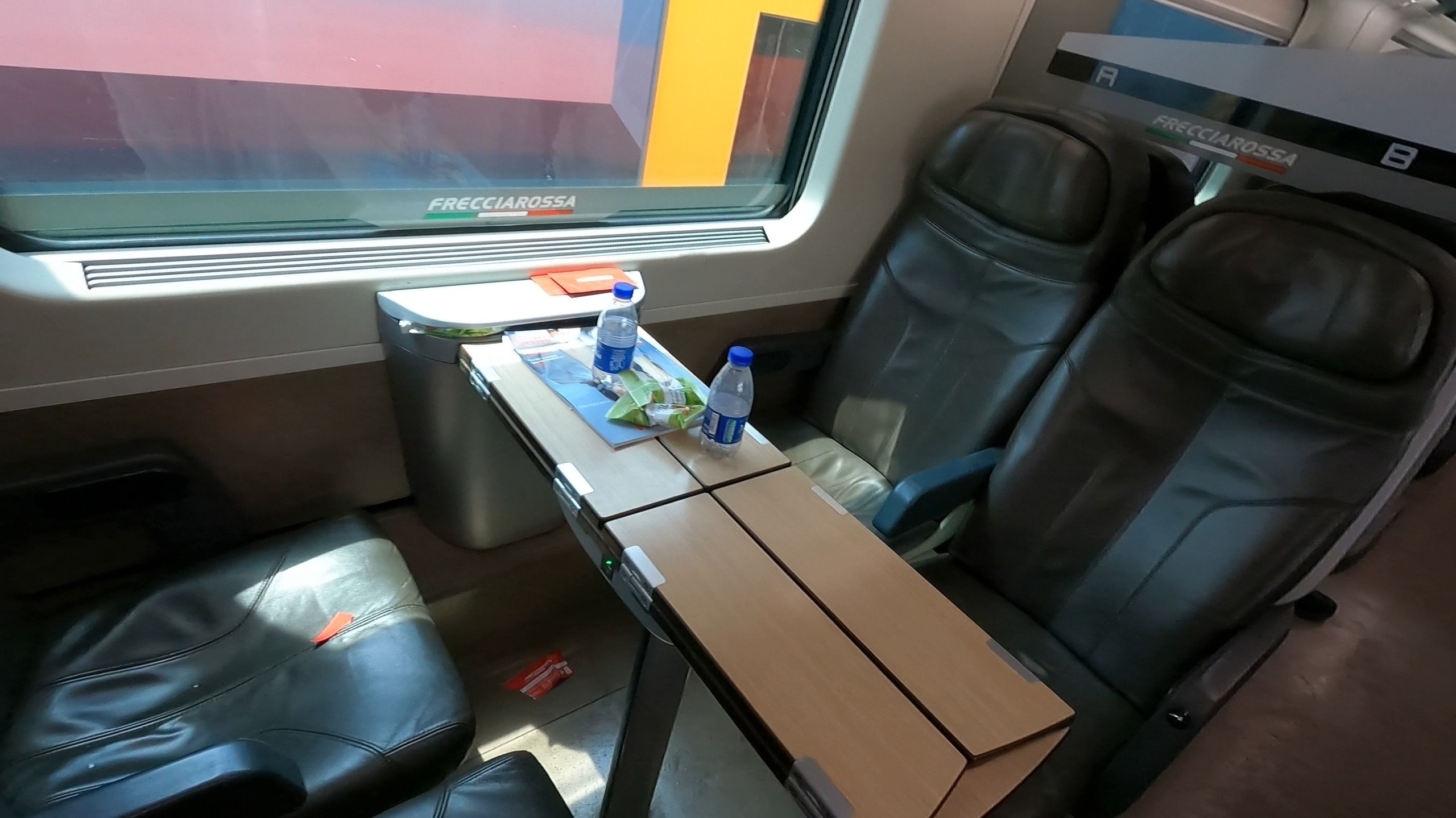
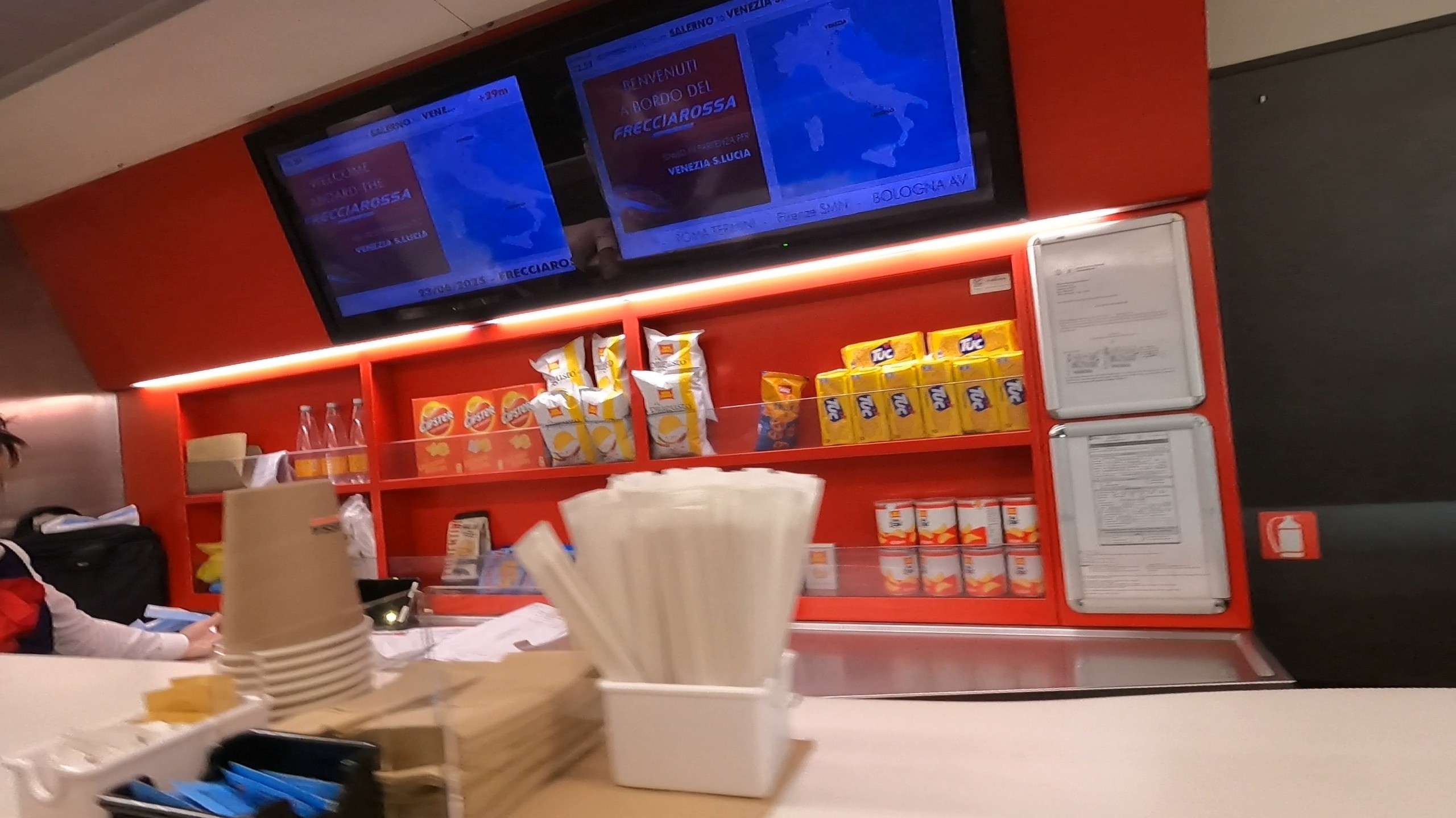
The thing I’m a little sad we didn’t do is the overnight sleeper train. We had the option for Venice to Rome and we talked ourselves out of it because we were worried about the train being late and us missing our flight home. If we were doing this trip again and we had a buffer day on the back end, I think we’d try it. That’s on the list for next time.
A Note on Train Strikes
One thing nobody warned us about. When our app driver came to take us to Roma Termini for the Florence leg, she looked up our specific train, saw it was a strike day, and warned us the train might not be running. That was the first I’d heard of it.
Italian rail strikes happen. The thing we learned, which I want to pass on, is that the main intercity high-speed trains usually keep running through a strike day. Trenitalia is required to operate a guaranteed minimum service for those routes. So our Frecciarossa went out on time and we made our connection. But still, on a strike day, check your specific train number before you head to the station. Don’t assume.
Venice Runs on Water, Not Roads
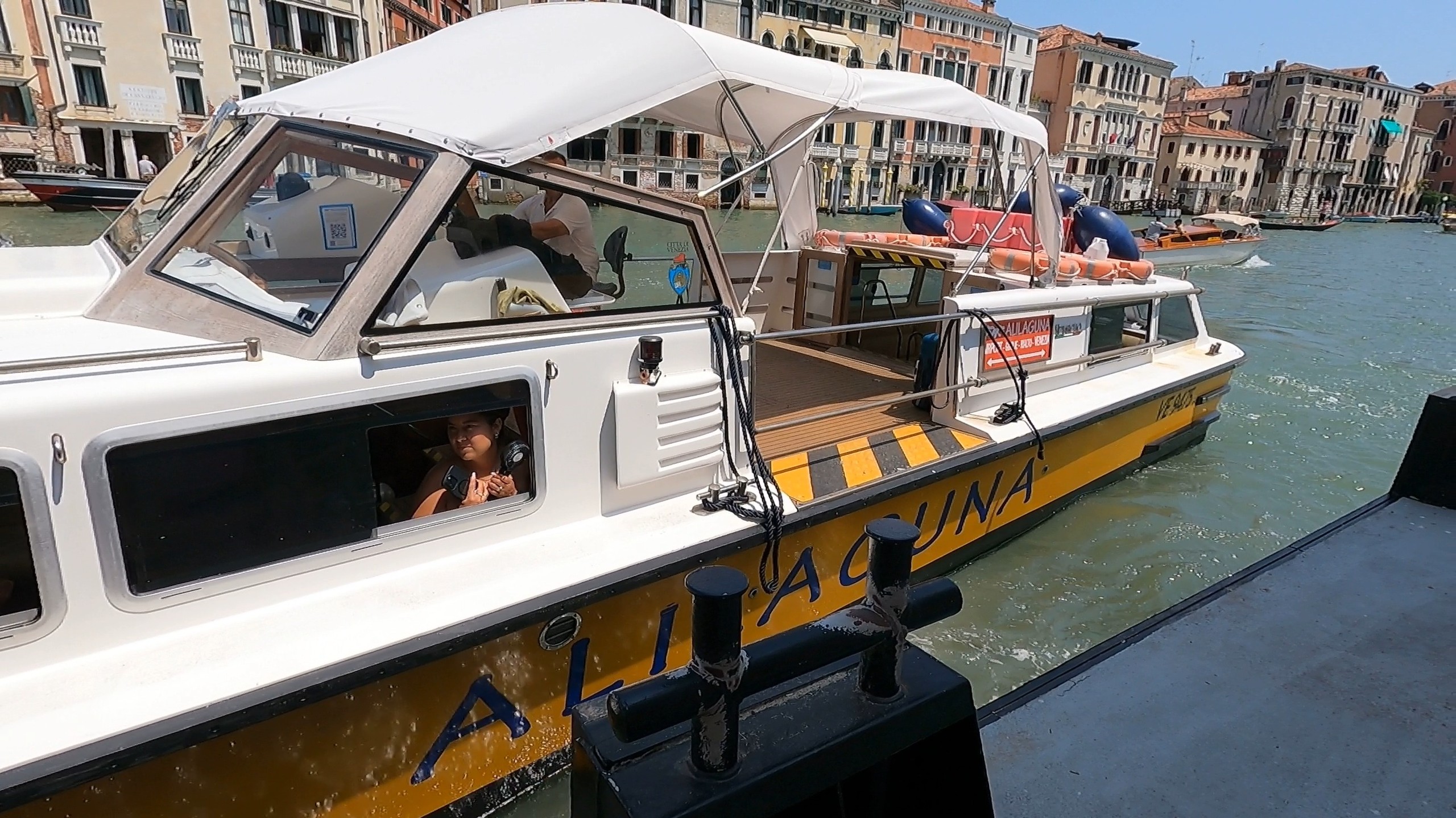
The first thing you do when you get to Venice is buy a vaporetto pass. The vaporetto is the public boat-bus network that does everything a metro would do in a normal city, except it does it on water. You can ride to Murano, ride to Burano, ride out to the Lido beach, and ride the Grand Canal at sunset for the same flat pass.
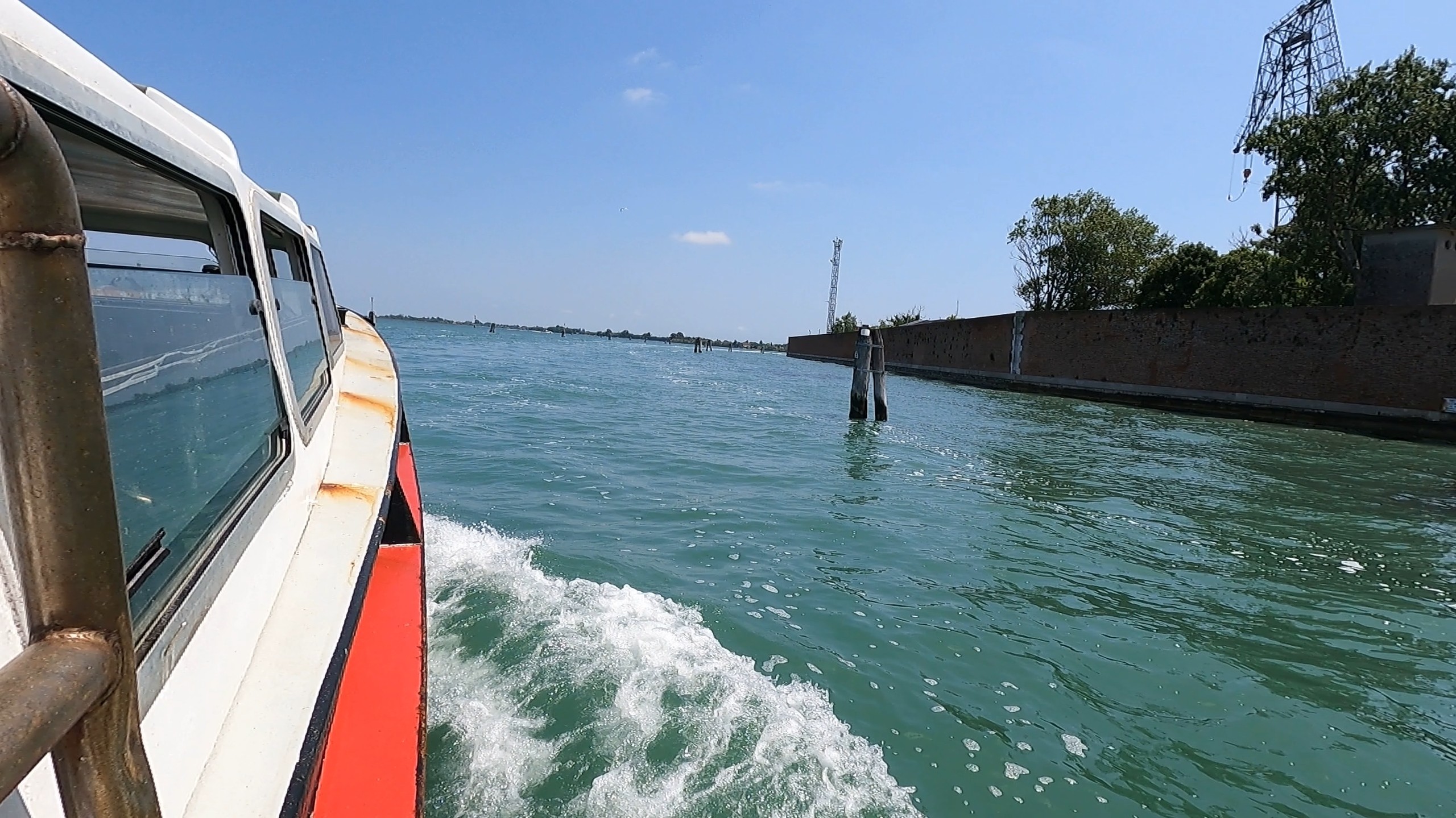
We bought ours at the Vela SPA office at Rialto. For our family of four, the multi-day pass came to right around €140, or about $160. That number sounds like a lot until you do the math on what we used it for over three days. Two round-trip runs out to Murano and Burano. A run out to the Lido di Venezia beach. The slow cruise down the Grand Canal more than once, because the view doesn’t get old. Walking-distance hops between neighborhoods we didn’t feel like walking. If you tried to do that on per-ride tickets you’d spend more.
The pass also takes the stress out of decisions. You’re not standing at a dock doing mental math on whether the next stop is worth the ticket. You’re just hopping on. That’s the part that makes Venice feel like Venice instead of feeling like a logistics puzzle.
The family verdict on the vaporetto is the easiest one in this whole article. Get the pass. Get it on day one. Use it.
A Word on Google Maps (Especially in Venice)
I used Google Maps to get around everywhere in Italy. Rome, Florence, the Pisa walk, Lido di Ostia, every train station, every restaurant. Venice was no different. Honestly, I don’t know how I’d navigate the tangle of Venice’s little streets and alleyways without it. I completely respect that millions of people have done Venice on paper maps for centuries and still do, but a phone in your hand makes the city so much easier to figure out.
Two caveats from our trip. In some of the tightest Venice corridors you’ll lose reception, so the map will hang or send you the wrong way at exactly the moment you most need it. Build in a buffer when you’re trying to get somewhere on a schedule. And on the safety side, walking around with your phone visibly out the whole time makes you an easier target for pickpockets, which are a real thing in Italian tourist cities. The technique I used in busier areas was to listen to the navigation through one earbud under a hat, glance at the route on my Apple Watch when I needed a visual, and only pull out the phone occasionally to recalibrate. Phone out of pocket only when the moment calls for it, not as the default. It’s a small change, but it really cuts down your risk.
Rome Metro and the Tap-and-Go System
The Rome metro is honestly underrated. We tapped in with a contactless credit card at the gate using the ATAC Tap and Go system, and at €1.50 a ride per person, it’s the cheapest moving you can do in the city. No machines, no kiosks, no paper tickets, just tap your card against the reader and walk through.
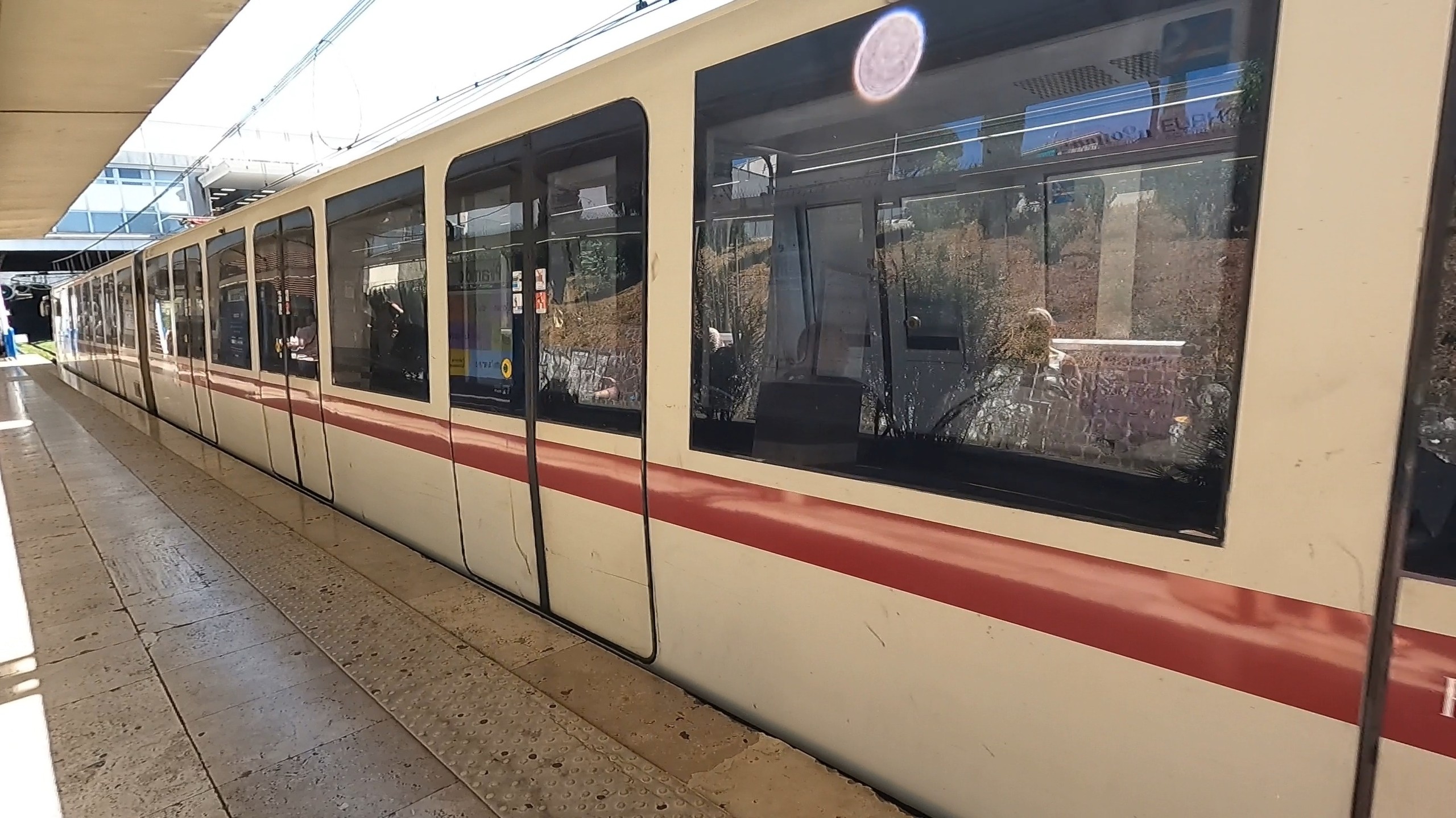
The most useful single ride we took was the metro out to Lido di Ostia after we got back into Rome from Venice. That’s the move that lets you do the last few days of an Italy trip from a beach town instead of from a Rome hotel, and the metro makes that almost free.
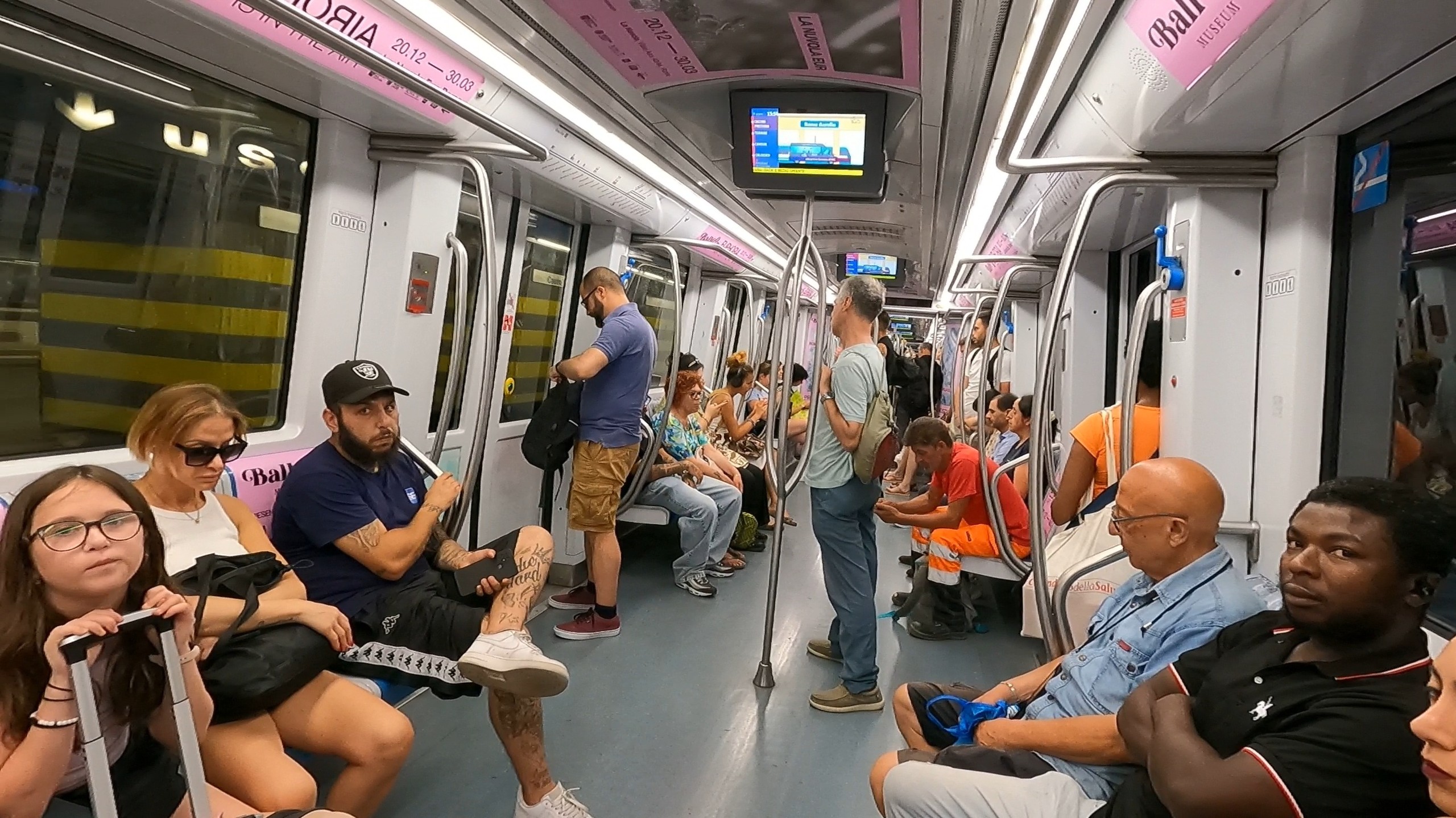
The catch with the metro is that it doesn’t go everywhere you might want. Rome’s network is smaller than what you’d expect from a city this size. You’ll combine it with walking, with the Hop-On / Hop-Off, and with the occasional ride-hailing app. But for what it does cover, it’s fast and dead simple.
The Rome Hop-On / Hop-Off (And Why We Do This in Every City)
The Hop-On / Hop-Off is a tool we use in almost every new city we visit. Not as our primary way to get around. As a first-pass scouting tool. You buy the ticket on day one or day two, you ride the full loop once, you see the major sights from the comfortable open-top deck, and by the end of that loop you have a real map in your head. You know what’s worth coming back to and walking around. You know what was enough to see from the bus and check the box on. That’s the whole game. See it all once, decide what’s worth the time, and come back to those.
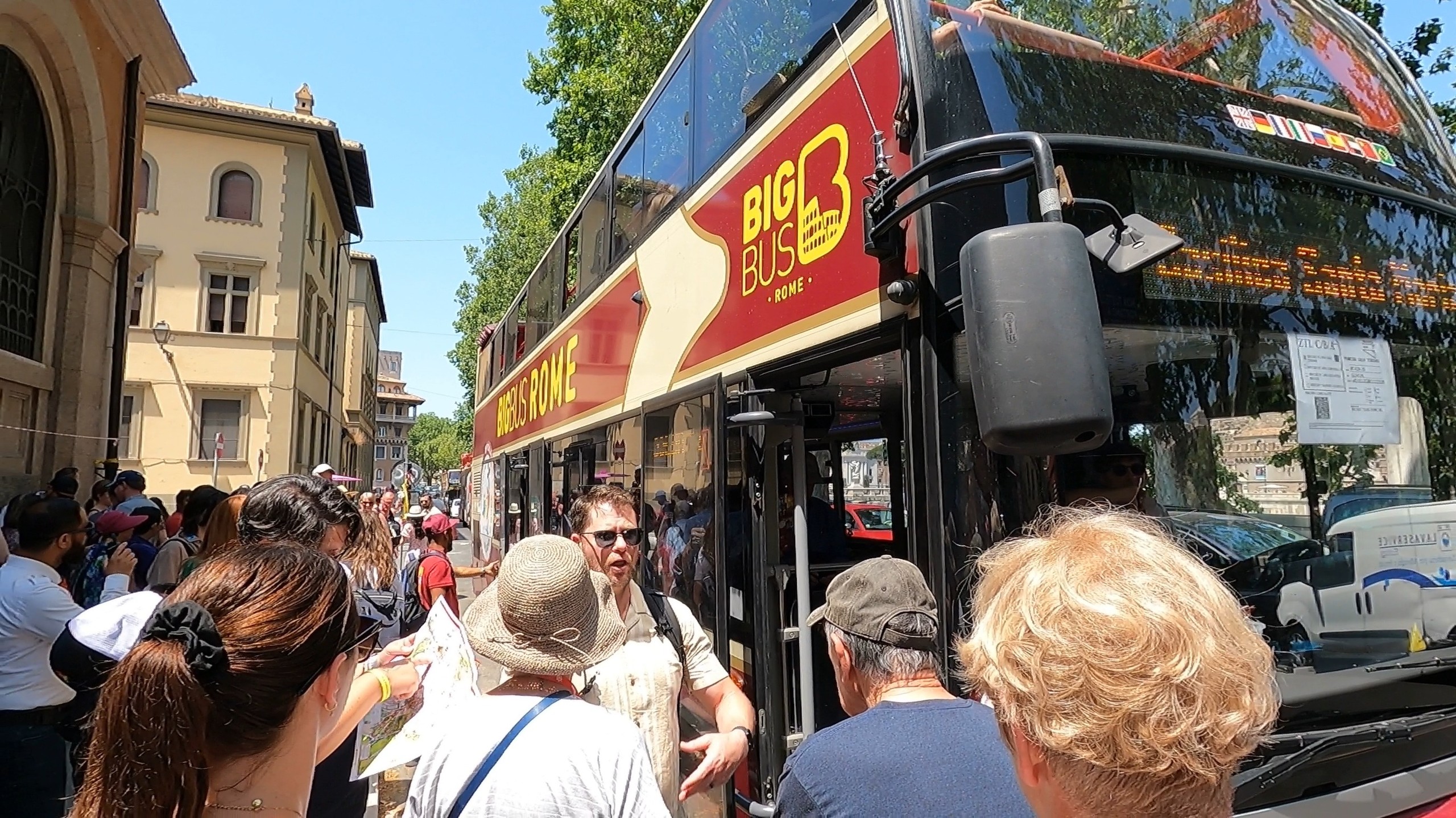
In Rome we bought the family ticket at about €115, which is around $130 for the four of us. That was a two-day pass, not a 24-hour, so it stretched across two days of sightseeing for the same family price.
How we actually used it. We wanted to see all the major Rome sights and we did see most of them. The loop passed the Colosseum, the Trevi area, the Vatican side of the river, the Piazza Venezia, and a few other major stops. The full loop gave us a map in our heads of what was next to what, which let us combine neighborhoods on our walking days. For some sights, the drive-by view from the upper deck was honestly enough to call it. For others, especially the Colosseum and the Vatican side, the loop was the scouting pass, and we came back later to spend real time there. The first HOHO stop was about a fifteen-minute walk from our Airbnb, so we’d walk over to start the day from there, then use the bus to get to whatever we wanted to see first, and sometimes use it again at the end of the day to get back to that same stop near the apartment. Multi-purpose tool out of one ticket.
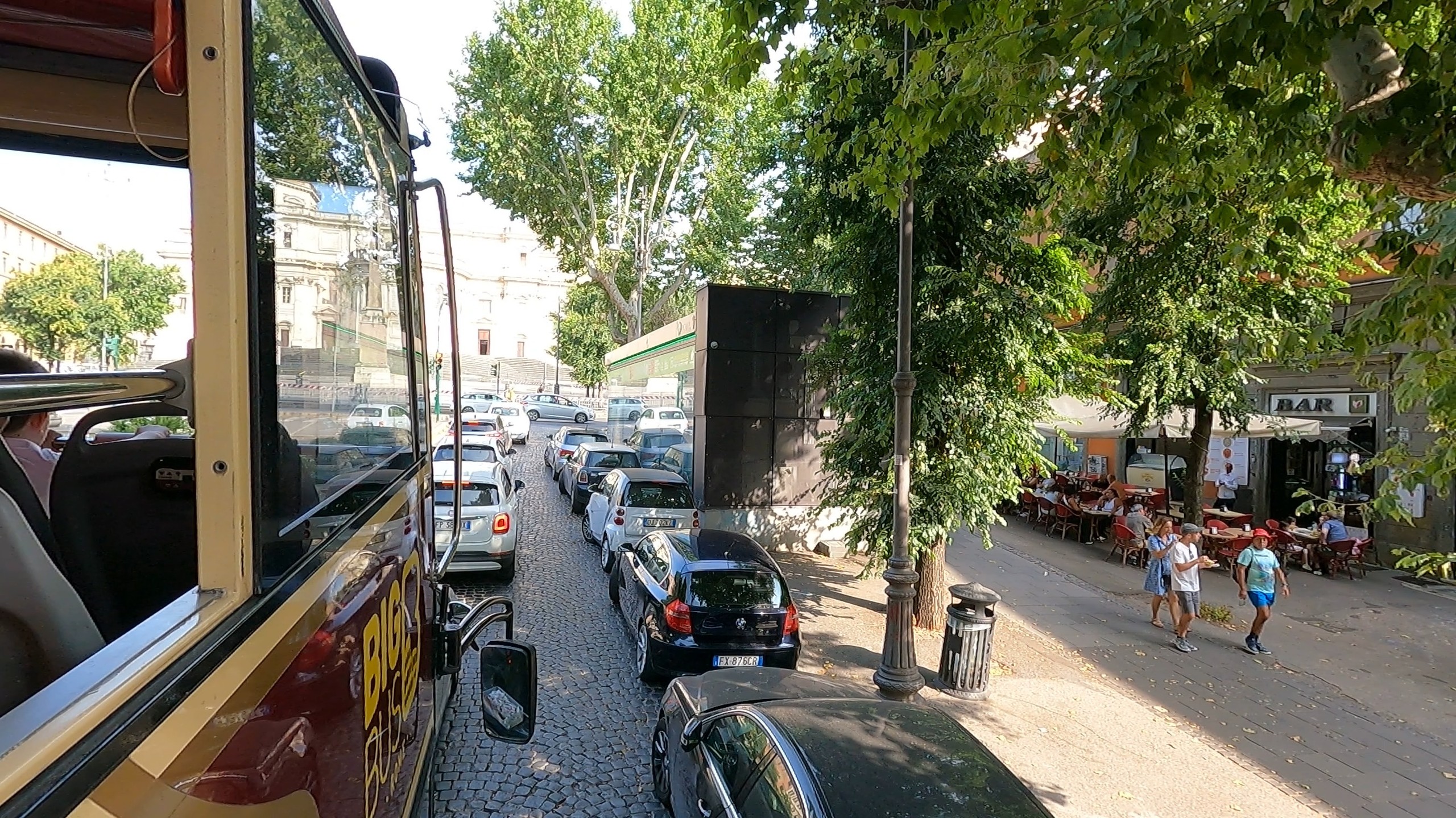
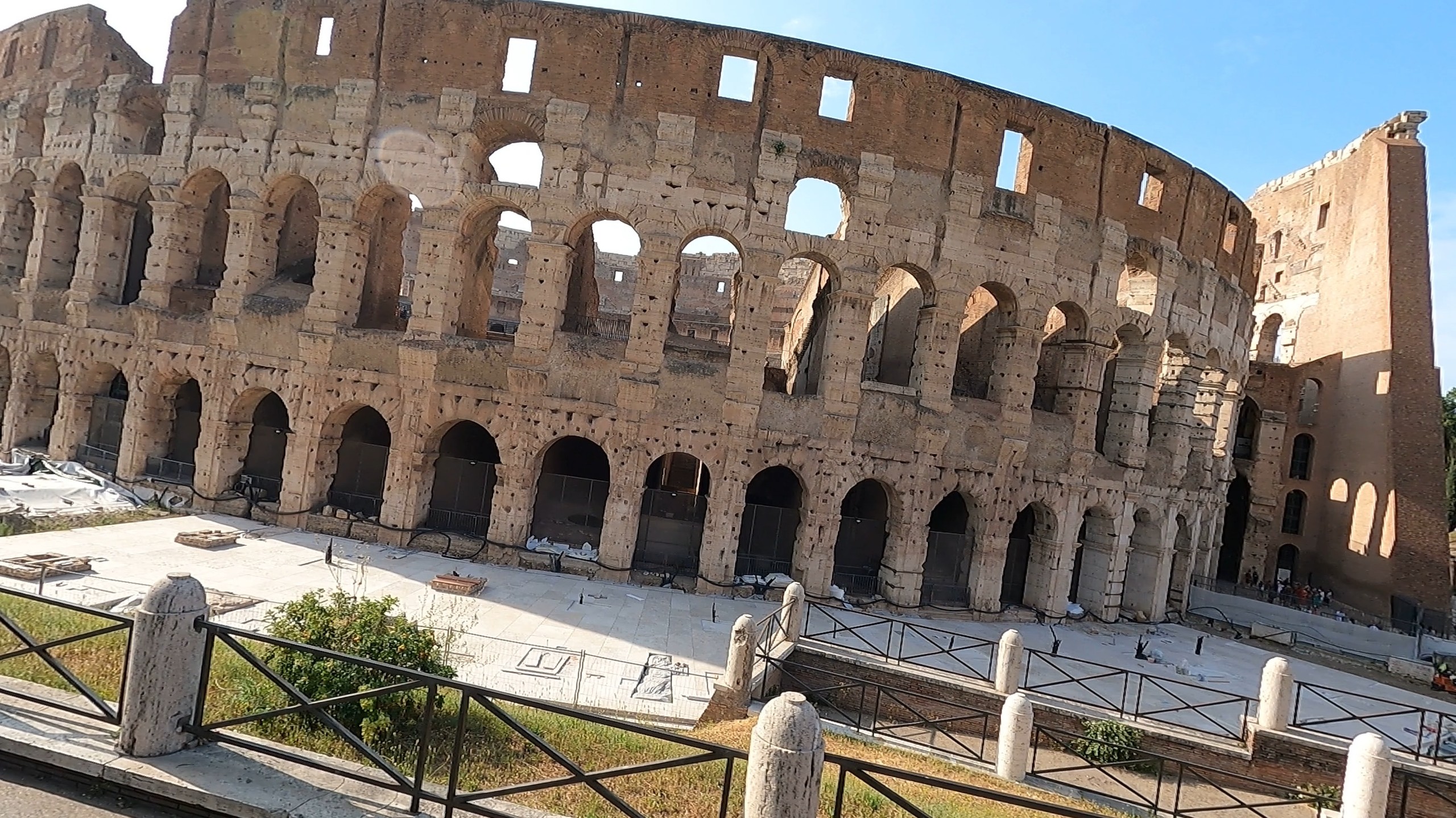
The family piece. Josh and Emily liked the open-top deck. The bus also gave us natural rest time between long Rome walks, which matters when you’re trying to do a lot in a day with teenagers and the temperature is climbing.
When we don’t pay for it. If you’ve already been to the city before and you have a feel for where things are, you don’t need the scouting pass. The Hop-On / Hop-Off is most valuable on a first trip to a new city. By the third or fourth visit you already know where the Colosseum is.
Ride-Hailing in Italy: Uber, Free Now, and Where They Wobble
In the United States, Uber is one of three or four ride-hailing apps you’d pick from. In Italy the picture is different. Lyft does not exist in Italy. Uber works, but only in the big cities, mostly Rome and Milan. In Florence, Venice, and most of the rest of the country it doesn’t operate at all. The apps Italians actually use are itTaxi and Free Now, both of which dispatch licensed taxis through the app. AppTaxi covers some cities too. The result is what an American might find a little confusing at first: you open Uber and the car that pulls up is a licensed taxi anyway, because Uber in Italy contracts to those same drivers. Set the pickup, see the price before you accept, watch the car come. The price is generally what the app quotes. The surcharges I’ll talk about below are the catch.
Worth saying up front: we really only used ride-hailing in Rome. Florence, Venice, and the Pisa day were all walkable enough that we didn’t need a car at all. The vaporetto handled Venice, our feet handled Florence and Pisa, and the train stations were close enough to our Airbnbs that we walked from the platform to the front door with our bags. Rome was the city where we needed wheels.
We used ride-hailing several times in Rome. An in-town ride for €37. The long airport run from Lido di Ostia to Fiumicino for about €60 at the app price. Both showed a price before we got in. That part worked the way it’s supposed to.
One thing to know about Uber in Italy specifically. Most of the rides we matched with through Uber weren’t UberX in the way you’d expect from the US, where it’s a regular driver in their own car. The cars that pulled up to us through Uber were either licensed taxis or Uber Black, which is the premium black-car service. That isn’t a problem in itself, but it matters for what comes next. If the Uber that picks you up turns out to be a regulated taxi underneath, the Italian taxi surcharge rules can still apply on top of the app price. That’s exactly what happened to us on the airport ride I described at the top.
Where Rome wobbled. A few times in the evening we’d open the app, request a car, and it would search for ten or more minutes without ever finding one. Other times the app would show a car on the way, the car would get within a block of our Airbnb, and then the driver would cancel and we’d start over. That happens. If it happens to you, walk to a busier street and try again, or fall back to a taxi stand.
About the flag-down move. We tried it a few times in Rome when the apps weren’t cooperating, and drivers would ask where we were going, hear the answer, and pull away. I assume the fare wasn’t long enough to be worth their trouble. The lesson, if you don’t want to wait on the app, is to find a taxi stand instead of waving from the curb. The stands work, the flagging often doesn’t.
The Surcharges Are Real (And They Hit App Rides Too)
Back to that five-in-the-morning airport ride. The whole point of booking through an app is that the price you see is the price you pay. That’s not always how it works in Italy. The driver waited until we were already in the car and partway to Fiumicino to mention that the per-bag charge and the per-extra-passenger charge would be added on top. Four euros per bag, two euros per extra passenger past the second. That isn’t huge money for one ride. It’s the principle that’s the catch.
What I’ve since learned. Italian taxi tariffs include a long list of surcharges that drivers are allowed to apply on top of the base fare. Per bag in the trunk. Per passenger past a base number. Airport runs. Night and Sunday rates. None of these are illegal. They’re listed in regulations. But they aren’t part of the price you see in the app when you book.
To be fair, the system can work cleanly. When we landed at Fiumicino and took a regular taxi into Rome at the start of the trip, the fare from FCO to inside the city is a flat rate, clearly posted on a sign inside the cab itself, and the driver charged us exactly that flat rate with nothing extra on top. No per-bag, no per-passenger, no surprises. So this isn’t a “Italian cabs are bad” story. It’s a “watch what you’re being charged” story. The flat-fare regulated airport run worked. The app-booked ride at five in the morning didn’t. Different drivers, different rules, same trip.
A friend of mine had a similar thing happen on a hotel run in Greece. He went inside to grab cash, asked the front-desk host whether the charges the driver was claiming were normal, and the host walked outside and went a few rounds with the driver in the local language. The driver dropped every surcharge AND the final fare ended up being about half what was on the meter to begin with. The point isn’t that every driver tries to overcharge. The point is, when you don’t know the rules, you can’t push back. And when you don’t speak the language, even less so.
What I’d do differently next time. Book everything through the app, but watch the receipt at the end and confirm what you’re paying for. If the price in the app is what charges, great. If extras get added, ask what they are, ask the driver to point them out, and pay attention to whether the math actually adds up. The argument is much easier when you know what you’re arguing about. Five in the morning with a flight to catch is not the moment to learn this. Learn it before you go.
The Pisa Day Trip From Florence
One last piece. From Florence we did a guided half-day trip out to Pisa with CAF Tour and Travel (also operating as Gray Line Florence). The whole thing ran us right around $205 for the family of four. Round-trip coach from Piazzale Montelungo near Santa Maria Novella station, a multilingual escort, the run out into the Tuscan countryside, the walk through the Square of Miracles, the Leaning Tower, the Baptistery, the Duomo, and back to Florence by late afternoon.
Could you do Pisa on your own with a Trenitalia regional train? Sure. The math is cheaper that way. But what you’re paying for with the guided trip is one less logistics puzzle on a vacation day. You walk to a meeting point in the early afternoon, somebody else handles the bus, the route, the tickets, and the timing, and you spend the rest of the day looking at the tower instead of looking at a phone. With teenagers and a Sunday spent in Florence already, that was the right trade.
A Bonus Move: The Brussels Stopover on the Way In
One more tip, because it shaped the whole front end of our trip. When we booked our flights to Rome, we had options that would have gotten us there faster. We didn’t take them. We picked a routing that included a planned stopover in Brussels, because Brussels was a city we wanted to put on our list, and a half-day on the way through was the right amount of time for it. We came, we saw, we moved on. That’s exactly the trip Brussels deserved for us.
What we actually did. We stashed our bags in the luggage lockers right at the Brussels Airport (first floor, by the taxi stand, you don’t have to haul anything off-site), took two short cab rides to and from the bus loop, did the Tootbus Hop-On / Hop-Off through the city (same scouting playbook we use everywhere), grabbed two meals (plus a beer for me at a bar between them), and got back on the plane to Rome the same day. All in, the Brussels half-day ran us about $370 for the four of us, which covered the Tootbus ticket, the airport lockers, the two meals, my beer, and the two cab rides.
When this move works. It works when there’s a city on your radar that you don’t think you’d want to spend three full days in, and the airline you’re already flying connects through it anyway. Pick that routing, build in enough connection time to do the loop without panicking about your next flight, and you check the box without burning real trip days. The one variable you have to manage is connection length. Six or more hours on the ground is the minimum to make it relaxed. Tighter than that and you’ll spend the whole stopover watching the clock instead of seeing anything.
The Verdict, If You’re Planning the Same Trip
Skip the rental car. You don’t need it for Rome, Florence, Venice, or the day trips in between. The trains do most of the work, the metro and the Hop-On / Hop-Off cover Rome, the vaporetto pass gets you around Venice, and ride-hailing handles the rest. The piece to be careful with is the cabs, including app-booked cabs. Especially on early-morning airport runs, when the available driver pool skews to licensed taxis filling in for the smaller pool of UberX drivers, and those licensed taxis can stack the regulated surcharges on top of the app price. Watch the bill.
For a family of four, the single move that paid for itself most clearly was the Venice vaporetto pass. The single move I’d think hardest about next time is the overnight sleeper train from Venice back down to Rome, which we passed on, but only because we had a flight to make.
Trains and boats will get you almost everywhere. Use them.
If You’re Not a Family of Four
This article is written for the family-of-four reader, but the same playbook adjusts for other groups in a few obvious ways.
- If you’re a couple without kids: skip the Hop-On / Hop-Off, walk more, lean harder on the metro and the apps. You’ll cover the same ground in less time and it feels more like living there.
- If you’re traveling solo: the apps and the metro cover ninety percent of what you need. The vaporetto pass still pays for itself in Venice. The Hop-On / Hop-Off is optional and probably skippable for one person on a first trip.
- If you have younger kids (not teenagers): the vaporetto matters even more in Venice because the walking distances are deceptive on a stroller or for short legs. The Hop-On / Hop-Off becomes more useful in Rome for the rest-time alone, and you can ride downstairs in the air-conditioned section rather than the open top deck (a real consideration in Rome summer heat with small kids). And the guided day trips (like Pisa) are worth the upcharge to avoid logistics meltdowns on a vacation day.
If you’ve done Italy with a family, what’s your move for getting around? And has anybody actually taken the overnight sleeper from Venice to Rome? I want to hear about it before we book one.