
Updated August 2026
Here is the thing that costs American families money in Barcelona, and almost nobody says it out loud.
The ten journey ticket everyone tells you to buy cannot be shared. The T-casual is a single person ticket. You cannot tap four people through the gate on one. There is a ticket that four people can legally share, it is cheaper per person than buying singles, and hardly anyone writing about Barcelona mentions it.
Then we did the math on it, for the four of us, and decided not to buy one.
That is the honest version of this article. We spent a week moving around Barcelona on foot, in taxis, on a hop on hop off bus and in a tuk tuk, and we never once rode the metro. Not because it is bad. It is genuinely good. Because once you run the numbers with two adults and two kids, the case for it gets a lot weaker than every guide implies.

So here are the fares and the rules, verified, because you may well be one or two people and the metro may be exactly right for you. And then here is why it was not right for us.
The Ticket That a Family Can Share
Three tickets matter. Only one of them works for a group.
| Ticket | Price | What it is | Shareable |
|---|---|---|---|
| Single | 2,90 | One journey | No |
| T-casual | 13,00 | 10 journeys | No, one person only |
| T-familiar | 11,50 | 8 journeys over 30 days | Yes, if you travel together |
| T-dia | 12,00 | Unlimited for 24 hours | No, one person only |
The T-familiar is the family ticket and it is not marketed as one. Eight journeys for 11,50, valid thirty days, and you may tap it through for several people provided everyone is travelling together on the same journey. That is the legal condition, and it is the normal way a family moves anyway.
Run the numbers on a family of four making two metro trips in a day. That is eight taps. Eight singles is 23,20. One T-familiar is 11,50. You have halved it.
The T-casual is still the right answer if one adult is doing a lot of solo running around. For four people moving together, it is the wrong ticket, and buying four of them is how a family ends up overspending without noticing.
One more cost people forget: every ticket has to sit on a card. A plain anonymous card is 1 euro, a personalised one is 4,50, or you load it onto a phone with contactless for 1 euro.
Children Do Not Ride Free
This is the one that surprises Americans most, so I want it in plain language.
Only children under four travel free on the Barcelona metro and buses. A four year old pays the full adult fare.
There is no child rate. There is no youth rate for visitors. A six year old and a forty year old cost exactly the same to put through the gate. If you have come from a US transit system with a kids-ride-free policy, budget accordingly, because this is a real line item across a week.
Your Ten Journey Ticket Dies at the Airport
This one has an actual penalty attached, so read it before you land.
The T-casual, the T-familiar and the T-grup are not valid at the airport metro stations on line 9 South. If you arrive at Aeroport T1 or T2 and try to get out on one, you will be buying an airport ticket at the gate to leave the station.
What you need instead:
- Airport ticket, 5,90. Metro only, gets you between the terminals and any metro station.
- T-dia, T-usual, T-jove or the Hola Barcelona card are all valid at the airport metro.
- The R2 Nord train from Terminal 2 takes every integrated ticket, including the T-casual, at a normal 2,90 fare or one journey off your ten. About twenty minutes to Barcelona Sants.
- Bus 46 and the night buses take integrated tickets too.
So if you are landing with a T-casual in your pocket, take the train or the bus, not the metro.
The other airport options for a family:
- Aerobús, 7,45 one way, 12,85 return, about thirty five minutes to Plaça Catalunya, every five to ten minutes, runs around the clock. Under fours free. Note that it is not part of the integrated fare system, so your metro tickets do not work on it.
- Taxi. There is no fixed airport fare into the city. The meter runs, there is a 4,60 airport supplement, and there is a minimum of 21,00 on any trip starting at the airport. Expect somewhere around 25 to central Barcelona before traffic. Ours ran to 46,90 from Diagonal Mar, which is the far side of the city, so where you are staying matters more than any published rate.
We took the taxi, and in our house that was not a close call. When I raised the train as an option, Vika said no before I had finished the sentence. Four people, the bags and a flight to make, and the 46,90 bought us the apartment door to the terminal door.
One safety note that is worth more than any of this. The old Aerobús web address is no longer the Aerobús. The domain aerobusbcn.com now serves a completely unrelated gambling affiliate site. The real operator is at aerobusbarcelona.es. Book there or at the machine.
The Hop On Hop Off Bus, and the Ticket Length We Got Wrong
We bought four 48 hour hop on hop off passes for 120,60 euros. We should have bought 24.
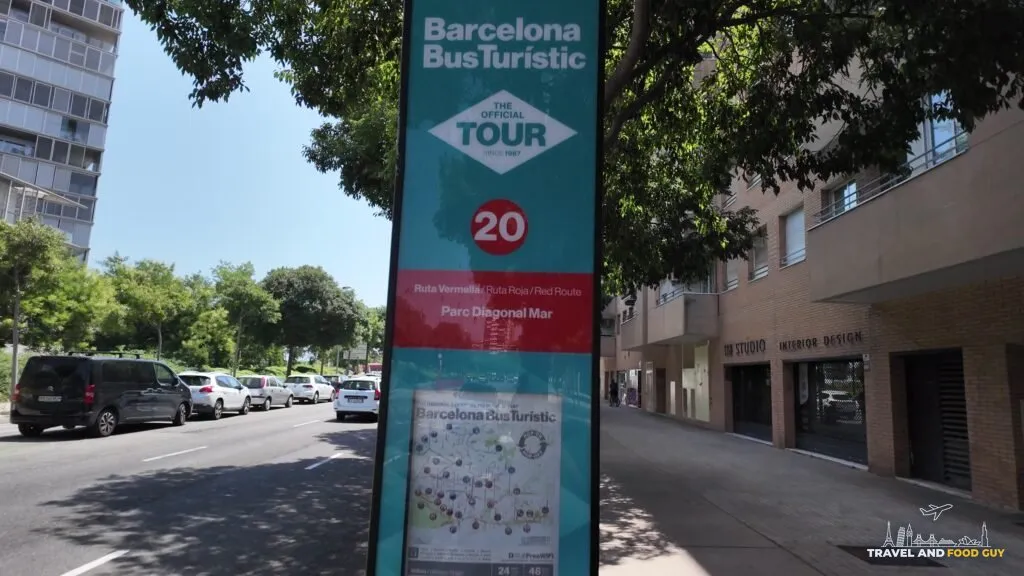
Here is how we actually used them. We started at about one in the afternoon on the first day and rode the loop, which is what the bus is genuinely good for. We used it again for part of the second day. By the third day we had stopped reaching for it and walked to the Sagrada Família instead. Two full days of ticket, roughly one day of use.
The detail that makes this fixable is when the clock starts. It runs from the moment you first scan the ticket, not from when you buy it. So a 24 hour ticket first scanned at three in the afternoon covers the rest of that day and everything up to three the following afternoon. That is two useful half days out of the cheaper ticket, and for a family who want one orientation loop it is all you need. Worth confirming at the point of sale, because it is the difference between the two prices.
Buy 24 hours. Scan it in the afternoon, not first thing in the morning. Treat it as an orientation pass rather than as transport, ride the loop once to work out what deserves a second visit, and then go back to those places on foot.
One thing worth being straight about, because it is not impatience. Nobody in this family got sick of the bus. On every trip we take, Josh and Emily ask to go on the hop on hop off, because they get to sit still and watch a city go past. What wore on us here was boarding it late in the day. Pick it up in the afternoon, partway round the second leg, and it is already full, and what is left is a seat in direct sun up top or a spot downstairs where the air conditioning is not really coping. It gets you there. On a hot afternoon it is not a pleasant way to get there. Still better than the city bus, which by mid afternoon was more crowded again.
We Priced It All Up and Took Taxis Anyway
Here is the arithmetic that decided it, and it is not really about money.
On time, the metro and a cab came out about the same. Barcelona is compact and the traffic is not Chicago traffic. Whatever we saved underground we gave back walking to and from stations at both ends.
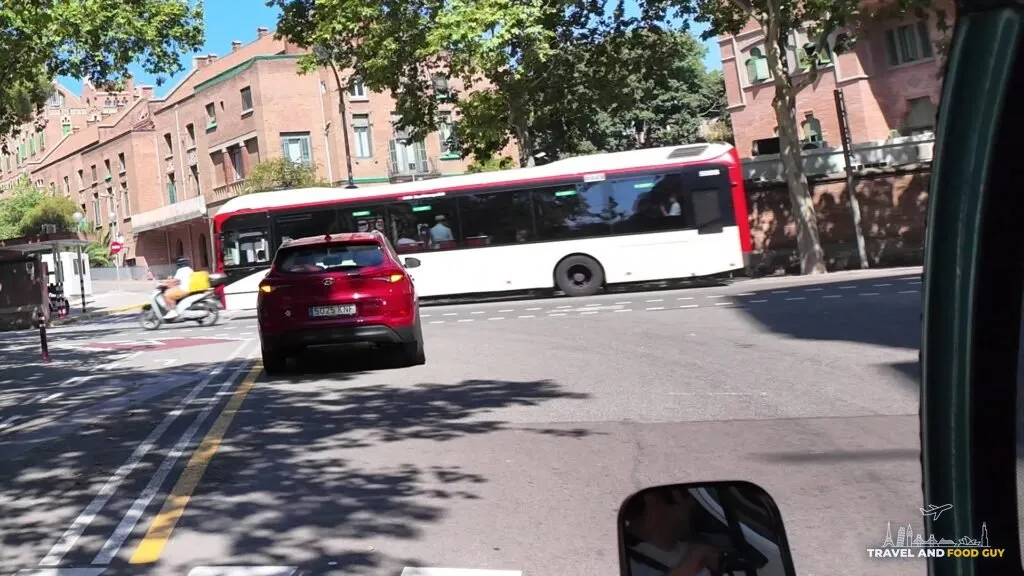
On cost, four people is the whole story. One person on a T-casual is a bargain. Four people is four fares, and at that point a metered cab across town comes out close enough that the gap stops being the deciding factor.
Then the part the fare tables do not show you. Most of our rides were in the evening, which in Barcelona means the same rush hour everyone else is in. A packed train full of people going home from work, at the end of a day when we had already walked ten or fifteen thousand steps in the heat. After a day like that we wanted air conditioning and a seat, not a carriage full of other hot, tired people.
Add the pickpocket risk on a crowded train with four of us and bags, and the calculation stopped being close. Same money, air conditioning, door to door, nobody’s hand near a pocket.
The honest caveat, and it matters. If it were just me, or just me and Vika, I would take the metro. On cost it would probably win. This is a decision that flips on how many of you there are and what you are carrying, and anybody telling you there is one right answer for every traveler is not doing the math.
There were also two rides where a cab was not a choice at all. Arriving at the cruise port with the suitcases, and leaving for the airport. It is not that a bus and a train were impossible. They just made no sense with that much luggage.
Taxis, and Why the App You Know Might Not Work
Barcelona taxis are metered and the rates are set by the metropolitan authority, so at a rank you are not negotiating. But in the FreeNow app you get a choice most visitors never notice, and it is worth understanding before you tap.
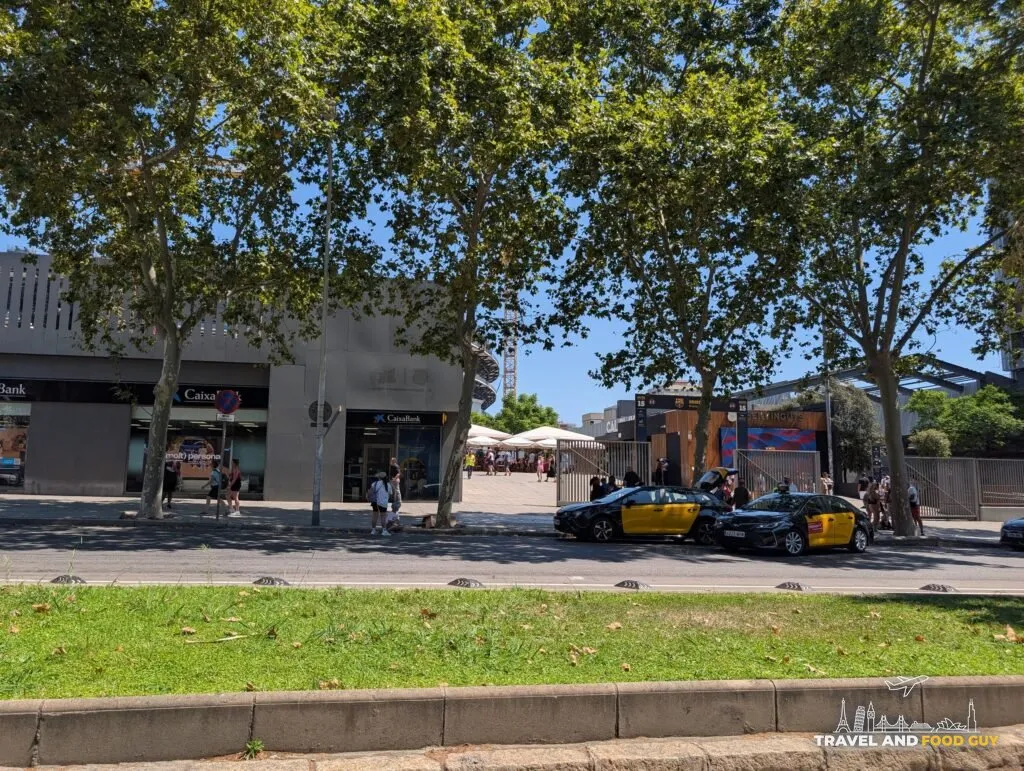
You can book a fixed price, or you can book the meter. Choose the meter and the app shows you a range. The bottom of that range is usually cheaper than the fixed price. The top of it is a lot more expensive. So the meter is the better bet on a clear road and the worse bet in traffic.
We took fixed prices on almost every ride, because we were travelling in rush hour and we knew we would be sitting still. And we did sit still. It did not matter, because the number was already agreed. That is why I like a fixed fare with a family. It is not always cheaper, but sitting in traffic does not cost you anything extra.
The other thing worth knowing is the car itself. The app asks how many passengers. With four of us and a pile of luggage we asked for five, which gets you a van instead of a compact, and nobody ever questioned it at the curb. We had room to sit, stretch out and get every case in. There is no surcharge for the bigger vehicle. It is the same price. That is the opposite of home, where a larger car on Uber or a taxi app costs you more, and for a family arriving with suitcases it is one of the genuinely good things about getting around this city.
Here is what five rides cost the four of us in one week, airport run included, all booked through FreeNow. Almost all of them were fixed fares agreed before we got in. The one that ran on the meter was the cruise port to the apartment, and that was also the one time we ended up in a small car.
| Trip | Total |
|---|---|
| Poblenou to Casa Vicens, morning | 25,55 |
| Sagrada Família across to the Eixample, early afternoon | 18,64 |
| Below Park Güell back to Poblenou, evening | 18,40 |
| Gothic Quarter back to Poblenou, evening | 13,60 |
| Diagonal Mar to the airport, Terminal 1, late morning | 46,90 |
| Five rides | 123,09 |
Two of those include a small tip we added in the app. Nothing else appears on any of the receipts. No booking fee, no surcharge line, no toll line. The base fare is the whole metered amount and tax is included in it.
Including on the airport run, and that one is worth a closer look. Barcelona’s official tariff adds a 4,60 euro airport supplement on top of the meter. Our airport receipt shows exactly two numbers, a base fare of 46,90 and a total of 46,90, with nothing in between. The supplement is in there somewhere, but the receipt does not tell you where. So do not expect an itemised bill you can check against the published rates. You get one number.
Worth putting next to the metro maths. That 46,90 airport ride would have been about 11,60 for the four of us on the R2 train from Terminal 2, so the convenience cost roughly 35 euros of a door and a boot on a departure morning with six pieces of luggage. Given the alternative was four people dragging three suitcases and three backpacks down to a platform, that was money well spent, and I would spend it again.
The city rides are a different calculation. That 25,55 ride across town is more than two T-familiars. But the 13,60 ride home at the end of a long day, with four tired people, is about what four singles would have cost you, and it took a third of the time. Taxis in Barcelona are not the splurge an American visitor might expect, and at the end of a day they are often the right call.
| Flag | Per km | |
|---|---|---|
| Weekdays, 8am to 8pm | 2,80 | 1,35 |
| Nights, weekends, holidays | 2,80 | 1,66 |
Supplements worth knowing: 4,60 for the airport in either direction, 4,60 for the cruise terminal, 2,55 leaving Barcelona Sants, and 4,60 for a vehicle carrying five to eight passengers, which applies to larger families. There is a fixed 46,00 between the airport and the Moll Adossat cruise terminal.
Now the part that catches visitors. Catalonia requires a minimum of fifteen minutes between booking a private hire car and being picked up. Uber, Cabify and Bolt operate under that rule, which means you cannot summon one and have it arrive in four minutes the way you can at home, and you cannot flag one down at all.
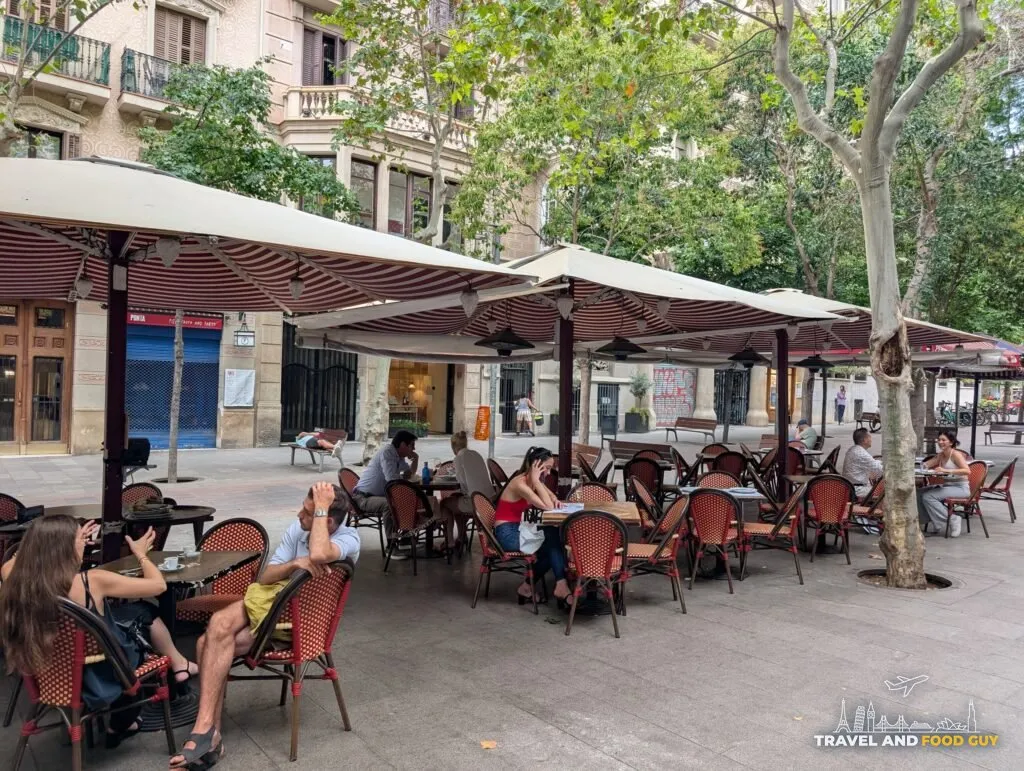
FreeNow is the app that dispatches licensed metered taxis, which is why the rides we took came in on the meter at the official rates. With four people and a schedule, that is usually the faster and simpler option.
The Tourist Tax, and the Exemption Worth Real Money
Barcelona charges a per person per night accommodation tax, and it went up in April, so anything you read from before then is wrong.
| Where you stay | Per person, per night |
|---|---|
| Five star | 12,00 |
| Tourist apartment | 9,50 |
| Four star | 8,40 |
| Other hotels and pensions | 7,00 |
| Youth hostel | 6,00 |
It is capped at seven nights per stay, and it is usually collected by the property rather than at booking.
Here is what it actually cost. Our Airbnb charged 10,45 per person per night, for guests aged seventeen and over. Four nights, two adults, and Josh and Emily both under sixteen and therefore free. 83,60 euros in total. Note that our figure came in above the published tourist apartment rate, so treat the table as a guide and your own booking as the truth.
The age cut is worth doing the sum on. Had our two been adults, that same stay would have been 167,20. The exemption halved it, and almost no family travel guide mentions the tax exists at all.
How you pay it is the part that catches people. Every property does it differently. A hotel adds it to your bill. In Venice last year we were asked to leave it in cash on the table in the apartment. In Barcelona our host sent a payment link, we filled in our details, and we paid by card before we ever arrived. We could not check in until it was paid and the host had confirmation. Turning up on arrival day and discovering that would be a bad hour.
And the link came through WhatsApp, not through Airbnb. That is normal. WhatsApp is the default messenger almost everywhere outside the United States, and your host will very likely use it. If you do not have it, either install it before you travel or tell the host in the Airbnb thread that you want to communicate there instead.
Expect the message, and then verify it before you pay a cent. A payment link arriving on WhatsApp from someone claiming to be your host is also exactly what a rental scam looks like. A real one will quote your reservation number and your dates. If anything is missing, ask in the Airbnb thread and confirm there before you touch the link.
Practical Things We Got Right and Wrong
Validate everything, every time. Tap on entering the metro, tap boarding every bus, and tap again at every transfer. Transfers do not cost you an extra journey, but they still have to be tapped. According to Barcelona’s transit website, a one-zone integrated ticket allows up to three transfers within 75 minutes of the first validation.
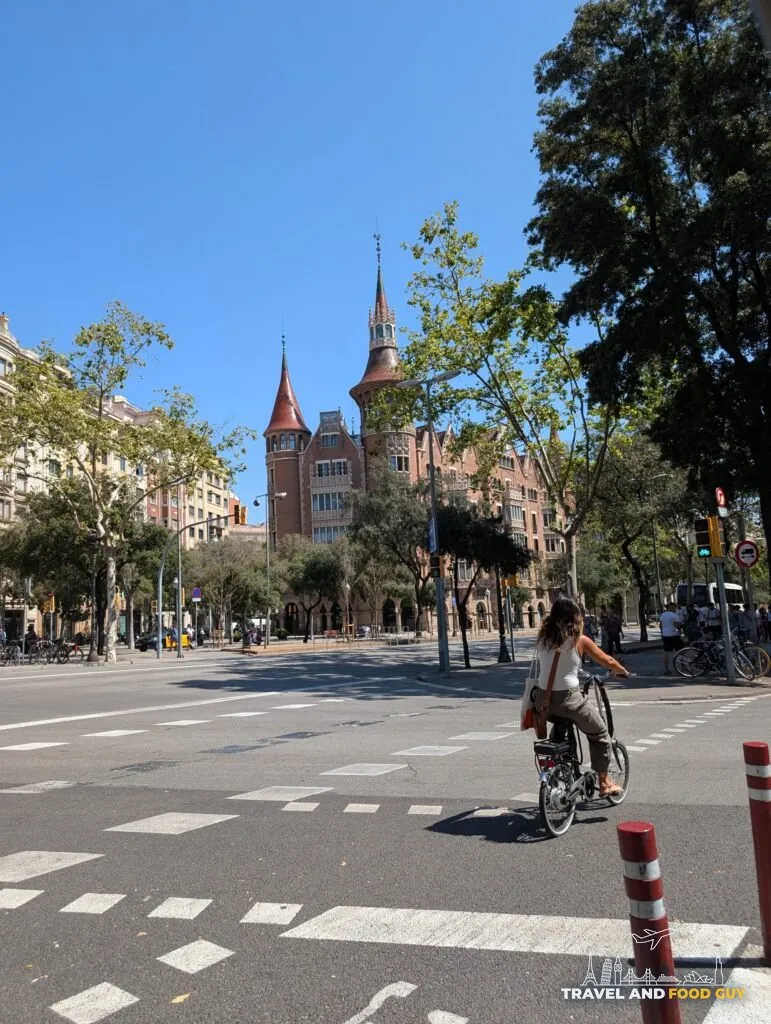
Metro hours are not the same every night. Roughly five in the morning to midnight Sunday to Thursday, until two on Fridays, and all night on Saturdays.
Ask which floor the apartment is on. The elevator in the building we stayed in broke on the morning we were leaving, so four people and the luggage went down six flights of stairs. We pack one large case per two people, and after two weeks on the road with everything picked up along the way, none of it was light. We got it down and we were fine. It was not easy, and it is the one part of that departure we were not prepared for. We did not take the metro out either, which in hindsight was the right call with the bags. If you are booking an apartment in this city, ask what floor you are on and picture doing it carrying everything.
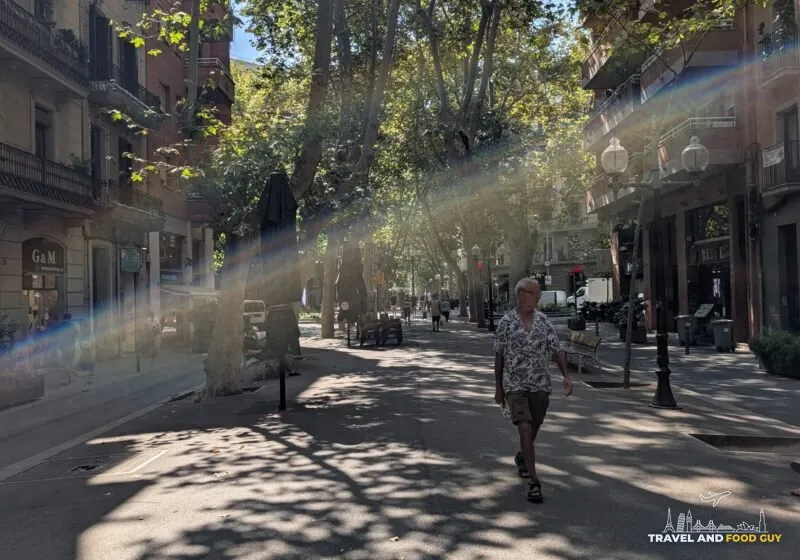
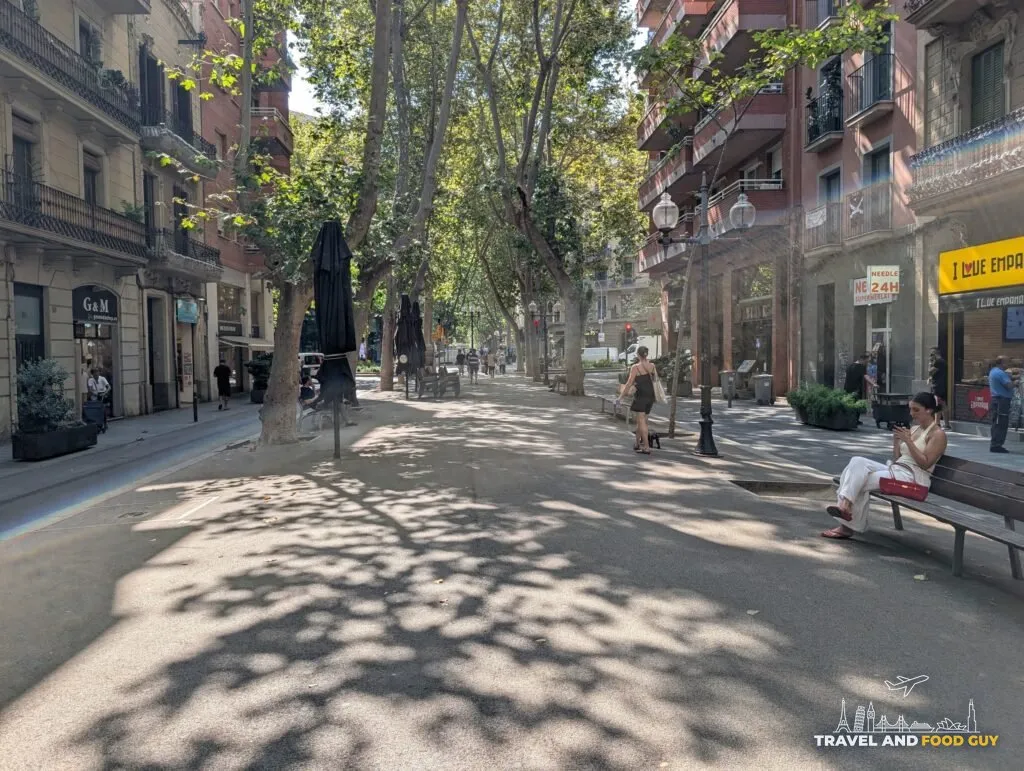
Walk more than you plan to, but not in the afternoon. Our best hour in Barcelona was an unplanned hour on foot from the Eixample up to Park Güell, through neighborhoods no itinerary would have sent us to. By every account the metro is excellent, and if the math works for your group you should use it. But the distances between the things you have come to see are often shorter than they look, and the city between them is the part you will remember. The caveat is heat. Two miles looks like nothing on a map and it is nothing at home, and at 83 degrees, uphill, in direct sun, on legs that have already done a morning, it is a different thing entirely. Do your walking early.
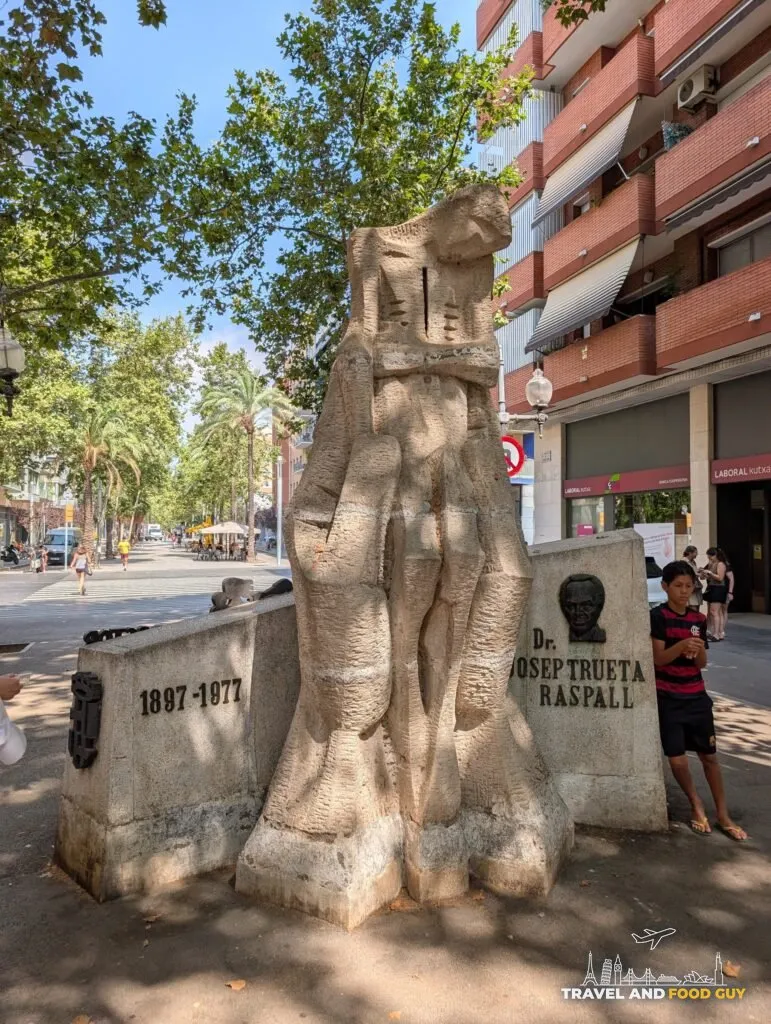
On pickpockets, the honest version. The US State Department’s current advisory says pickpocketing and theft are very common in Spain and that thieves work with distractions, and that is worth taking seriously in any crowded station. But the widely repeated lists naming specific metro lines as danger zones come from a press report several years old, not from current police data. Barcelona police figures for the first five months of this year show crime on the metro and commuter rail down about 38 percent year on year. Keep your phone in a front pocket and your bag closed, and do not let a scare list decide your route.
Questions Families Ask
Can a family share one metro ticket in Barcelona? Yes, but only the right one. The T-familiar, 11,50 for eight journeys, is explicitly multi person as long as everyone travels together. The T-casual and the T-dia are single person only.
Do children pay on the Barcelona metro? Only under fours travel free. From four years old, children pay the full adult fare. There is no child discount.
What is the cheapest way from Barcelona airport to the city with a family? The R2 Nord train from Terminal 2 at 2,90 a person, or one journey off an integrated ticket. The airport metro needs a separate 5,90 airport ticket. The Aerobús is 7,45.
Can you use Uber in Barcelona? Yes, but not on demand. Catalan rules require at least fifteen minutes between booking and pickup, and you cannot hail one on the street. FreeNow dispatches regular metered taxis and is usually quicker.
Do kids pay the Barcelona tourist tax? No. Under seventeens are exempt. The tax is charged per person per night, capped at seven nights.
The Short Version
Buy a T-familiar, not four T-casuals. Do not try to leave the airport metro on one. Assume your children pay full fare from their fourth birthday, and assume they pay no tourist tax until they are seventeen.
And leave room in the plan for walking. Barcelona is a smaller city than the map makes it look.