Venice . Food & Dining . Family of Four . Historical Venetian Tasting Menu . $332 . Trip’s Biggest Single Bill
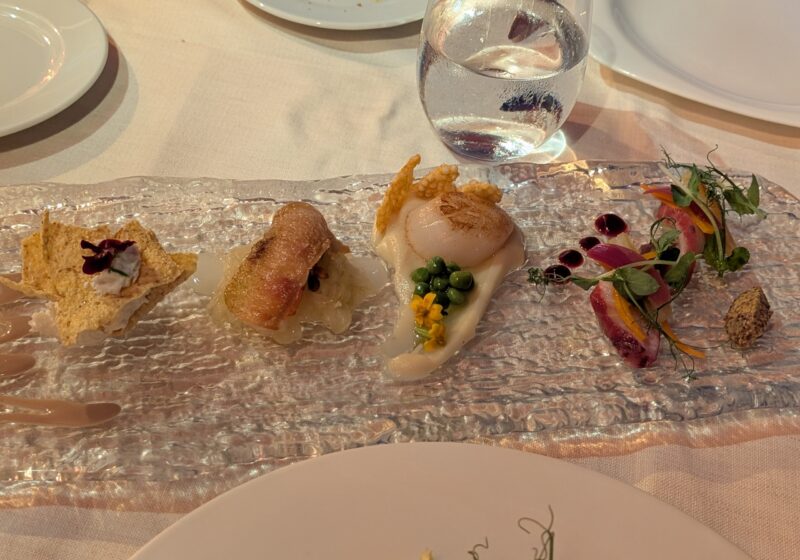
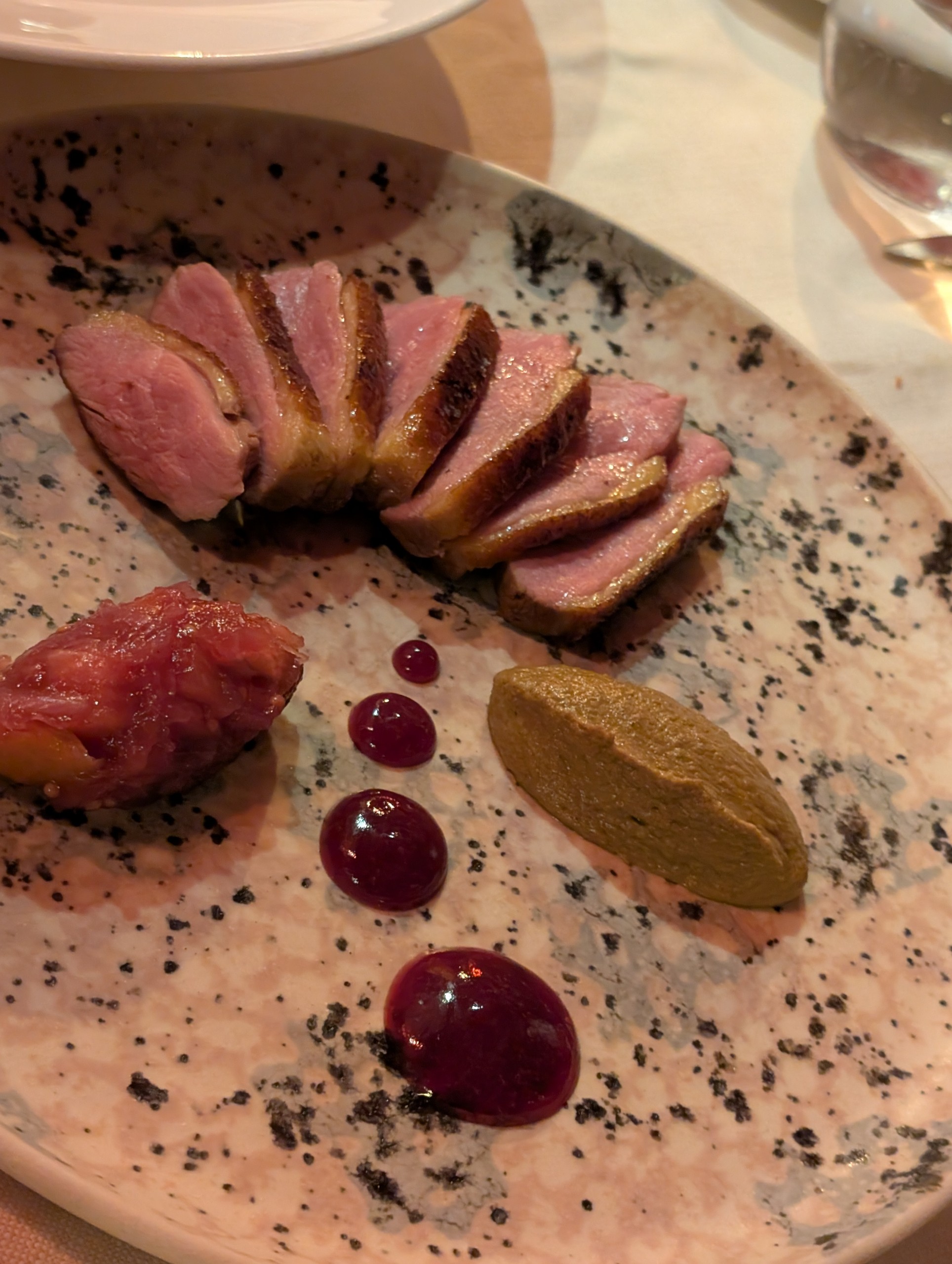
The duck breast above is the dish from Bistrot de Venise that Vika and I are still going to be talking about a year from now. Honey-lacquered, plated next to a sweet-and-sour compote of apple, grape, and red onion, with a lemon Pevarada sauce drawn in a stripe across the plate. The recipe is from Bartolomeo Scappi, a sixteenth-century cookbook. The kitchen at Bistrot de Venise is built around resurrecting these historical Venetian dishes, plates that were eaten at the long banquet tables of the doges five hundred years ago, and serving them at your table in a modern dining room on Calle dei Fabbri.
We paid right around $330 for the four of us. It is the biggest single bill of our two weeks in Italy and I would do it again tomorrow.
This article is not sponsored. We paid for every plate ourselves, and we didn’t tell the restaurant we were going to write about them.
The Setup
Bistrot de Venise is on Calle dei Fabbri, the narrow shopping street that runs from Rialto down to Piazza San Marco. The room is small, white-linened, intimate without being stuffy. You’d walk past the door three times if you didn’t know it was there.
The menu is built around two ideas. One is historical Venetian recipes, traced to Scappi and other Renaissance cookbooks, dishes that the city has eaten for centuries that are no longer on most restaurant menus. The other is a modern Venetian tasting menu with traditional and contemporary courses paced over multiple plates. The 4-course tasting runs around €100 per person, the 7-course around €180 per person. Both with optional wine pairings. We did a mix that landed us at the family-of-four total of €287 before exchange.
One small note on the room itself. Most of our other Venice meals were eaten outside, on candle-lit tables in a campo or canalside, which has its own joy even in the summer humidity. Bistrot de Venise is an indoor dining experience by design, and that was the right choice for a meal where the kitchen wants you focused on the plate. We didn’t miss the outside air.
The Pacing
The No-Rush Italian Dining Culture (And This Restaurant Specifically)
One thing worth saying about both Bistrot de Venise specifically and Italian dining culture generally, especially in Florence and Venice. The restaurants are not trying to turn your table. They want you to enjoy the meal and they’re patient about it. We had the last reservation of the night at Bistrot de Venise, and we were one of the very last tables in the room when we finally got up to leave. At no point did the staff make us feel like they wanted us out. They encouraged us to have another glass of wine, to try one more course, to take our time with dessert. I completely understand that’s also how the restaurant makes money. But in plenty of restaurants around the world, the kitchen closes at nine, the waiter wants you settled up at eight fifty-five, and you can feel the pressure building well before the bill arrives. That energy was never in this room. The same was true at most of our meals across Florence and Venice. Whatever you came in for, the table is yours for as long as you want it.
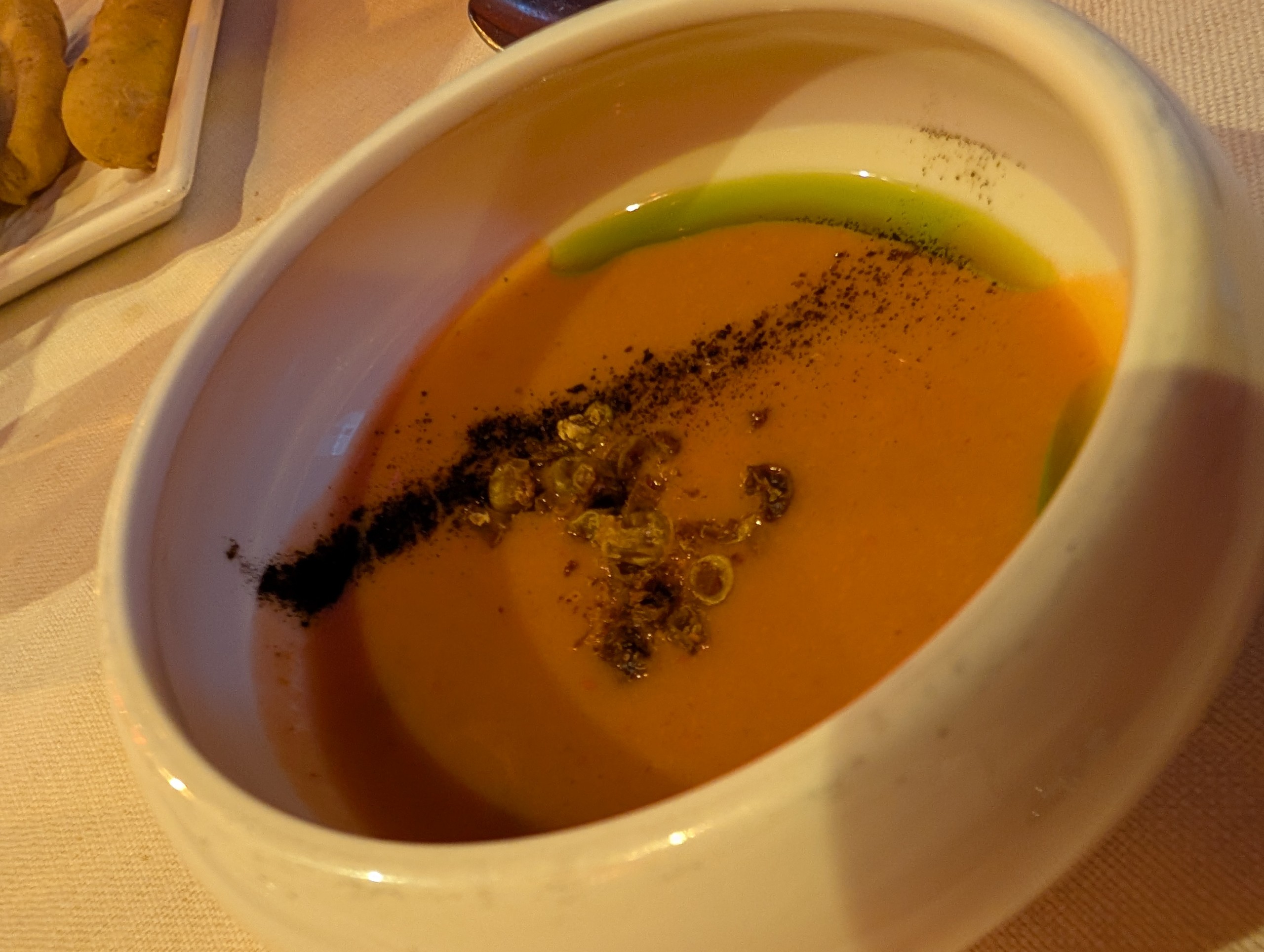
The velouté above was somewhere in the early-middle of the meal. Pumpkin, herb oil drawn in a ribbon across the surface, a fine line of dark spice powder, served in a wide white bowl. Each course was a deliberate beat. The kitchen wasn’t rushing and they wouldn’t let the room rush either. Two-ish hours at the table, real conversation between courses, the kids settled in the way teenagers do when they realize a meal isn’t going to be cut short and decide to enjoy it.
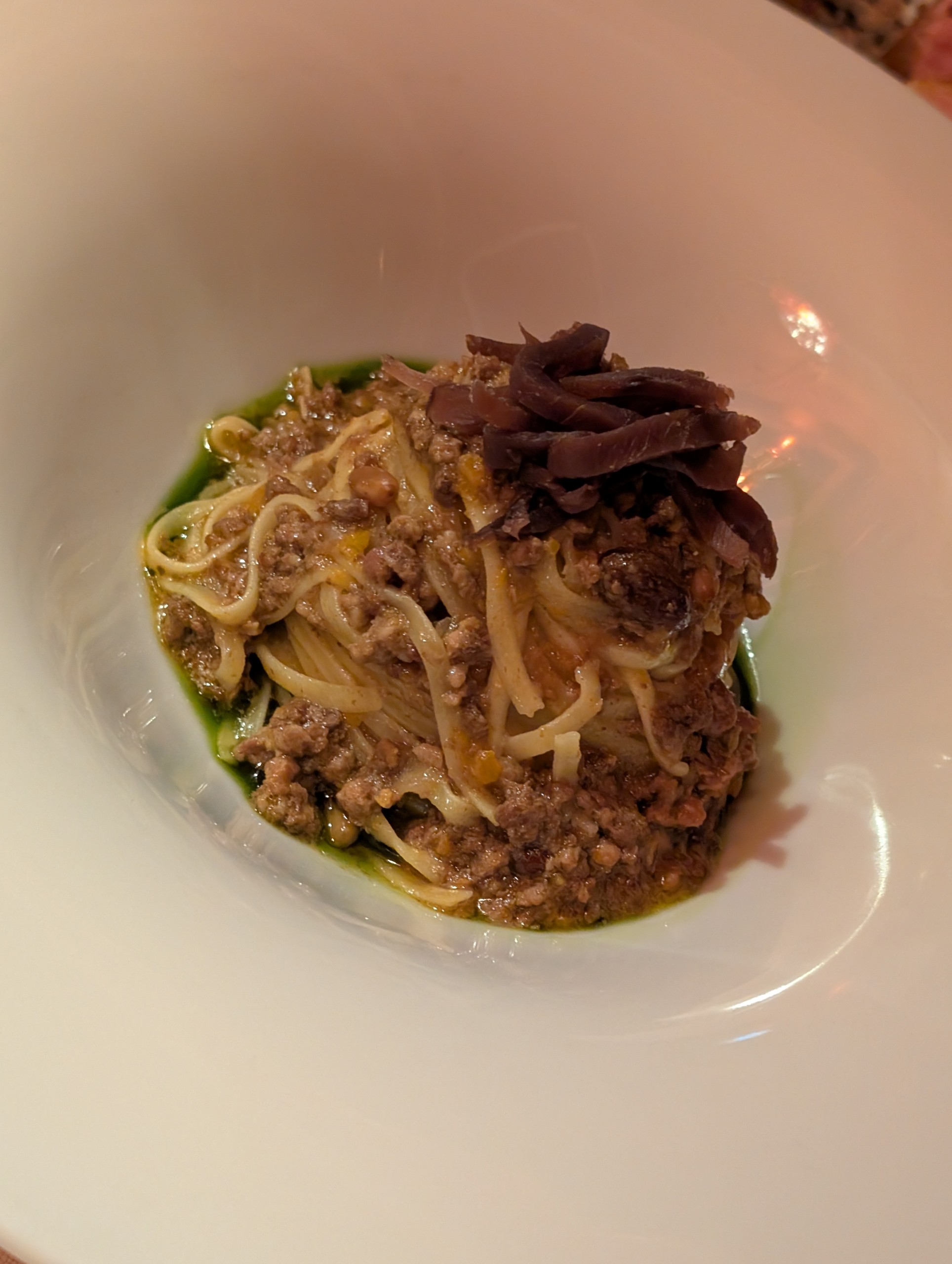
The pasta course came next. A small precise nest of tagliatelle in a slow-cooked ragù, topped with a curl of thinly shaved cured meat as a final flourish. The portion is small by an American standard, which is the point of a tasting menu. The flavor density is the trade. You’re not supposed to leave full from one plate. You’re supposed to leave full from the arc.
The Service
What makes Bistrot de Venise stand out next to its Venice peers is the service. Our waiter knew the historical context of every plate he set down and was happy to walk us through it without lecturing. At one point the chef sent out a small extra course that wasn’t on our menu, just because. That’s not a courtesy you can buy. It happens when a kitchen has settled into the night and decides to share something with the room.
The wine list is the kind of thing you read for entertainment even if you’re drinking water. The restaurant has won wine-program awards over the years. If you’re into Venetian-region wines or sweet wines paired with historical desserts, this is the room for it.
The Verdict (and the One-and-Done Read)
Here’s the honest read. Bistrot de Venise was a fantastic dinner. The kind of meal that earns its price tag. The duck breast in Pevarada sauce is a five-star plate, the service is the kind you remember, and the kitchen delivers at a level that justifies every cent of what we paid.
Would we go back ourselves the next time we’re in Venice? Probably not, and only for one reason. Venice has so many other places we haven’t tried yet that we’d rather spend our next big-night dinner discovering a different room. That’s the only reason. If Venice were the kind of city with one obvious fine-dining choice, we’d be back at Bistrot in a heartbeat. But the wealth of other options on our list is what tips us toward exploring rather than returning. One of those other Venice rooms we did try, and loved, was Vini da Arturo, the tiny steak counter with no pasta that Phil Rosenthal made famous.
Worth every cent. One and done.
Common Questions About Bistrot de Venise
What is Bistrot de Venise known for?
Historical Venetian cooking. The kitchen resurrects dishes from Renaissance cookbooks like Bartolomeo Scappi, food eaten at the doges’ banquet tables five hundred years ago, and serves them in a small modern dining room off Calle dei Fabbri. The standout for us was a honey-lacquered duck breast in a lemon Pevarada sauce, straight from Scappi. It also has an award-winning wine program built around Venetian-region and sweet wines.
Is Bistrot de Venise Michelin-starred?
Yes, Bistrot de Venise holds a Michelin star, and it earns it. Between the historical Venetian cooking, the duck breast in Pevarada sauce, and service that knows the story behind every plate, it is the kind of meal that justifies the recognition. Definitely worth the experience.
How much is the tasting menu at Bistrot de Venise?
The 4-course tasting runs around €100 a person and the 7-course around €180 a person, both with optional wine pairings. We did a mix for the four of us and landed at €287 before exchange, about $332. It was the single biggest bill of our two weeks in Italy, and I would do it again tomorrow.
What should you order at Bistrot de Venise?
Go for the tasting menu, that is the whole point, and let the kitchen walk you through the historical courses. If there is one dish to hope for, it is the honey-lacquered duck breast in Pevarada sauce, the plate Vika and I are still talking about. Portions are small by American standards, but you leave full from the arc of the meal, not any single plate.
Is Bistrot de Venise worth it?
Worth every cent. The duck breast is a five-star plate, the service remembers the history behind each course, and the kitchen even sent out an extra dish just because. The one honest caveat: we would probably not go back ourselves, not because it fell short, but because Venice has so many other rooms we want to try. If Venice had one obvious fine-dining choice, we would be back in a heartbeat. Call it worth every cent, one and done.
What is the dress code at Bistrot de Venise?
Dress nicely, you are in Europe and this is a nice dinner. Shorts are fine if they are nice shorts, paired with a dress shirt, a polo, or a nice t-shirt. One real tip: try to leave the baseball cap off at dinner. Yes it is hot and the sun is right overhead during the day, but this is a proper evening out, so lose the hat when you sit down.
Is Bistrot de Venise good for kids?
We brought Josh and Emily and it worked. It is an indoor, focused, multi-course meal, not a quick bite, so it suits kids who can settle in for a couple of hours. Ours did, once they realized the meal was not going to be rushed. The no-rush Italian pacing actually helps, there is real time to talk between courses. Younger kids who need to move around would find it a longer sit.
This standalone review is part of our Italy food spend roundup for a family of four, where Bistrot de Venise lands in the top 3 splurges alongside Cantinetta delle Terme and Ristorante Ad Hoc.
If you’ve done Bistrot de Venise on a Venice trip, what was the course that stayed with you? And honest question, did you go back next visit, or do you also fall in the “one and done” camp?