Updated August 2026. Casa Vicens, Casa Milà and Casa Batlló, walked in one morning with two kids, in the order that actually works.
Three of Gaudí’s houses in Barcelona let you walk inside. Everybody tells you to do Casa Batlló. Almost nobody tells you what order to do them in, how far apart they really are, or which one your kids will still be talking about at dinner.
We did all three in one morning, in a single loop that started furthest out and worked back toward the middle of the city. We booked it through Viator as a small group tour, the Barcelona Gaudí Houses Tour, run by The Touring Pandas. Twelve people maximum, a guide named Jane, about three hours door to door and roughly two and a half kilometers on foot. Four of us, no meltdowns. And the surprise of the day: the house we would tell you to cut is the famous one.
Three Gaudi houses in one morning, in about a minute.
The whole morning, all three houses, in nine minutes.
Start at the far end. The day gets easier and the story gets better.
Most people start on Passeig de Gràcia because that is where the two famous houses are, then trek out to Casa Vicens if they have anything left. Our tour runs the other way. It meets at Casa Vicens, up in the Gràcia neighborhood, and works back down toward the center. Whether you book a guide or do this on your own, copy that direction.
That single decision is why the day worked. The one real walk of the morning happens while everybody is fresh. Gràcia is quiet first thing and Casa Vicens was easily the calmest of the three when we were there, so you get a gentle start instead of an elbow fight. One catch: the doors open at 9:00 but the Casa Vicens ticket office does not open until 9:30, so general admission really starts at half past. And every leg after that gets shorter, ending two blocks from lunch.
| Leg | Distance | On foot |
|---|---|---|
| Casa Vicens to Casa Milà | about 2.0 km | about 25 minutes |
| Casa Milà to Casa Batlló | 540 m | about 7 minutes |
Do it in reverse and you finish the morning with a twenty five minute uphill walk, in August, with kids who have already looked at two houses. We would not want that day.
There is a better reason than logistics, though, and it only works in this direction. Casa Vicens is the first house Gaudí ever built. Casa Milà is the last one he finished. Walk them in this order and you start with a young architect working in flat tile and straight lines, borrowing from everywhere, and you end up on a roof he shaped like a landscape. You basically see twenty years of his career in one morning, in the order he did it.
One wrinkle if you want to be exact about it. Casa Batlló came a couple of years before Casa Milà, so the last two stops are less a sequence than a pair from the same stretch of his life. The jump that matters is the one between the first stop and the second, and you feel it the moment you come around the corner and see La Pedrera.
We could have done this on our own. Here is why we did not.
Nothing about this route is hard. Three addresses, two walks, three tickets you can buy yourself on three websites. We could have run the whole morning without a guide and kept the money.
We booked one anyway, for two reasons, and only one of them is the obvious one.
The obvious one is the door. The tour walked us straight into all three houses. Nothing at Casa Vicens, nothing at Casa Milà, and at Casa Batlló we went past a queue running down the sidewalk at the busiest part of the morning.
We learned that one the hard way at Versailles a few years back. We bought skip the line tickets, which sounds like it means what it says. It does not. It moved us into a different line, and we still waited hours to get in. That was August too. The only people walking straight through the door were on official guided tours. Ever since, when actually getting in matters more than saving money, we book through a tour.
The second reason is the one we did not expect to value as much. Jane told us just enough about each house. Enough that a room meant something once we were standing in it, and not so much that it turned into a lecture. That is hard to get right, and it is the one thing on this whole morning you cannot get with a ticket.
Casa Vicens is the one everybody skips, and it should not be
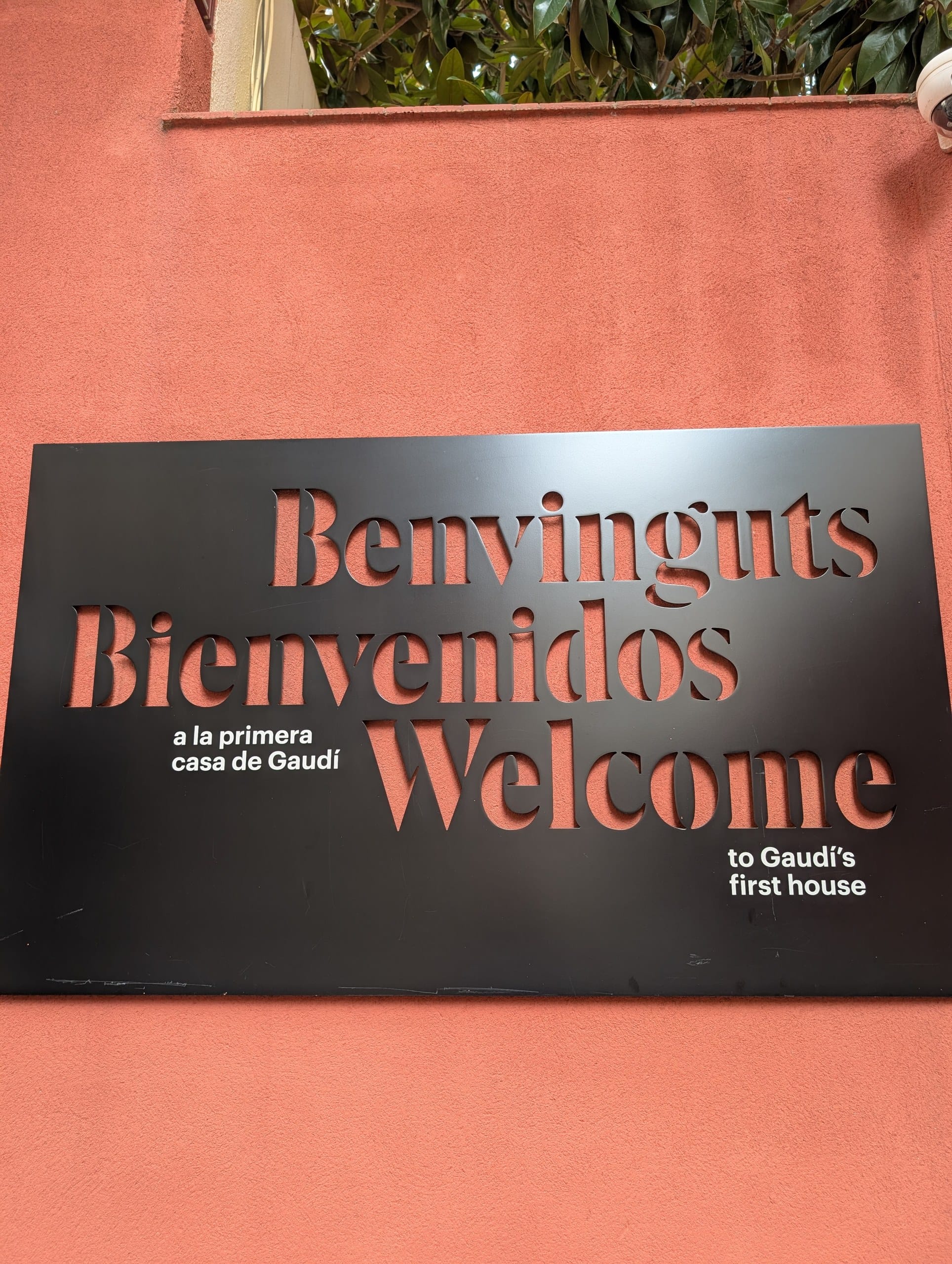
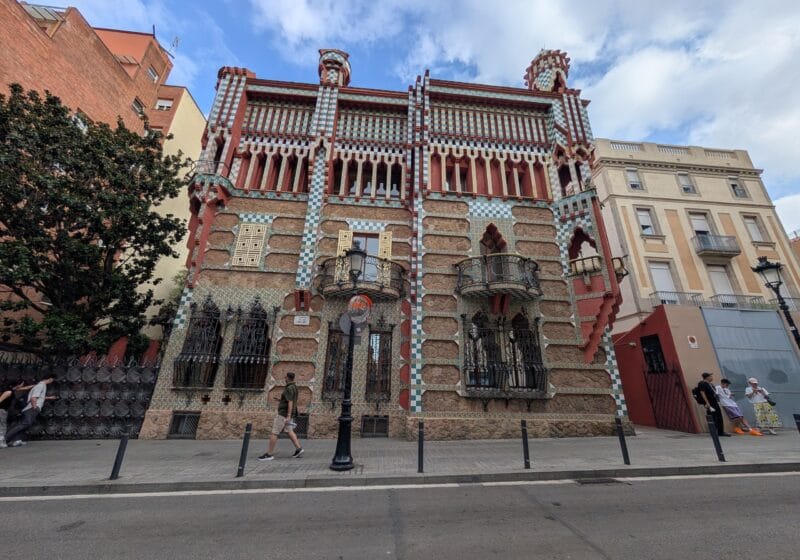
This is Gaudí’s first house, built when he was in his early thirties, and it does not look like anything else he did. No melting stone, no bones. Instead it is flat and graphic and loud, rough quarry stone banded with painted tile, marigolds everywhere, a checkerboard climbing the corner.
It only opened to the public in 2017. That is why it does not have the queue the other two have, and why most one day Barcelona itineraries leave it off.
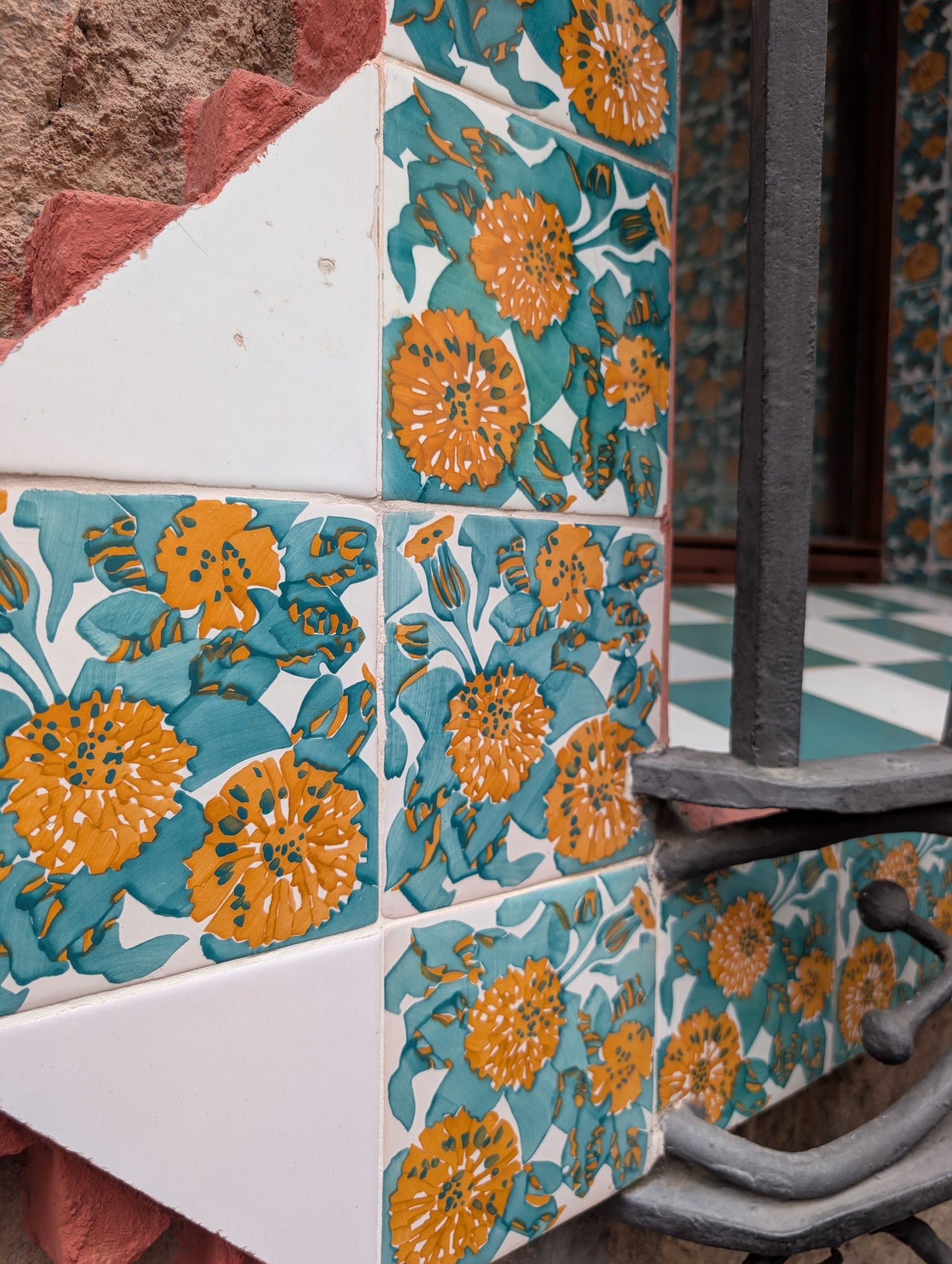
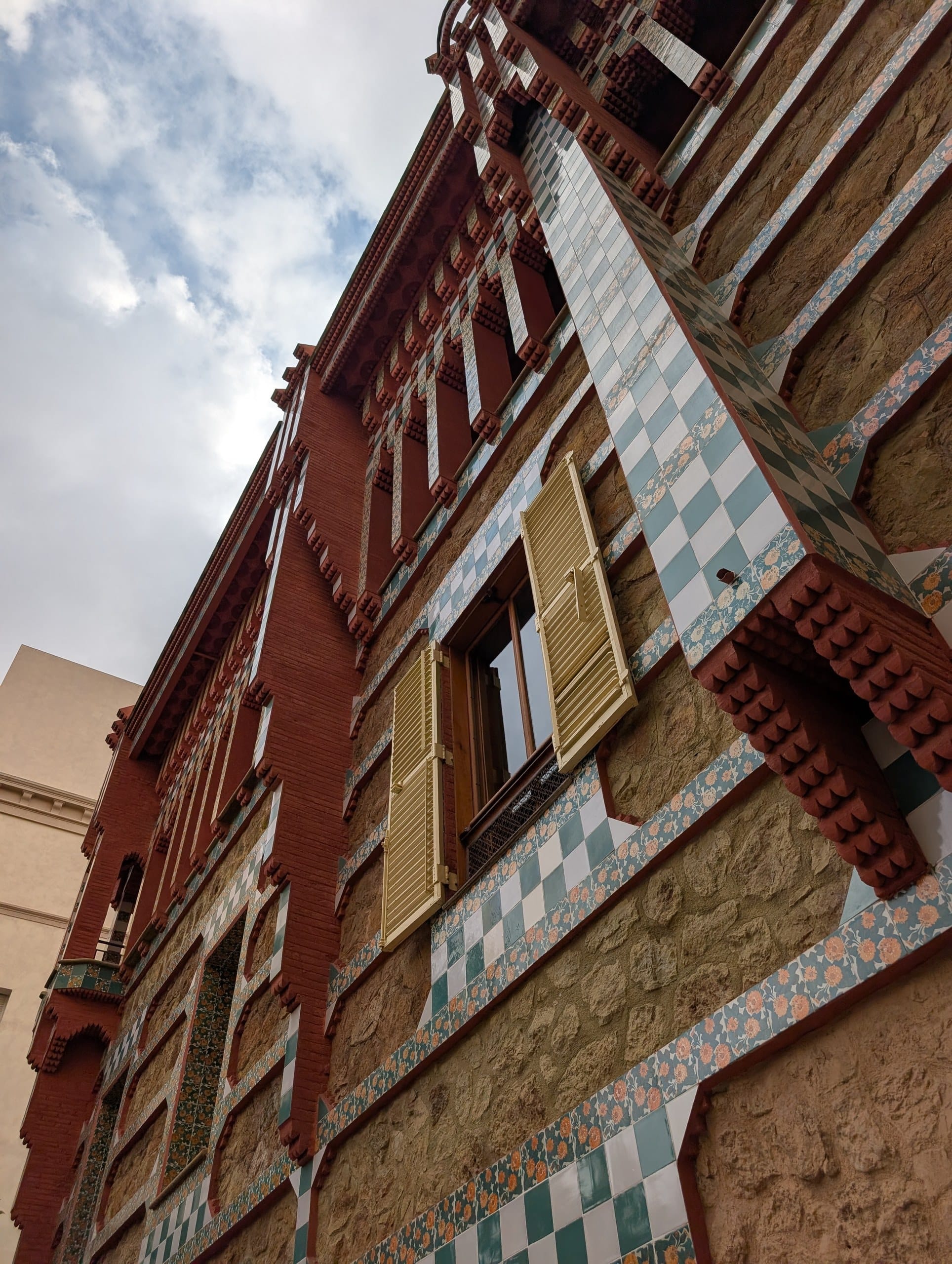
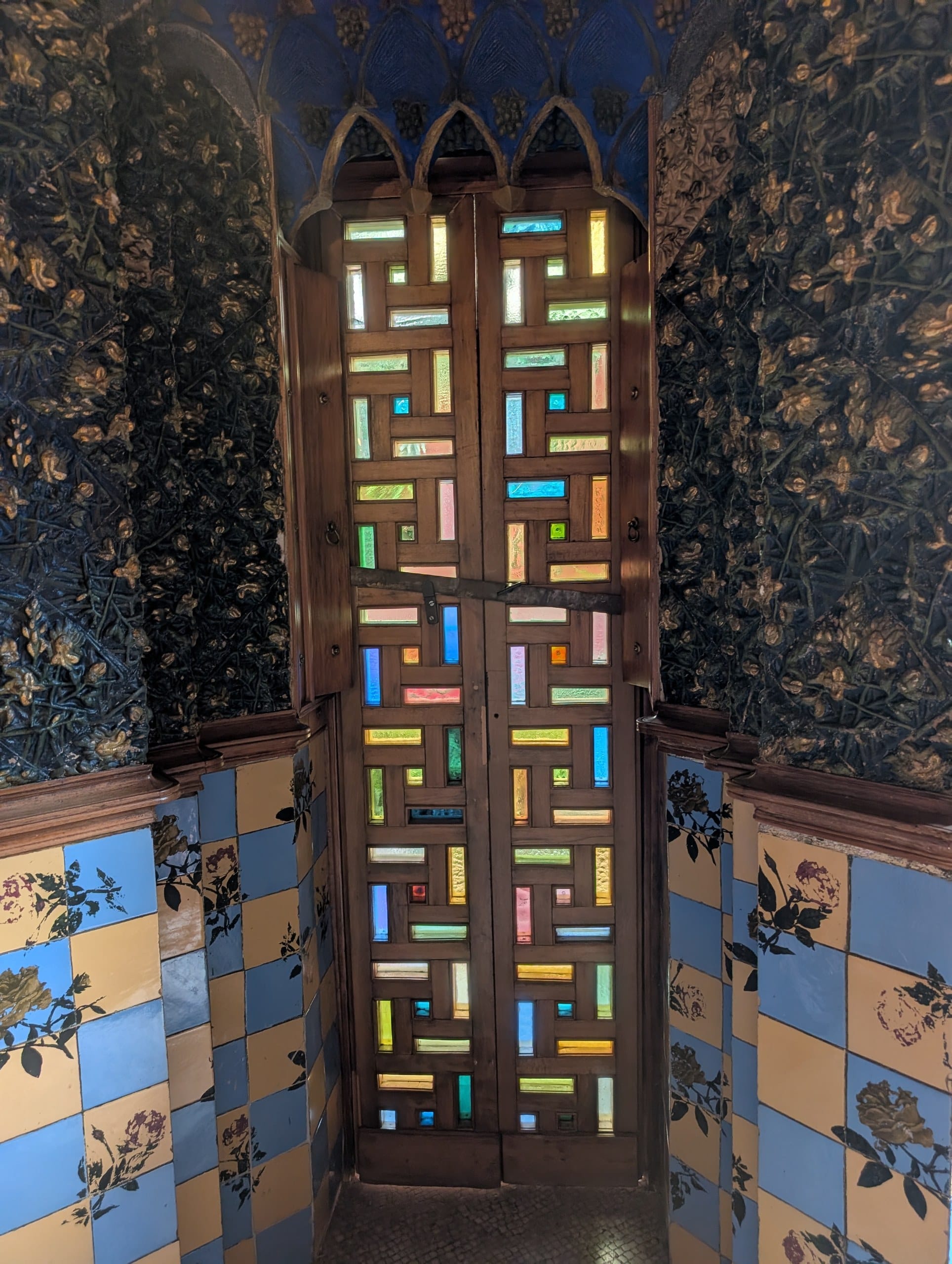
Inside is what makes the ticket worth it. There is an original pedestal sink still bolted to a wall of blue and yellow tile, and a window over the garden looking straight into the apartment blocks that grew up around it in the decades since.
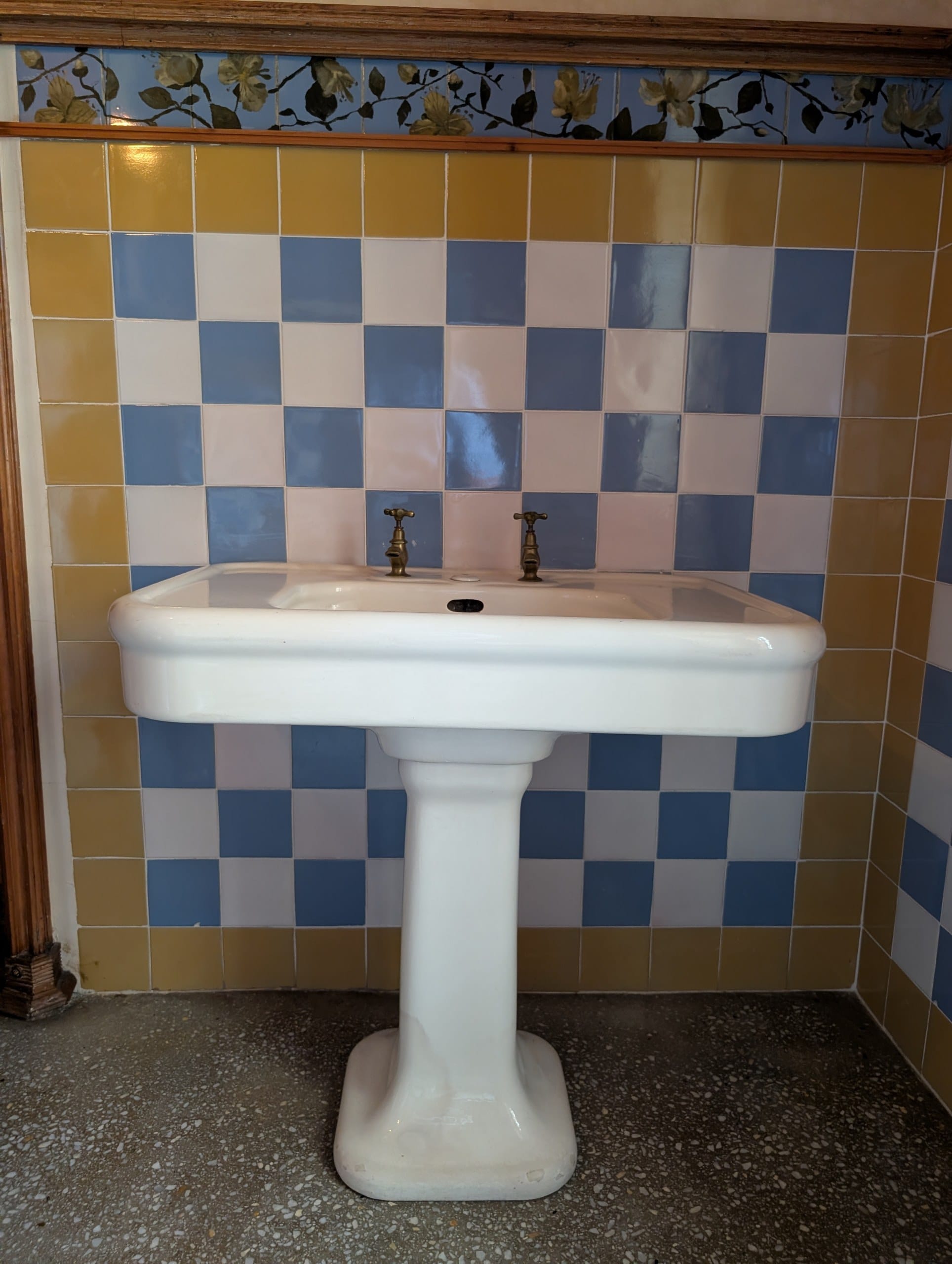
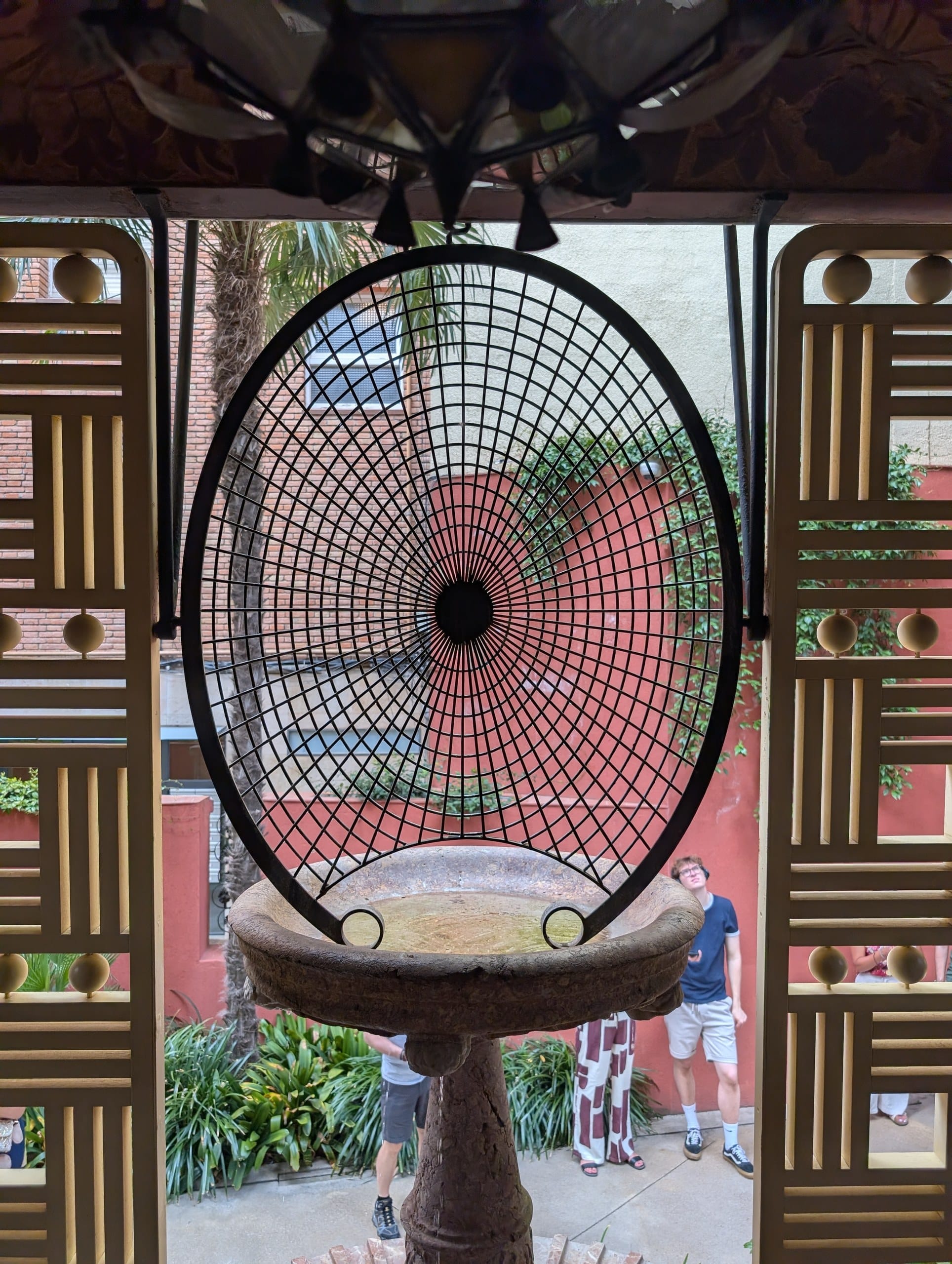
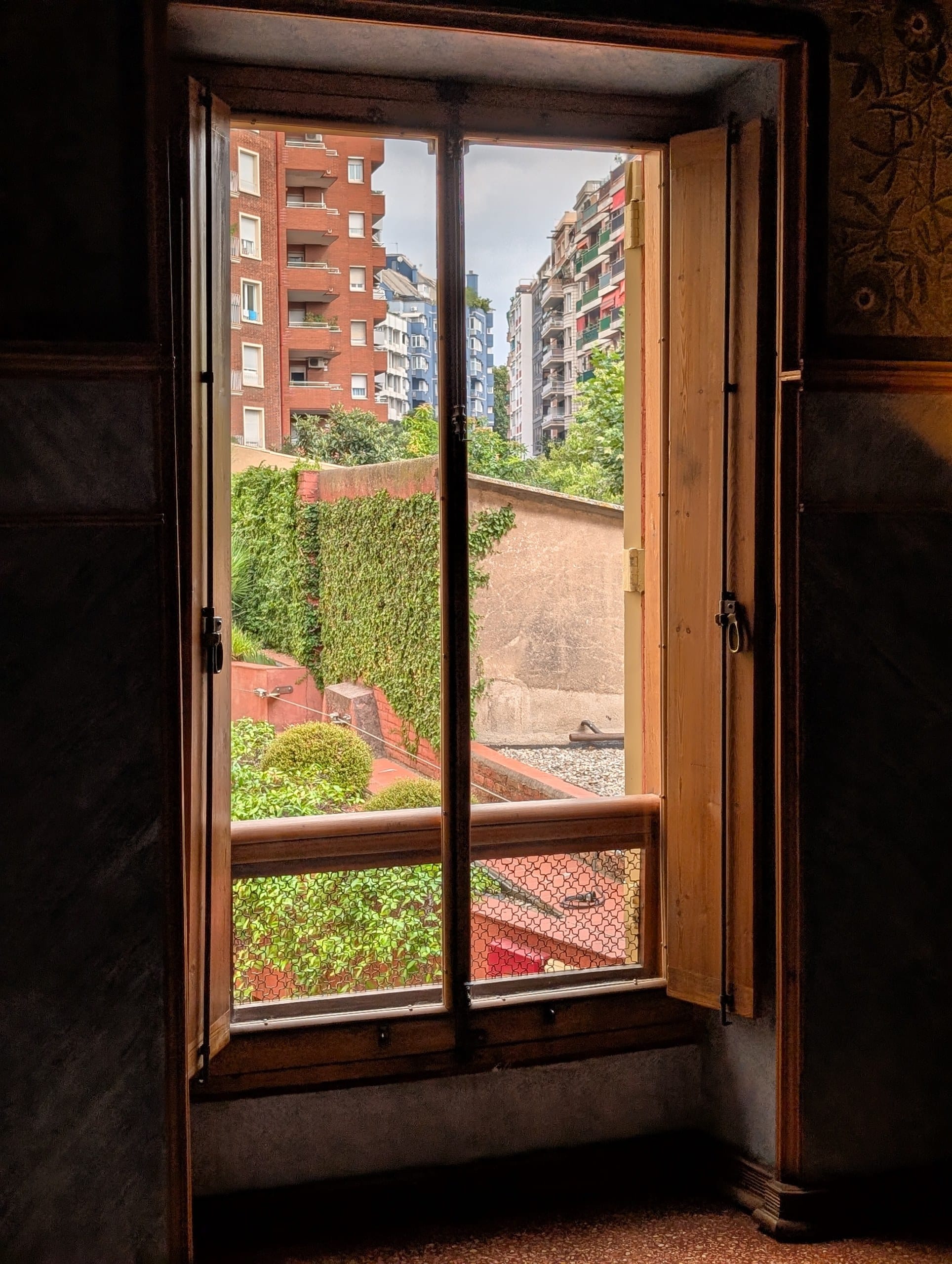
What actually surprised us was how intimate it felt. The other two are big. You move through them the way you move through a museum, carried along in a current of other people, looking into rooms from the doorway. Casa Vicens felt like being in somebody’s house. Ordinary proportions, rooms you could imagine sitting down in, a sink exactly where a sink would go. Nothing about that shows up in a photograph of the facade, which is probably why it is the one that gets left off the list.
It is also, and we did not see this coming, the house our kids picked. Josh went first: the color, and the fact that it felt private. Emily said the same without being prompted. She was impressed by the place, and when I asked her later which house was her favorite she picked this one too, the one most people do not go and see. Part of that is the crowd, or the lack of one. Casa Vicens had the fewest people in it of the three, and with room to move they explored instead of shuffling along behind somebody’s shoulder. Give a kid a house they can wander and they will take it over a monument every time.
Vika ended up in the same place, and for her it was not close. Casa Vicens was her favorite of the three by a distance. The color, and the fact that it felt more normal than the other two, a house rather than a monument. She thinks part of that is the crowd again. There were fewer people in it, so you could get much closer to everything, and it stayed an intimate space instead of a procession.
We were inside a bit over an hour, which matches what Casa Vicens tells you to budget. Entry is free for children up to eleven.
The walk between is not filler
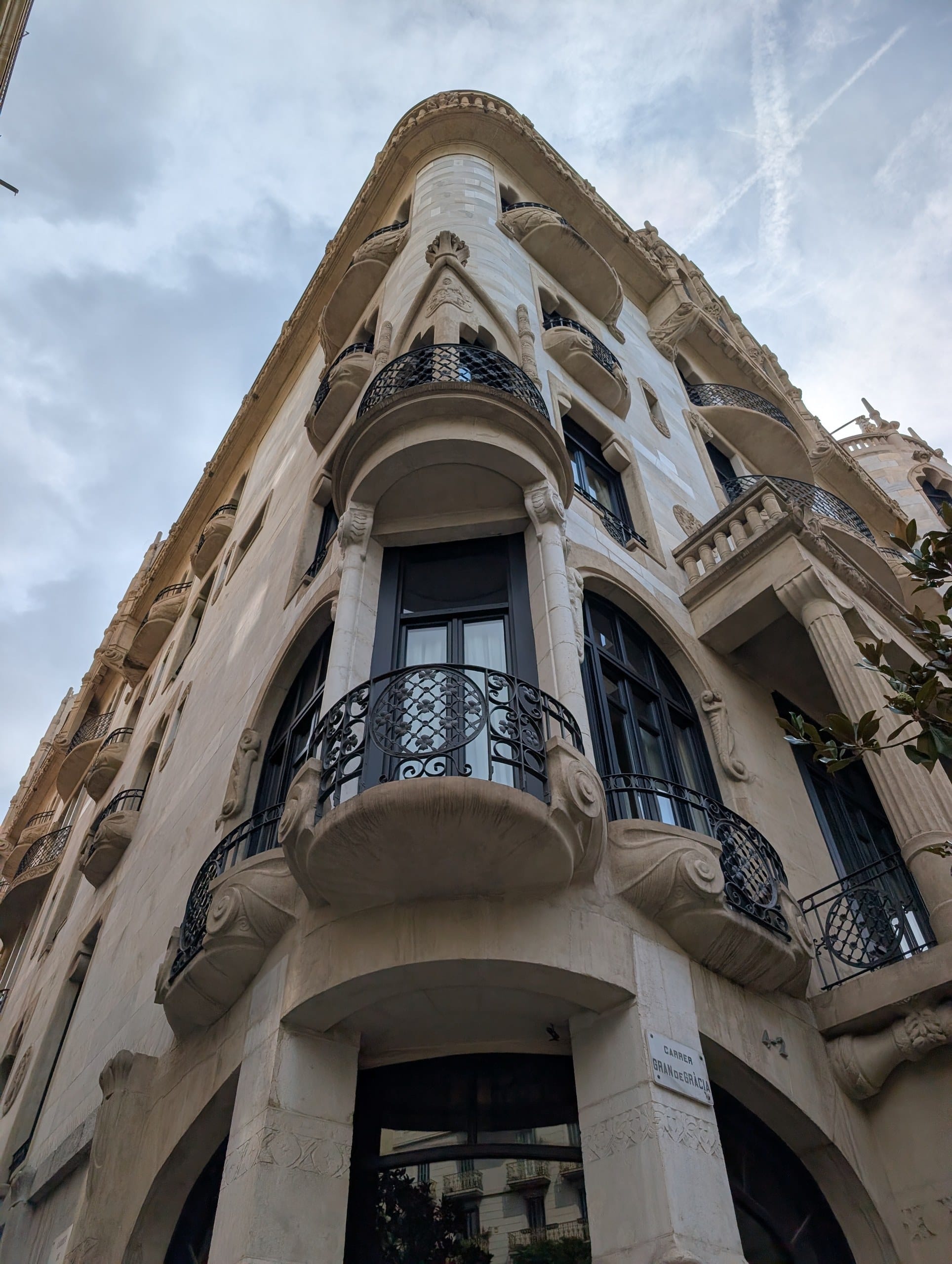
Jane came inside all three houses with us, but the stretch between Casa Vicens and Passeig de Gràcia is where having a guide really paid off. Gran de Gràcia is lined with Modernista buildings that nobody queues for and nobody photographs, carved stone doorways, stacked iron balconies, shopfronts banked with flowers. On your own it is just a nice street. With somebody explaining what you are looking at, it becomes part of the tour instead of just the walk between two houses.
Two stops stuck with us. One is a corner building at Gran de Gràcia 77 that turns out to be Casa Francesc Cama, by Francesc Berenguer, the man who worked as Gaudí’s assistant for most of his career and who left a handful of buildings up and down this street. You have been looking at Gaudí all morning, and here is the person who stood next to him, working in his own name, on a street most visitors treat as a corridor.
The other is the building that closes out Gran de Gràcia and opens Passeig de Gràcia, now the Hotel Casa Fuster. It is by Lluís Domènech i Montaner, who taught at Barcelona’s architecture school from the year it opened, the same years a young Gaudí was finishing his degree there, and whom the city’s own Modernisme Route lists among Gaudí’s teachers. He is also the architect of the Palau de la Música Catalana, which he built for a choral society, and the hotel still runs live music in the ground floor café his building has had for a century. Standing outside it, you realize Gaudí was not working alone on an empty street. He was just the biggest name among a lot of architects doing this kind of work.
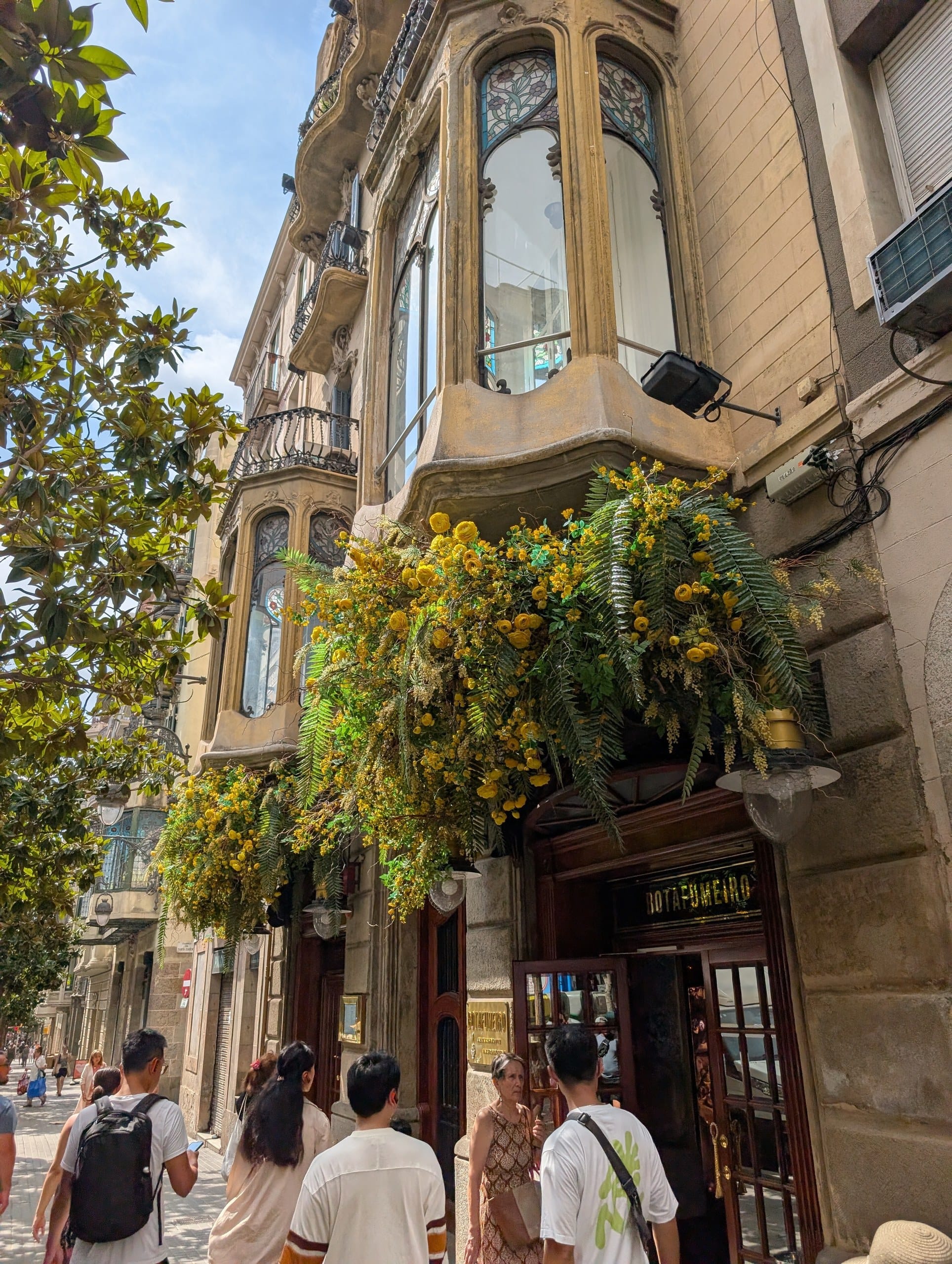
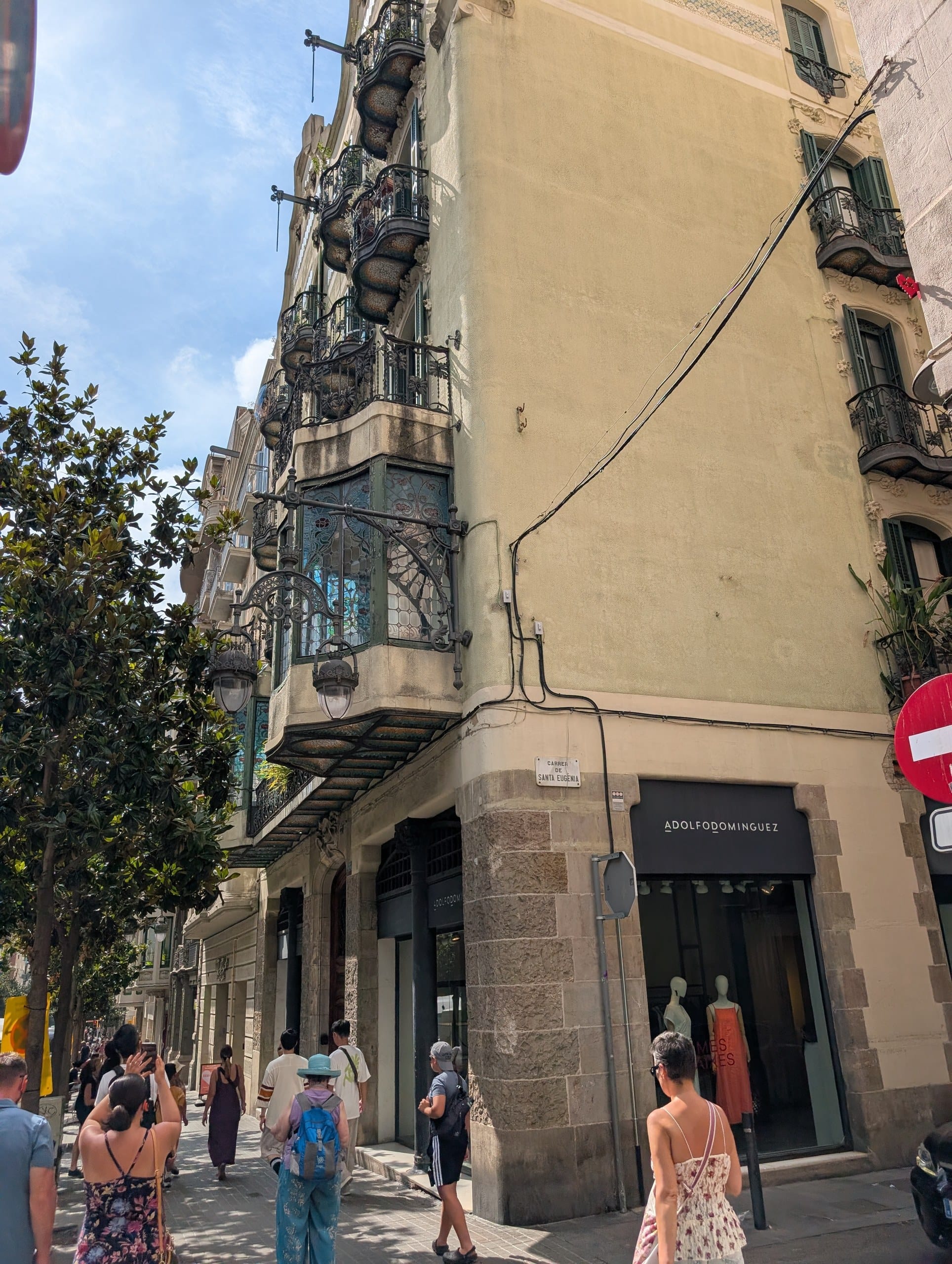
Jane also pointed down. Set flush into the pavement outside certain shops are square bronze plaques, ringed with little pictures of old trades and stamped by the city council in recognition of a business that has traded in the same spot for at least fifty years, with the founding year and the year of the award in the middle. Once you know they are there you start hunting for them. In our book, a shop with one of those plates in front of it is worth your money over any chain on the same street, and it is the cheapest souvenir hunt in Barcelona because it costs nothing to play.
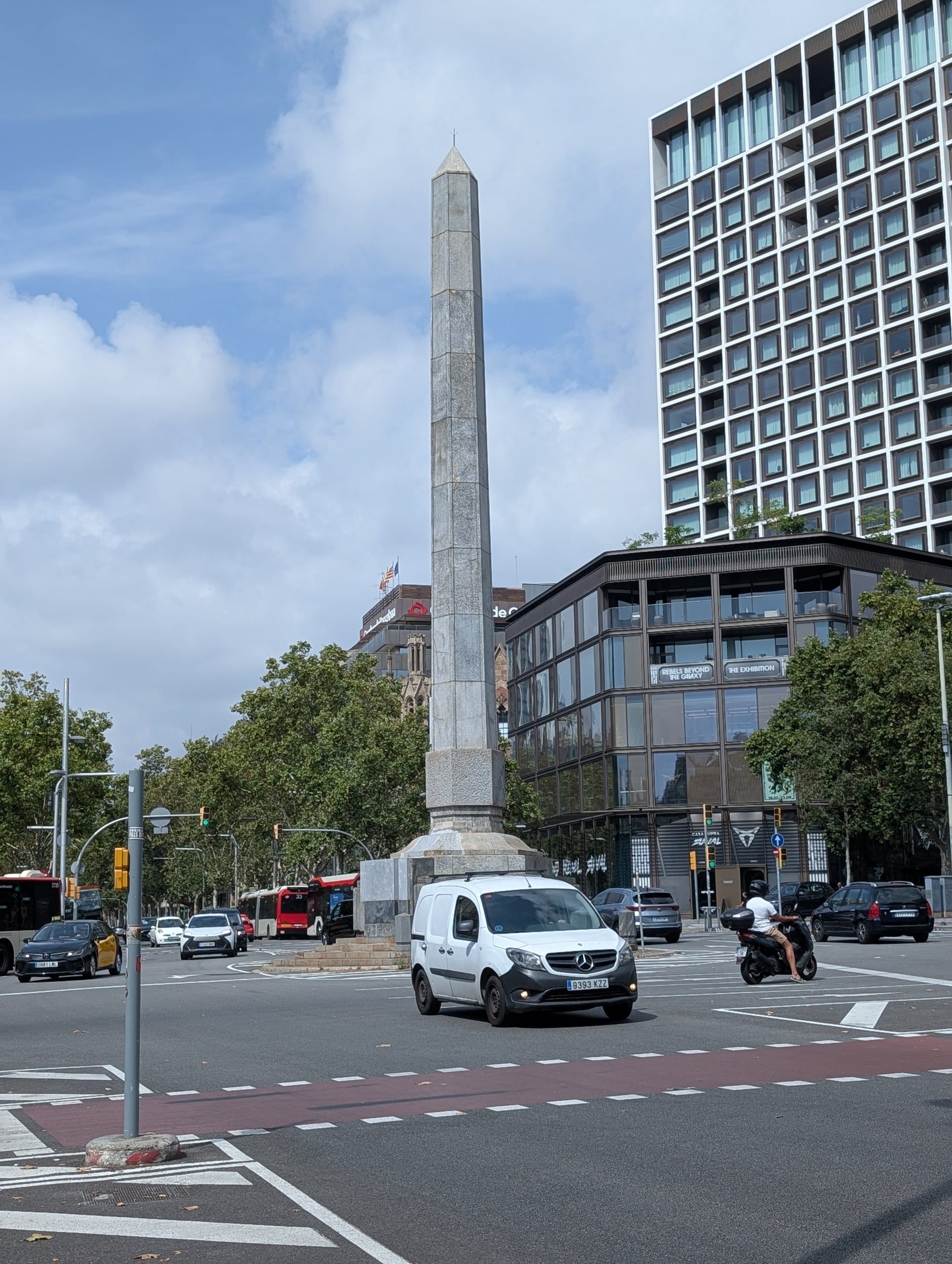
You come out at the obelisk where Passeig de Gràcia meets Avinguda Diagonal, and Casa Milà is right there.
Casa Milà gives you the most building, and the best half hour of the morning
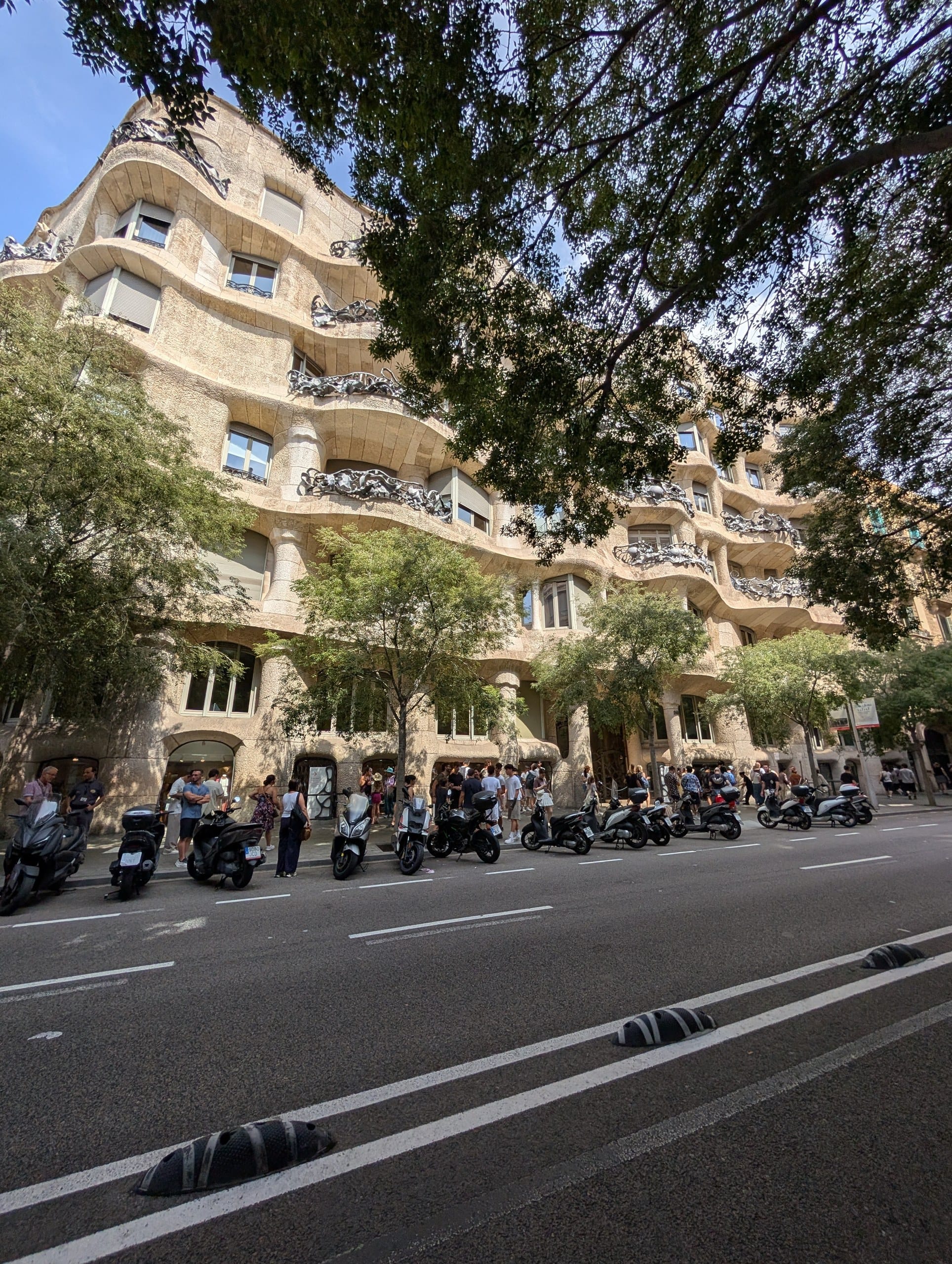
This was my favorite of the three, and the reason is simple. Casa Milà is the only one where the roof comes with the standard ticket, and the roof is the single best thing on this whole route.
The route through the building is worth knowing before you go, because it runs one way and it climbs. You start in the period apartment, go up into the attic, come out onto the roof, and then come all the way back down and out through the shop. Plan for stairs. Our kids counted them, and they were still counting on the way down.
The roof is not just a viewing platform with a railing. It is more like a landscape you walk around in. Stepped walkways rise and fall, chimney stacks stand around like helmeted guards, and you walk among them. Casa Batlló has a walkable roof too, but only if you buy up to it, which is where our day went sideways.
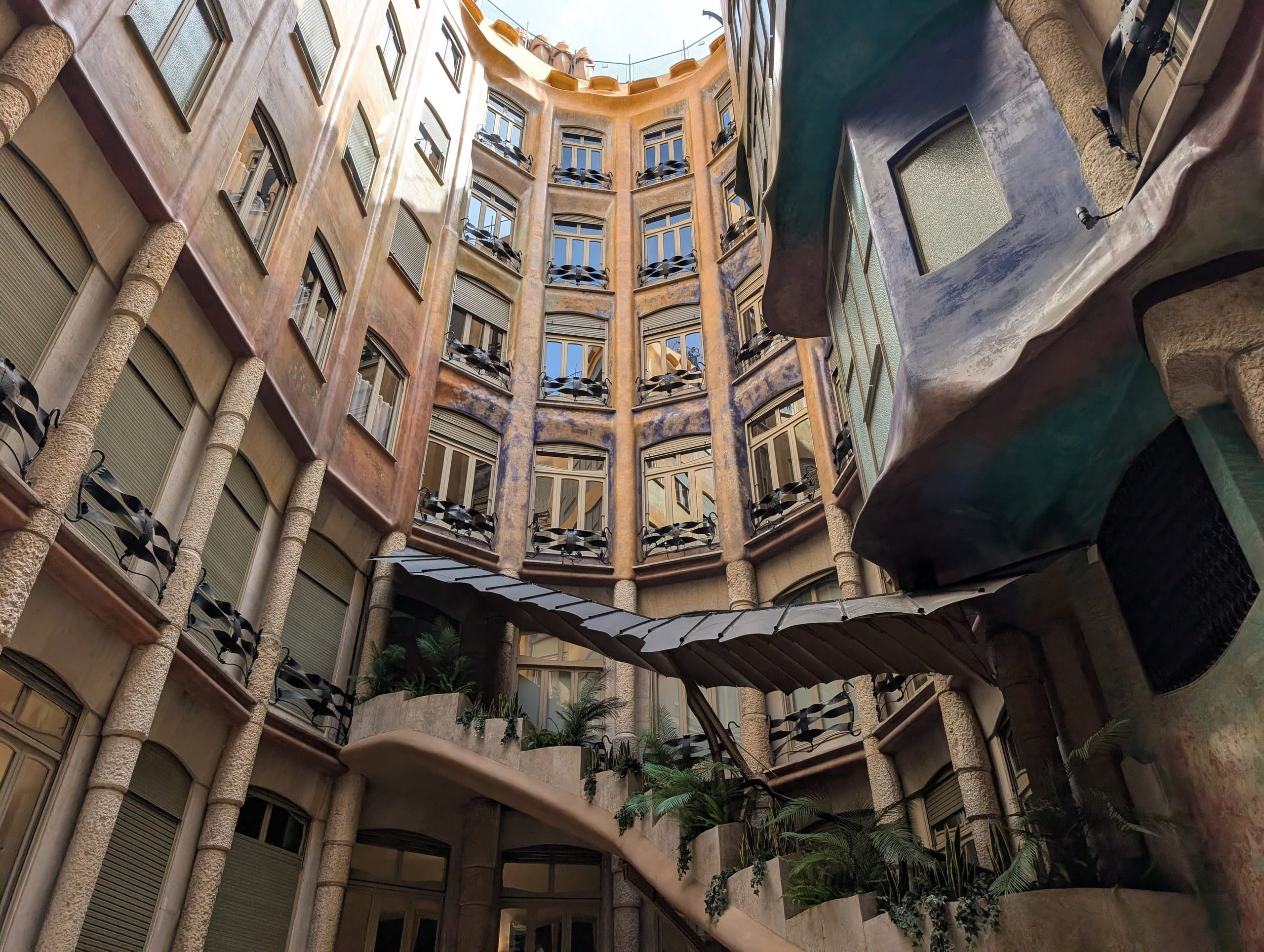
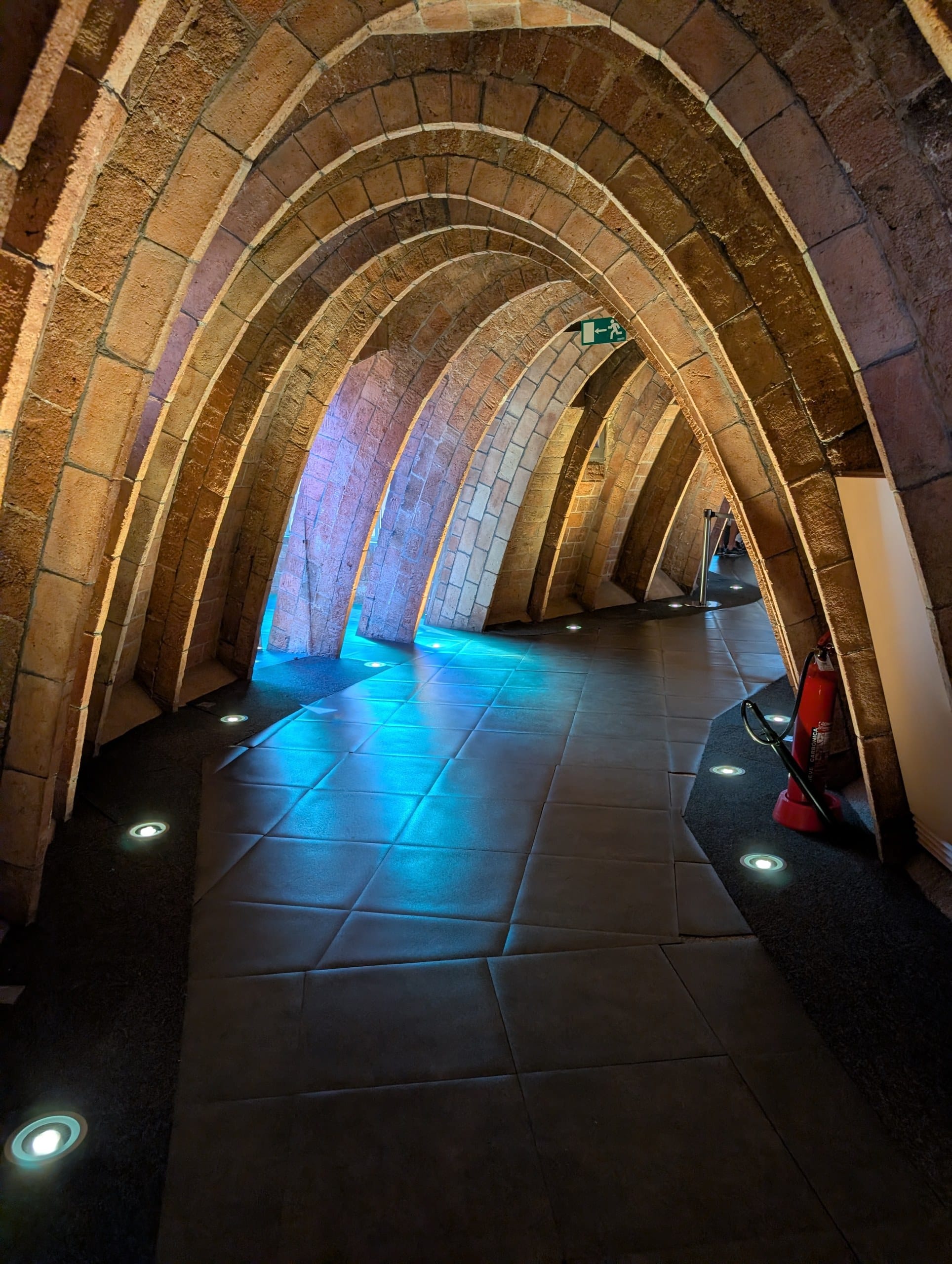
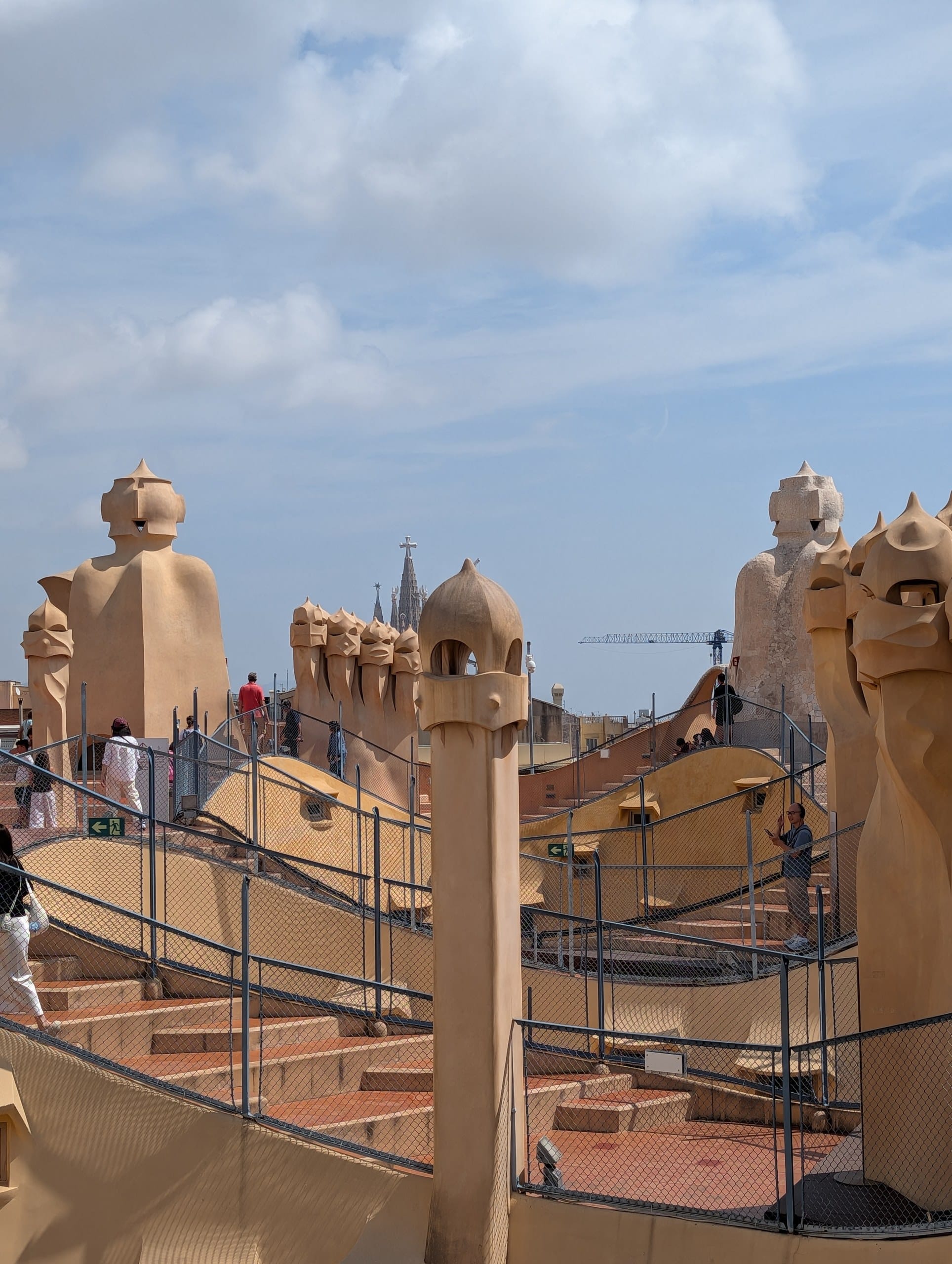
The attic on the way up is worth slowing down for. It is a long tunnel of brick arches, lit from the floor, and it is the clearest look you will get at how the building actually stands up.
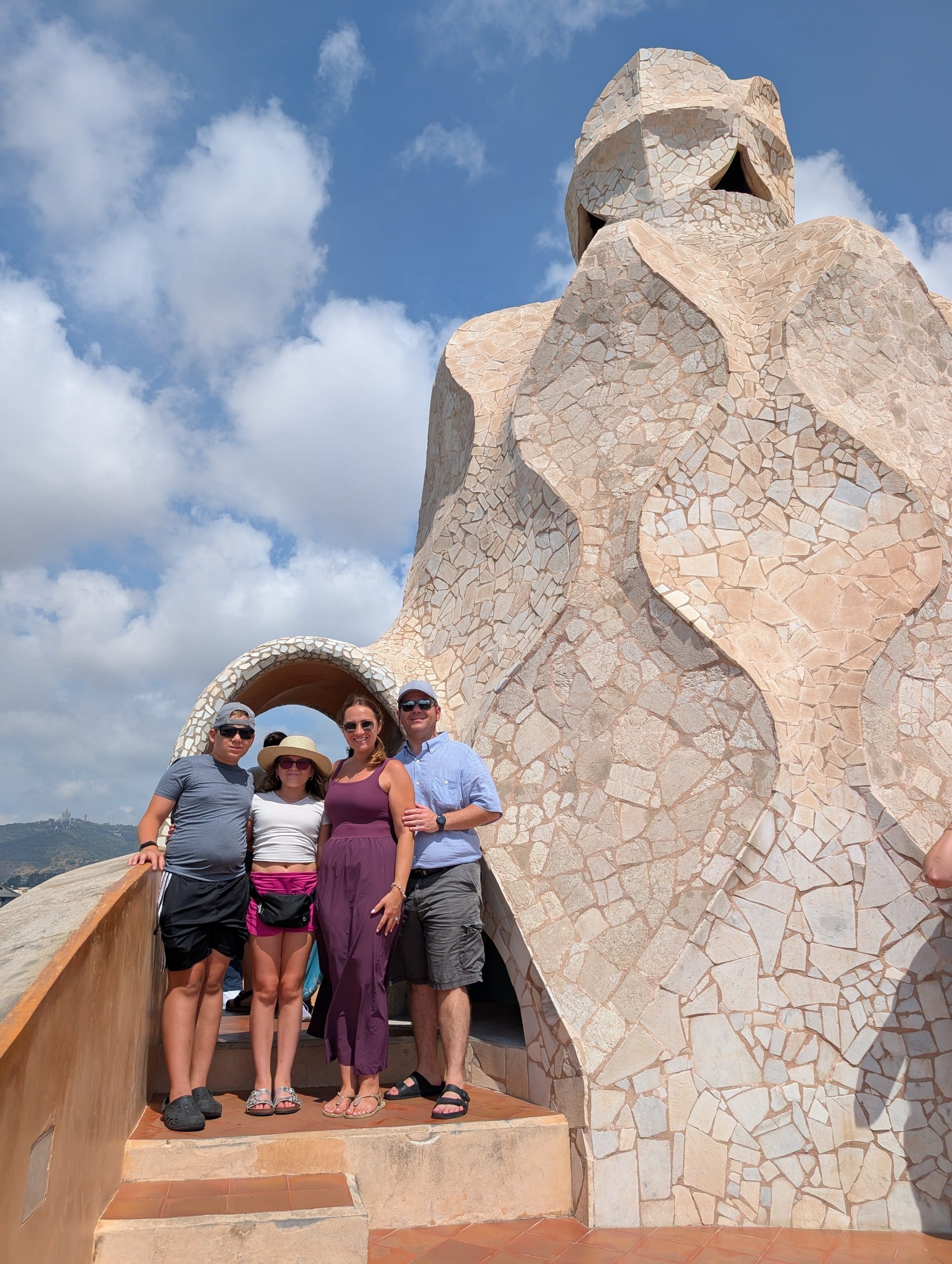
Then the roof, and the photo all four of us are in. What the kids actually talked about up there was how big the Sagrada Família looks from that height, and how cool the roof itself is. We were up around half past twelve, which in August means full sun and no shade. Go earlier if you can. The roof is what Vika took away from this house. All those steps and levels, and then the view out over the rooftops once you are at the top of them.
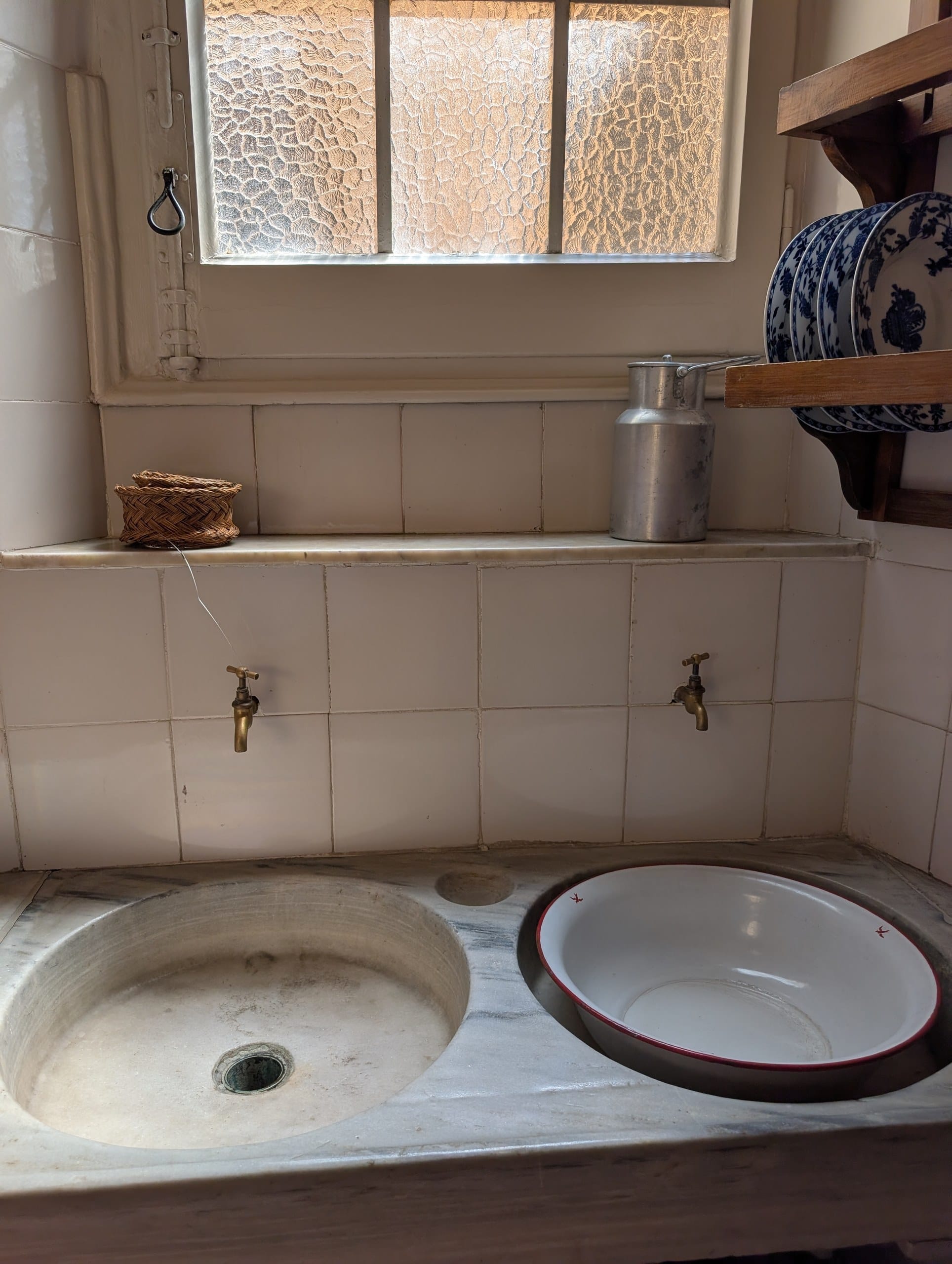
The period apartment, which you see first, is the part adults tend to like most. It is furnished as a Barcelona family would have had it, down to the marble kitchen sink, and it reminds you that people actually lived here.
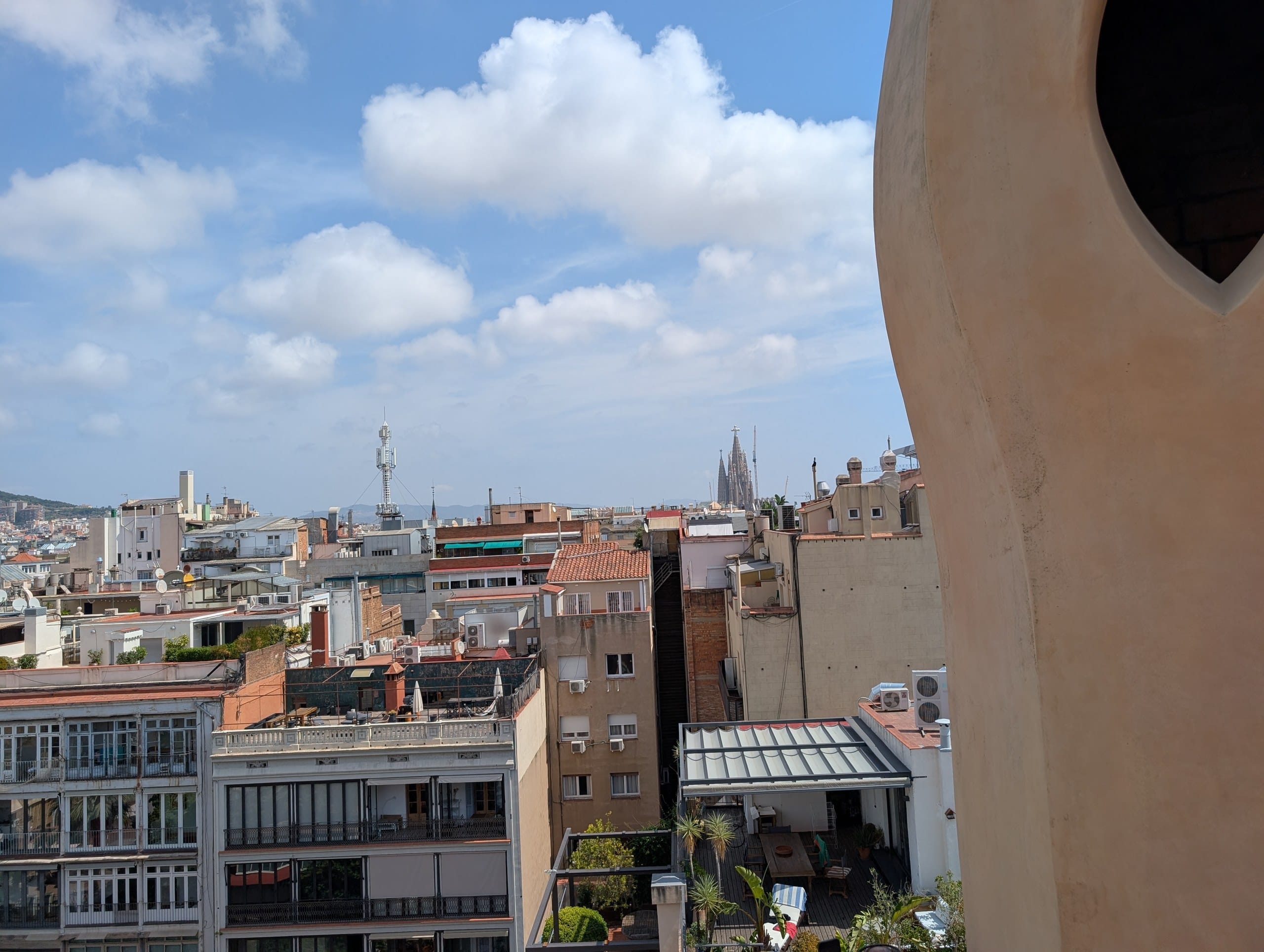
We were inside about an hour and twenty, which is exactly what the tour budgets for this house. Children under twelve are free.
Casa Batlló cost the most and showed us the least
This is the one on every Barcelona list, and it is the one we would cut. Not because the house is a letdown. Because of how little of it you actually get.
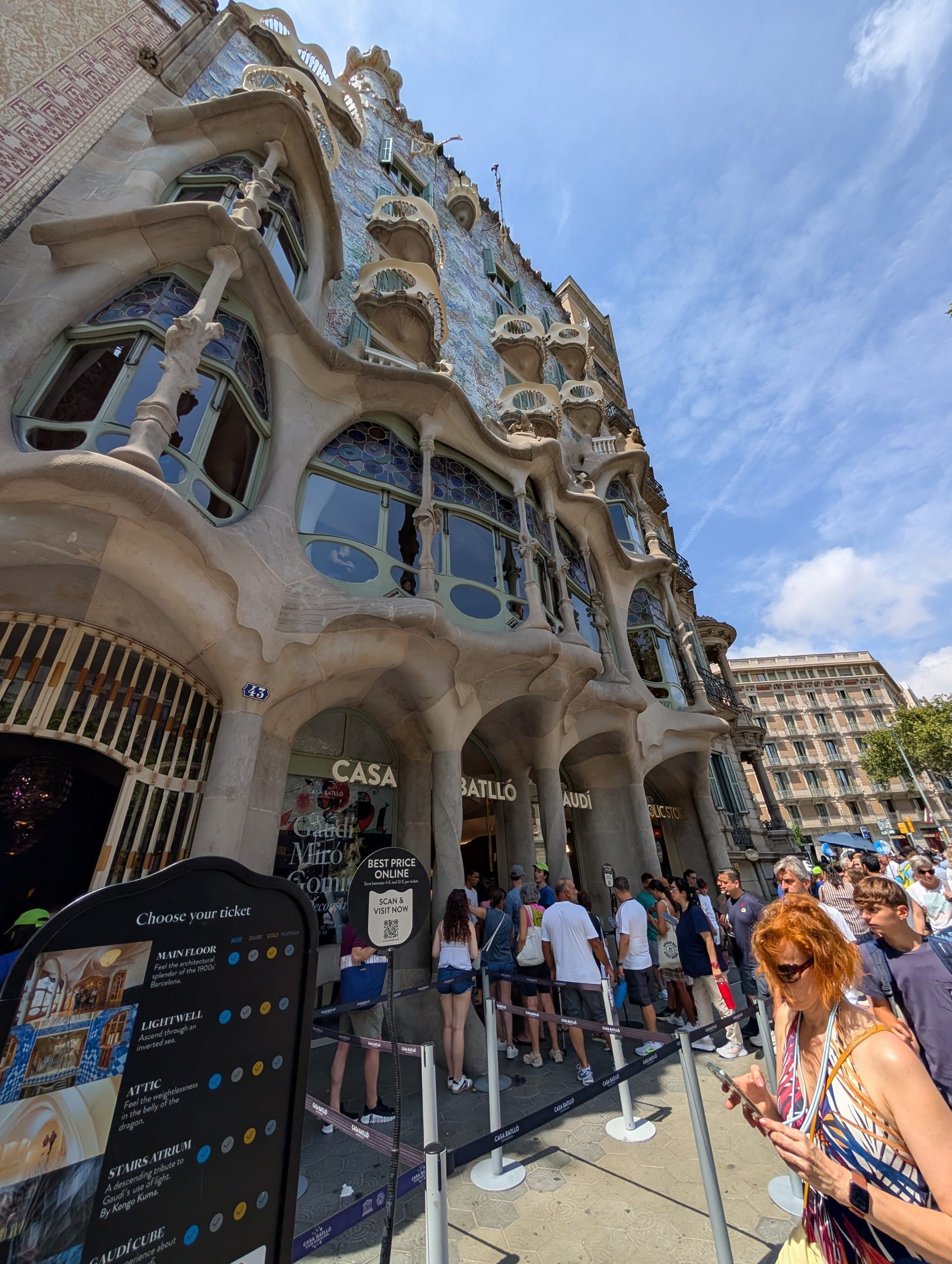
Vika felt about the same as I did. From the outside it is beautiful and she would say so. From the inside it did not impress her the way the other two did.
Casa Batlló does not sell one ticket. It sells four, stacked: Blue, Silver, Gold and Platinum. Each tier unlocks more of the house.
The board out front lays it out room by room. Blue gets you the main floor, the lightwell, the attic, the stairs atrium and the Gaudí cube. Silver adds the rooftop, which they call the Dragon’s Rooftop. Gold adds the augmented reality tablet, the immersive Gaudí Dôme, the original concierge room and the Batlló family’s private residence. Platinum adds no extra rooms at all, only a priority pass, a flexible date change and free cancellation.
Here is the part to read twice if you are booking a guided tour. The itinerary is explicit about it, and we did not clock what it meant until we were standing there. Your guide explains the facade and its dragon-like rooftop from the pavement. Then you go inside for the noble floor and the back patio, and that is the visit. You get the dragon’s back described to you from the street, and you never walk on it. In our case the rooftop was not part of our ticket either, so there was never a version of that morning where we were getting up there.
And I should be honest about where our heads were by this point. This was the third house of the morning and we were hungry. Emily was happy we were finishing up and going to eat, which says a lot about the house you paid the most to get into.
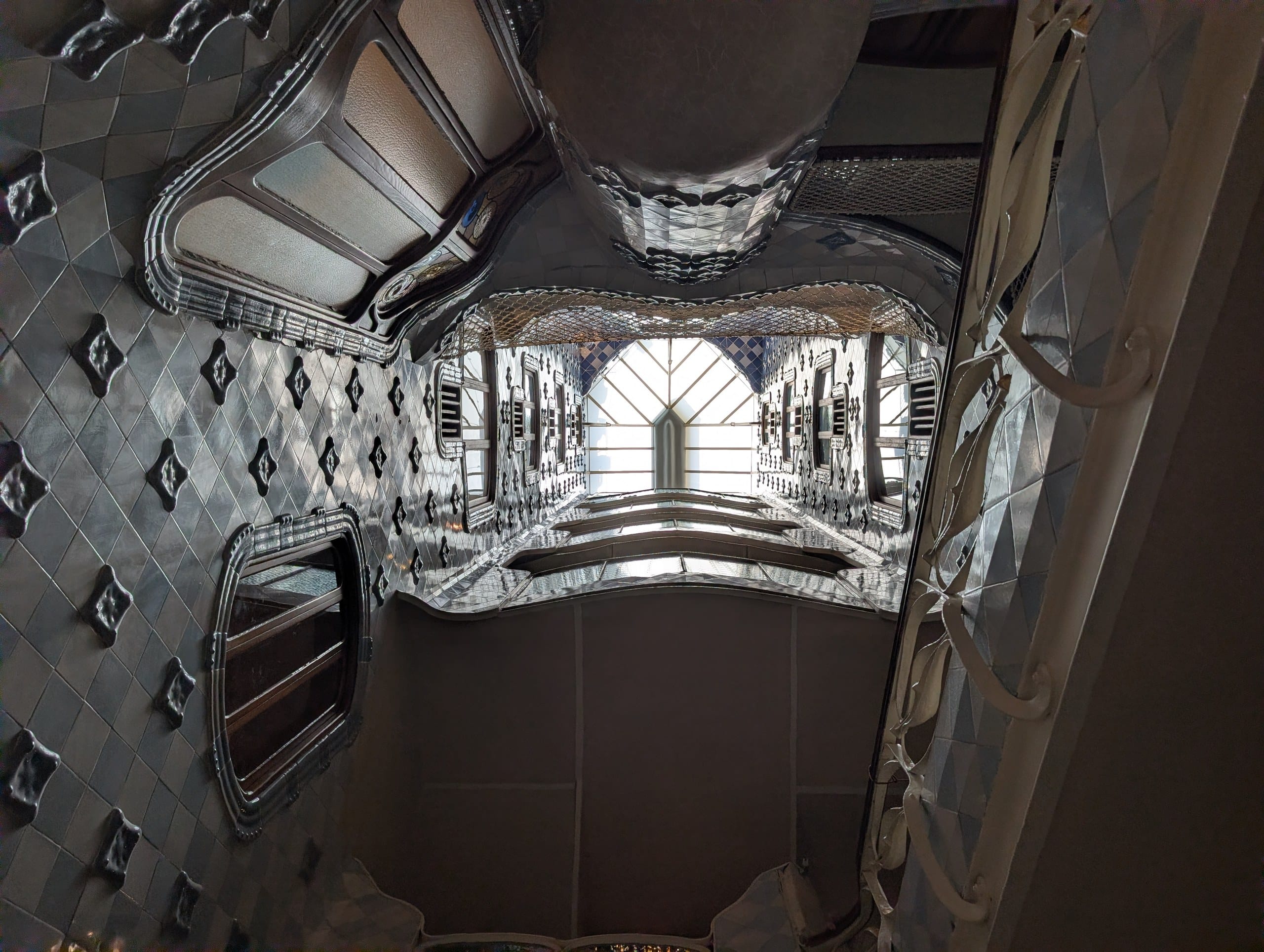
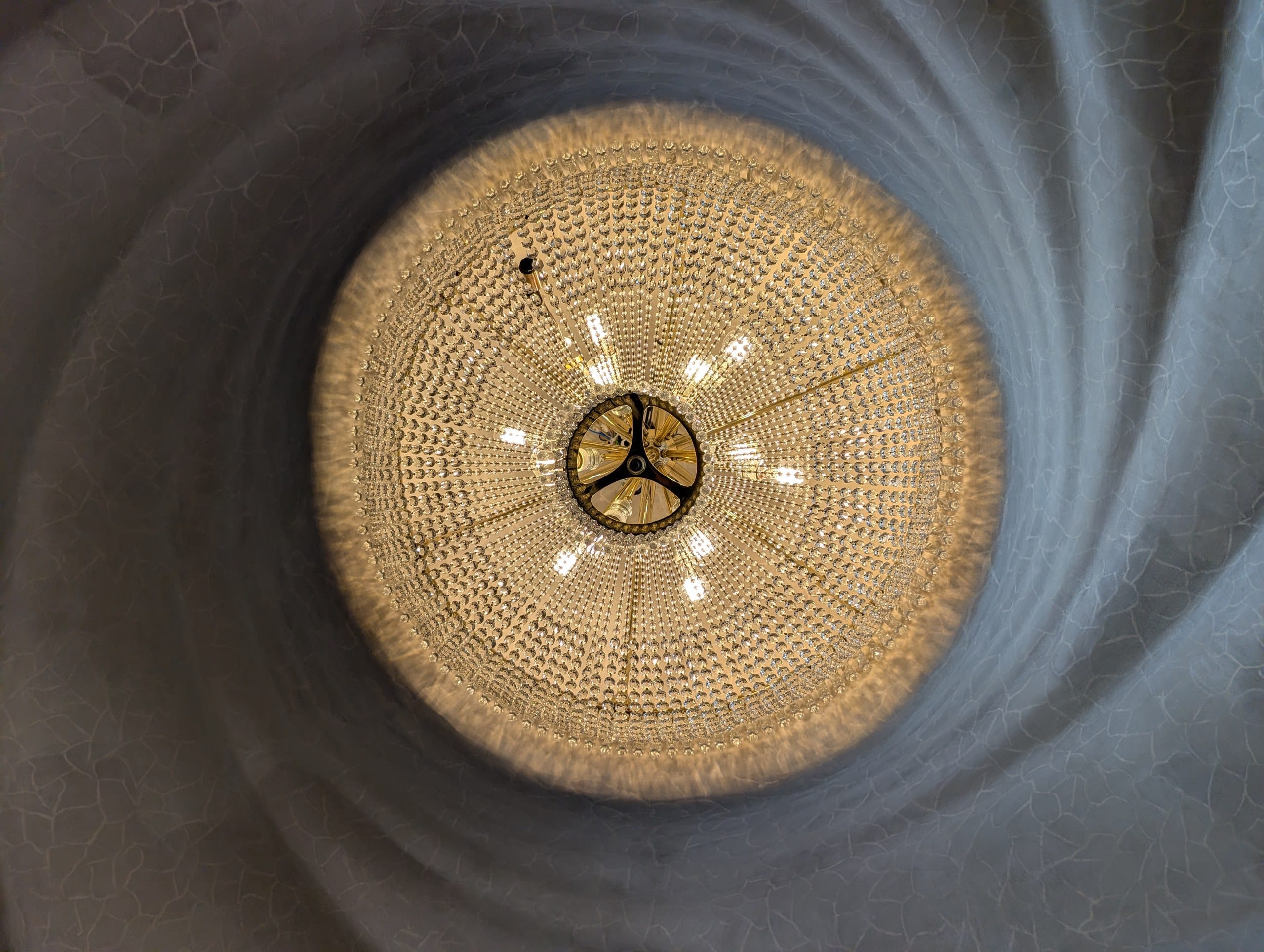
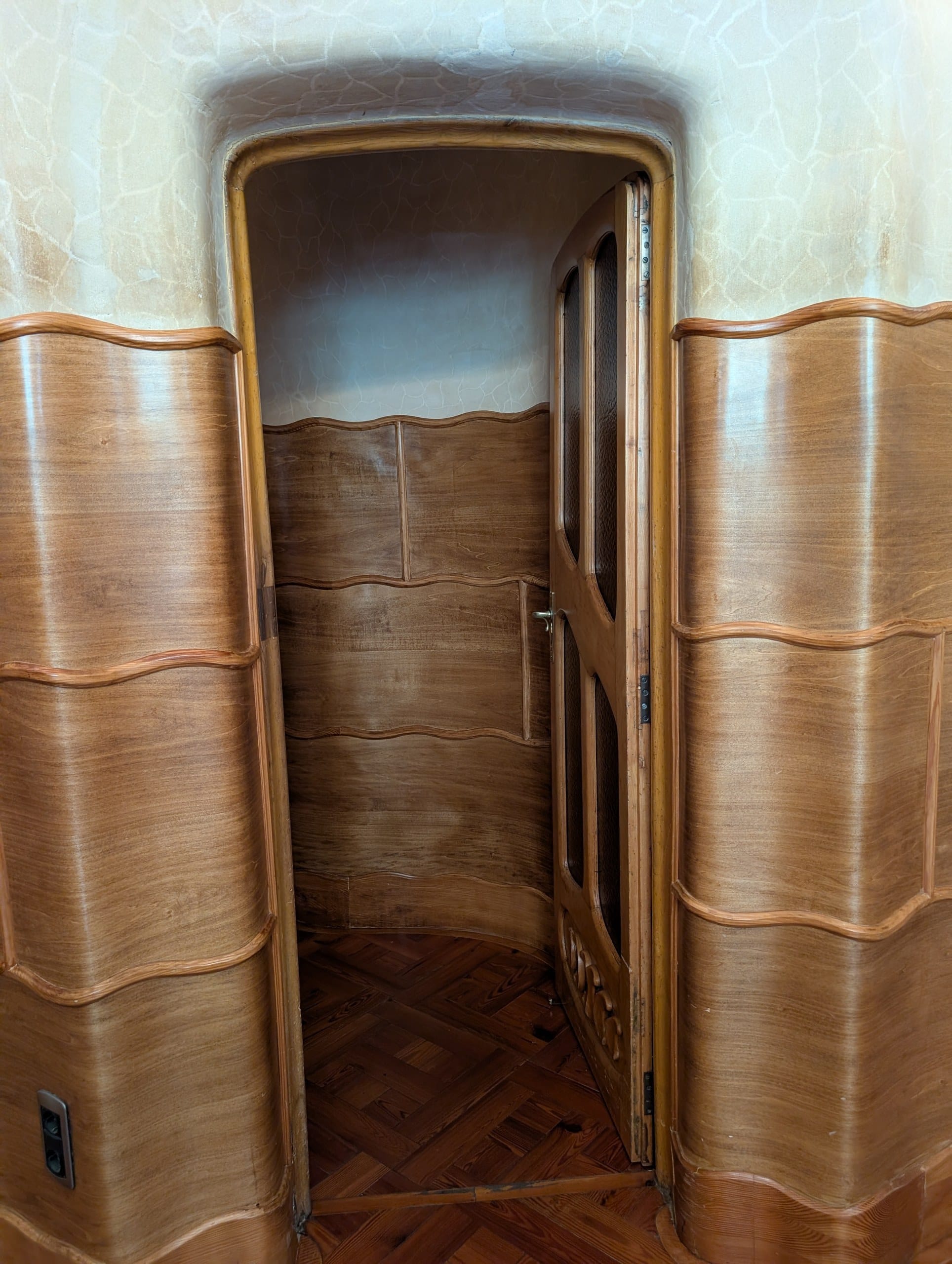
Compare that with Casa Milà an hour earlier, where the same tour walks you through the patios, the tenant’s apartment, the attic and the roof. One house hands you the whole building. The other hands you a floor and a courtyard, in forty minutes, at the busiest hour of the morning. What we did see is genuinely beautiful, the mirrored atrium is one of the best things in any of the three houses and there is not a straight line in the place. But the queue outside was longer than the part of the building we were let into.
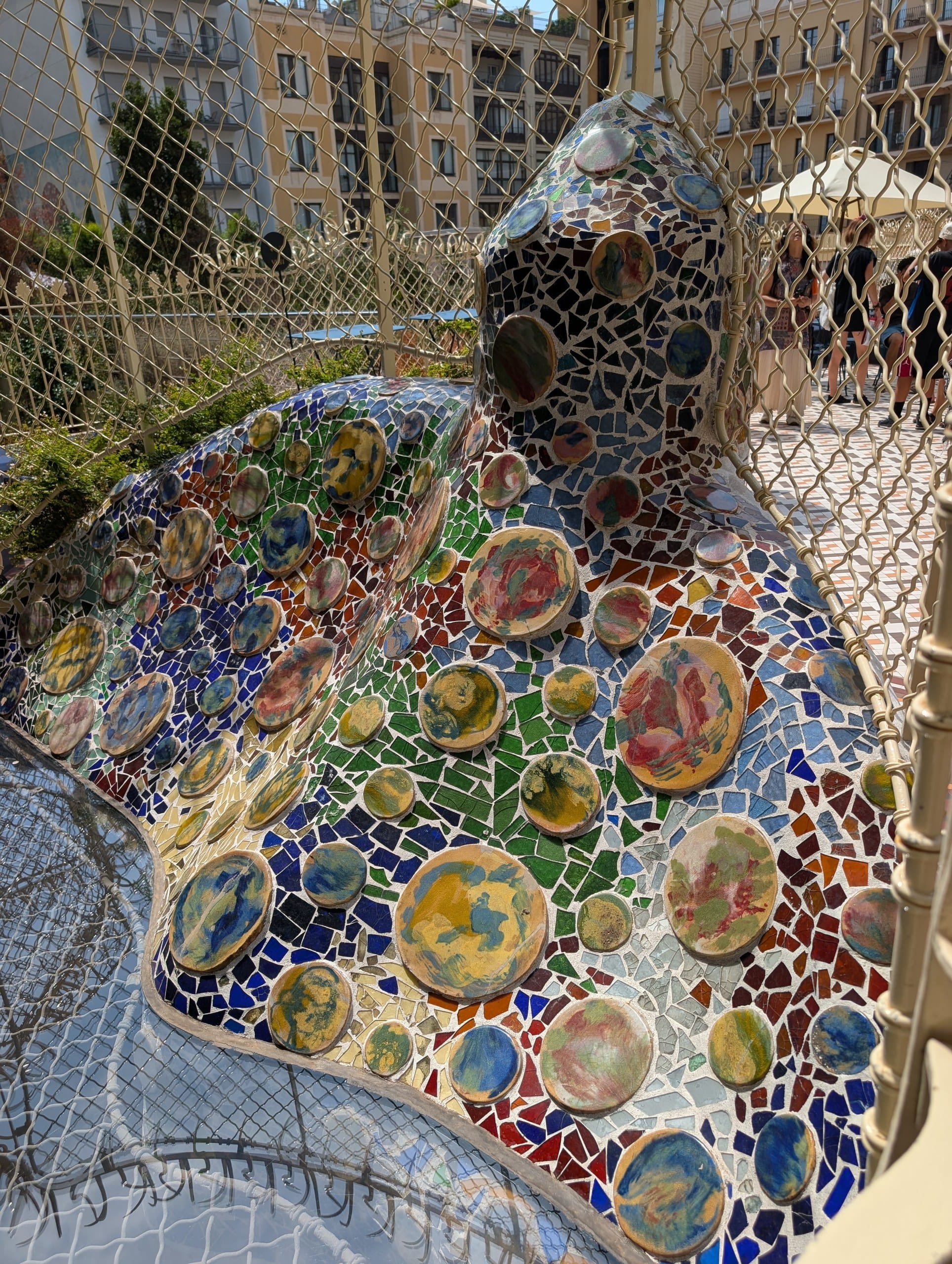
We were inside about forty five minutes. Casa Milà, the same morning on the same tour, was an hour and twenty.
So the honest read is not “skip Casa Batlló.” It is this: check what your Casa Batlló access actually covers before you pay, whether that is a line in a tour’s inclusions or a ticket tier you picked yourself. If the rooftop is not in it, you are buying the smallest slice of the most expensive house on the street. Either buy up to the roof or put the money into the other two.
Which Gaudí house should you visit inside?
There is no single answer in our house, and the split is the useful part. Both kids picked Casa Vicens. I would not give up the Casa Milà roof and attic for anything. All four of us put Casa Batlló last.
So: if you only do one and you are travelling with children, make it Casa Vicens. It is the one they can move around in, and being able to move around is most of what they are judging.
If you only do one and you want the most building for the money, make it Casa Milà. The roof is the single best thing on this route and it comes with the standard ticket.
Do two and you get both, which is what we would recommend to almost anyone. Casa Vicens is the cheapest and the quietest, it is the only one that shows you Gaudí before he became Gaudí, and it is the only one of the three that feels like a house instead of a monument. Casa Milà gives you the roof.
Casa Batlló is third on our list, and only worth it on a ticket that includes the roof.
How far apart are the Gaudí houses?
Closer than you think, with one exception. Casa Milà and Casa Batlló are 540 meters apart, about seven minutes, four Eixample blocks down the same street. Casa Vicens is the outlier at roughly two kilometers from Casa Milà, about twenty five minutes on foot. That is the only leg that feels like a walk, which is exactly why we did it first.
If you would rather ride it, Casa Vicens is near Fontana on the L3 and Casa Milà is at Diagonal on the L3 and L5, so it is a short hop on one line.
How long does each Gaudí house take?
Our tour budgets an hour at Casa Vicens, an hour and twenty at Casa Milà and forty minutes at Casa Batlló, plus about half an hour of walking. That is three hours of stops and it matched our morning almost exactly. If you are going on your own, La Pedrera itself suggests an hour and a half, and Casa Vicens and Casa Batlló both say around an hour and fifteen, so budget a little more than a tour would. Starting just before ten we had all three behind us and were sitting down to lunch in the early afternoon.
Start at opening. In August the Casa Milà roof is fully exposed and the Passeig de Gràcia crowds thicken through the morning, so an early start buys you both shade and space.
Do you need tickets in advance?
For Casa Batlló and Casa Milà, yes. Both use timed entry, both were visibly busy by midday, and Casa Batlló charges noticeably more at the door than online. Casa Vicens is the relaxed one, but it is also the smallest, so a slot is still worth having. And read the fine print on anything sold as skip the line. A timed ticket is not the same as walking straight in, which is a distinction we paid for once and have not forgotten.
One thing worth knowing before you shop: none of the three houses sells a joint ticket with the other two. Every “three houses of Gaudí” pass you will find is an operator bundling three separate admissions, and Casa Vicens even lists one of those third party tours in its own booking system, which makes it look more official than it is. Bundles are not a scam and they can genuinely save you time, but you are not buying a discount from Gaudí’s estate. Price it against three individual bookings before you commit.
What it cost us
We did not buy three separate tickets. We booked the Barcelona Gaudí Houses Tour, which bundles the guide and all three admissions together. Four of us came to $554.36, which is $138.59 a head. It meets at Casa Vicens and finishes at Casa Batlló, about three hours, twelve travelers maximum.
What that buys is uneven, and the operator is upfront about it if you read the itinerary before you book. Casa Vicens is an hour, the garden plus the ground and first floors. Casa Milà is an hour and twenty, the patios, the tenant’s apartment, the attic and the rooftop. Casa Batlló is forty minutes, the main vestibule, the noble floor and the back patio. The most famous house on the list gets half the time of the one before it, and the smallest share of itself.
Is that good value? For Casa Vicens and Casa Milà, yes, comfortably. Jane came inside all three houses with us, and we walked into all three without waiting in line. The Casa Batlló portion is where the math stops working.
What we can tell you now is the part that saves families the most money, because most sites get it wrong. Children go free at all three, at slightly different ages. Casa Vicens is free up to eleven. Casa Milà is free under twelve. Casa Batlló is free up to twelve when accompanied by an adult, and that includes the augmented reality tablet on the tiers that have one. Teenagers get a reduced rate at all three.
Questions we get asked
Is Casa Batlló or Casa Milà better?
Casa Milà, for a family, and it was not close for us. You see more of the building, the roof comes with the standard ticket, and the ticket is not carved into tiers. Casa Batlló has the more famous facade and the more theatrical interior, but what you get depends entirely on which of its four tickets you bought. All four of us ranked Casa Batlló last on the day.
Is Casa Vicens worth visiting?
Yes, and it is the best value of the three. It is the cheapest ticket, the shortest queue, and the only one where you get a sense of Gaudí as a young architect still working things out.
Is Casa Vicens free?
No, but children up to eleven are. Adults pay, with a reduced rate for students up to twenty nine, visitors over sixty five, and large or single parent families.
How many Gaudí houses are there in Barcelona?
More than three. The three on this route, Casa Vicens, Casa Milà and Casa Batlló, are the ones clustered together in Gràcia and the Eixample, which is why they get done as a set. Palau Güell down near La Rambla is also a full walk through house museum with a roof terrace, and Torre Bellesguard sells a self guided audio guide visit, so if you have a second Gaudí day there is more house to see. Several others are private and can only be admired from the sidewalk. Park Güell is Gaudí too, though it is a park rather than a house, and getting up there is its own small expedition: here is what walking to Park Güell with kids actually takes.
Can you really do all three in one day?
Comfortably, and with lunch after. We started just before ten, did all three with two kids, and nobody complained. The order is what makes it comfortable.
Addresses, hours and getting there
Casa Vicens. Carrer de les Carolines 20 to 26, 08012 Barcelona. Open 9:00 to 20:00 daily from March to October, 9:00 to 18:00 November to February. No entry within an hour and fifteen of closing. Metro Fontana or Lesseps, L3. Free audio guide in sixteen languages, bring your own headphones. Bags over 30 by 30 centimeters go in a locker and suitcases are not allowed at all.
Casa Milà, La Pedrera. Passeig de Gràcia 92, 08008 Barcelona. Open 9:00 to 20:30 through early November, with separate evening sessions. Note it does close on a handful of individual dates each year, so check before you book. Metro Diagonal, L3 and L5. The rooftop closes in rain, and neither the roof nor the mezzanine works with a stroller.
If you book the tour. It meets outside Casa Vicens at Carrer de les Carolines 20 to 26 in Gràcia, where the guide stands with a Touring Pandas sign, and it ends at Casa Batlló on Passeig de Gràcia 43. One way, no loop back, so plan lunch around the finish rather than the start. Worth knowing: the same operator’s three house tour also turns up inside Casa Vicens’s own booking system, so if you would rather book through the house than through a marketplace, look there before you assume there is no option.
Casa Batlló. Passeig de Gràcia 43, 08007 Barcelona. Open every day, with the general visit running from 9:00 through the early evening. Metro Passeig de Gràcia, L3 and L4. Strollers cannot come on the tour, though there is storage and they will lend you a baby carrier for under twos, and there are no lockers for luggage or large bags.
The verdict
Do all three, in this order, in one morning, starting at opening. Casa Vicens first while everyone is fresh and the streets are empty, Casa Milà in the middle for the attic and the roof, Casa Batlló last and only on a ticket that includes the roof.
If the budget only stretches to two, drop the famous one. I am not saying that to be different, it is just what our morning taught us. All three are works of art and not only architecture, so this is not about which one is good. It is about which two you buy when you cannot buy three. Casa Vicens was the favorite of Vika, Josh and Emily. Casa Milà was mine. Not one of the four of us named Casa Batlló, and Casa Batlló is the one that cost the most. Casa Vicens and Casa Milà are not the cheap option, two adult tickets there run more than one Casa Batlló ticket with the roof on it. They are the better option. More building, more room to move, and between them the two things this family still talks about, a house the kids could wander and a roof you can walk on.
Then eat. If you are looking for a lunch spot near the end of this route, we went straight to La Cabrera after we walked out of Casa Batlló, and after a morning on our feet it was the right call. The full write up is here: our review of La Cabrera in Barcelona.
If you have another half day in Barcelona, here is our walking route through El Call in the Gothic Quarter.